Why Medical Equipment Needs a More Capable Thermal Management Supplier
CT machines, MRI scanners, X-ray tubes, gradient amplifiers, and laser surgical systems are high-power medical imaging and surgical devices with some of the toughest cooling requirements in any industry. Precision components must maintain stable temperatures during long, continuous operation, while meeting the strict safety, reliability, and consistency standards of medical-grade equipment.
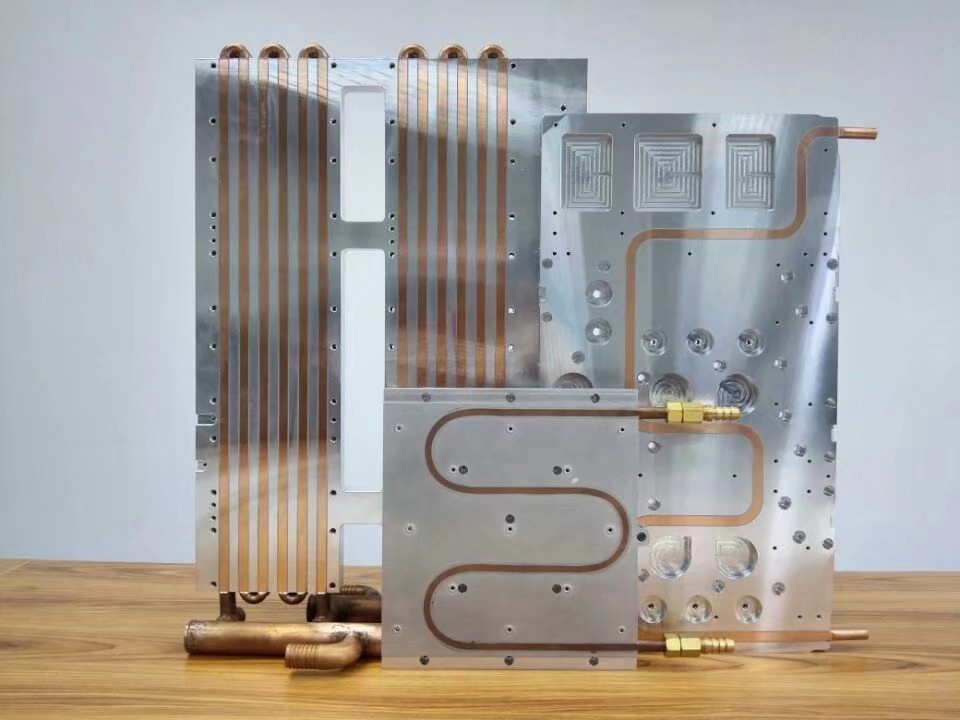
Standard cooling components often fall short: installation space is limited, heat sources are precise and unevenly distributed, or the parts can't deliver the long-term consistency medical equipment demands. At Kingka, our Liquid Cold Plate and Heat Sink lineup — including FSW Liquid Cold Plates, Tube Liquid Cold Plates, Brazed Liquid Cold Plates, CPU Water Blocks, and aluminum, copper, and water-cooled heat sinks — is built to deliver precise heat dissipation for these high-power medical components.
What Concerns Do Medical Equipment Buyers Usually Face?
| Buyer Question | What It Really Means |
|---|
| Can this solution handle continuous operation? | Thermal performance must match the device's real heat load and duty cycle |
| Can the solution fit my compact device structure? | Medical device interiors are often extremely tight, making layout a key constraint |
| Will sealing or performance degrade over long-term use? | Medical equipment requires longer service life and higher reliability standards |
| Can you guarantee consistency batch to batch? | Medical device production demands strong part consistency and traceability |
| Can you support customization from drawings to mass production? | Buyers need deep engineering collaboration, not just fabrication |
| Has the solution been properly validated and tested? | Patient safety is at stake — any cooling failure can have serious consequences |
How Kingka Responds to Different Medical Equipment Scenarios
Scenario 1 – CT Machines and MRI Scanners: Precision Thermal Management for Long-Term Stable Operation
Core components like X-ray tubes and gradient amplifiers generate concentrated heat during continuous scanning. A Brazed Liquid Cold Plate is often the right direction here — its complex internal channel design and strong heat dissipation capability deliver the stable, precise thermal management CT and MRI systems need.
Scenario 2 – X-Ray Tubes and Gradient Amplifiers: High Cooling Efficiency in a Compact Footprint
These components combine high power density with strict size constraints. A Tube Liquid Cold Plate or CPU Water Block is often the better fit, delivering stable, reliable cooling within a compact footprint while keeping costs under control.
Scenario 3 – Laser Surgical Systems: Extreme Reliability and Safety
Used directly in clinical procedures, laser surgical systems demand the highest reliability standard — any overheating could directly impact surgical safety. An FSW Liquid Cold Plate's sealing reliability and strong structural performance help keep these systems stable under intensive use.
Why Buyers Prefer Suppliers That Support Engineering Communication
| What Buyers Usually Expect | Why It Matters |
|---|
| Engineering and design support | Improves solution feasibility during early-stage development |
| Strict tolerance control | Medical devices require higher assembly precision |
| Consistency and traceability | Meets quality control requirements for medical device mass production |
| Multiple process options | Adapts to different medical device structures and performance needs |
| Support from sample validation to mass production | Matches the typical Prototyping → EVT → DVT → PVT → MP development flow |
What Information to Prepare Before Contacting Us
| Information | Why It Helps |
|---|
| 2D/3D drawings | Clarifies structure and dimensions |
| Heat load data | Helps evaluate the cooling requirement |
| Duty cycle (continuous vs. intermittent) | Affects cooling structure and material choice |
| Installation space constraints | Determines structural feasibility |
| Coolant type and flow rate requirement | Impacts channel and thermal design |
| Tolerance and consistency requirements | Confirms manufacturing capability against medical-grade standards |
| Current development stage (e.g., EVT/DVT/PVT) | Helps match the appropriate level of support |
| Estimated quantity | Supports process planning and quotation |
FAQ
Why do medical devices lean toward custom liquid cooling rather than standard cooling parts?
Medical devices have precise structures, limited space, and demand very high reliability and consistency — requirements standard parts often can't meet all at once.
Which cooling structure suits CT machines, MRI, X-ray tubes, and laser surgical systems respectively?
CT and MRI favor the Brazed Liquid Cold Plate; X-ray tubes and gradient amplifiers favor the compact Tube Liquid Cold Plate or CPU Water Block; laser surgical systems favor the FSW Liquid Cold Plate for its sealing reliability.
What validation stages does a medical equipment project typically go through?
Most projects go through Prototyping, EVT, DVT, and PVT before reaching Mass Production (MP). We provide corresponding technical support at each stage.
Can I get guidance without complete technical documentation yet?
Yes. A basic application scenario and rough cooling requirement are enough for our engineering team to help assess direction early on.
Looking for a thermal management supplier who genuinely understands your application for CT machines, MRI scanners, X-ray tubes, gradient amplifiers, or laser surgical systems? Contact our technical team today for a customized liquid cold plate and heat sink recommendation.