Heat sink fins play an important role in thermal management by increasing the surface area available for heat dissipation. However, during long-term operation, dust, dirt, and other contaminants can accumulate between the fins, reducing airflow and decreasing cooling efficiency. Knowing how to clean heat sink fins properly helps maintain optimal thermal performance, prevent overheating, and extend the service life of electronic equipment.
Whether you are maintaining a CPU cooler, GPU heat sink, industrial heat sink, or aluminum heat sink, regular cleaning is an effective way to improve heat dissipation performance.
What Are Heat Sink Fins?
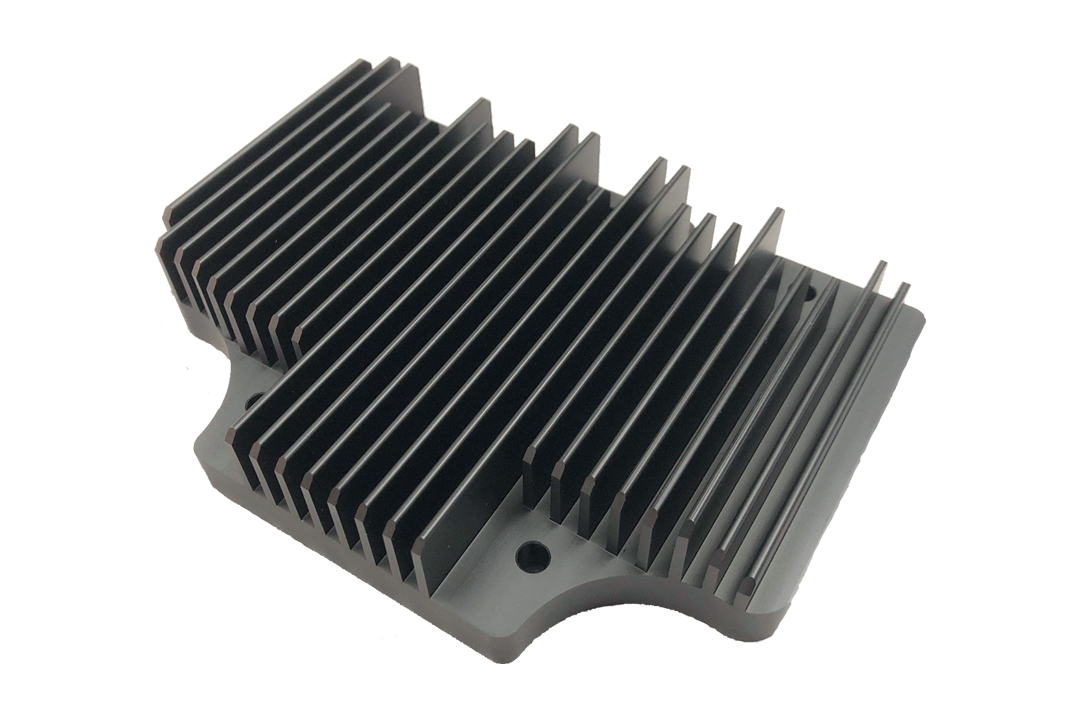
A heat sink is a thermal management component designed to absorb and dissipate heat generated by electronic devices. The heat sink fins are the thin metal structures attached to the heat sink base that increase the total cooling surface area.
Heat sink fins are commonly made from:
Aluminum
Copper
Aluminum alloy
Because aluminum provides excellent thermal conductivity, lightweight properties, and corrosion resistance, aluminum heat sinks are widely used in electronics cooling applications.
Common heat sink structures include:
These designs use different fin geometries to improve airflow and heat dissipation efficiency.
 Why Do Heat Sink Fins Need Cleaning?
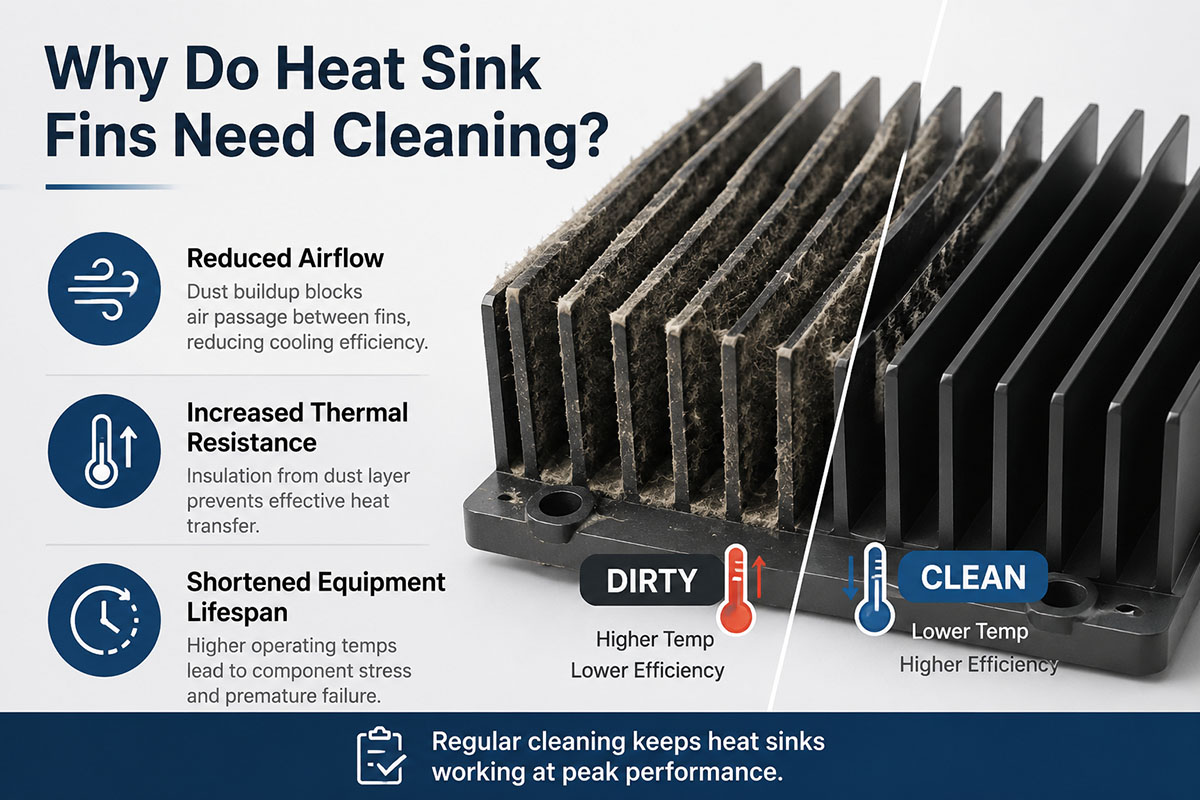
During continuous operation, dust and particles can accumulate between the cooling fins. Over time, this buildup can negatively affect heat transfer performance.
Reduced Airflow
Dust blocks the gaps between fins, preventing air from passing through the heat sink effectively.
Increased Thermal Resistance
When airflow decreases, the heat sink cannot release heat efficiently, causing higher operating temperatures.
Shortened Equipment Lifespan
Excessive heat can reduce the reliability and lifespan of electronic components such as CPUs, GPUs, power modules, and industrial controllers.
Regular heat sink fins cleaning helps maintain stable thermal performance and improves system reliability.
 How to Clean Heat Sink Fins?
The cleaning method depends on the size, structure, and application of the heat sink. The following methods are commonly used for cleaning cooling fins.
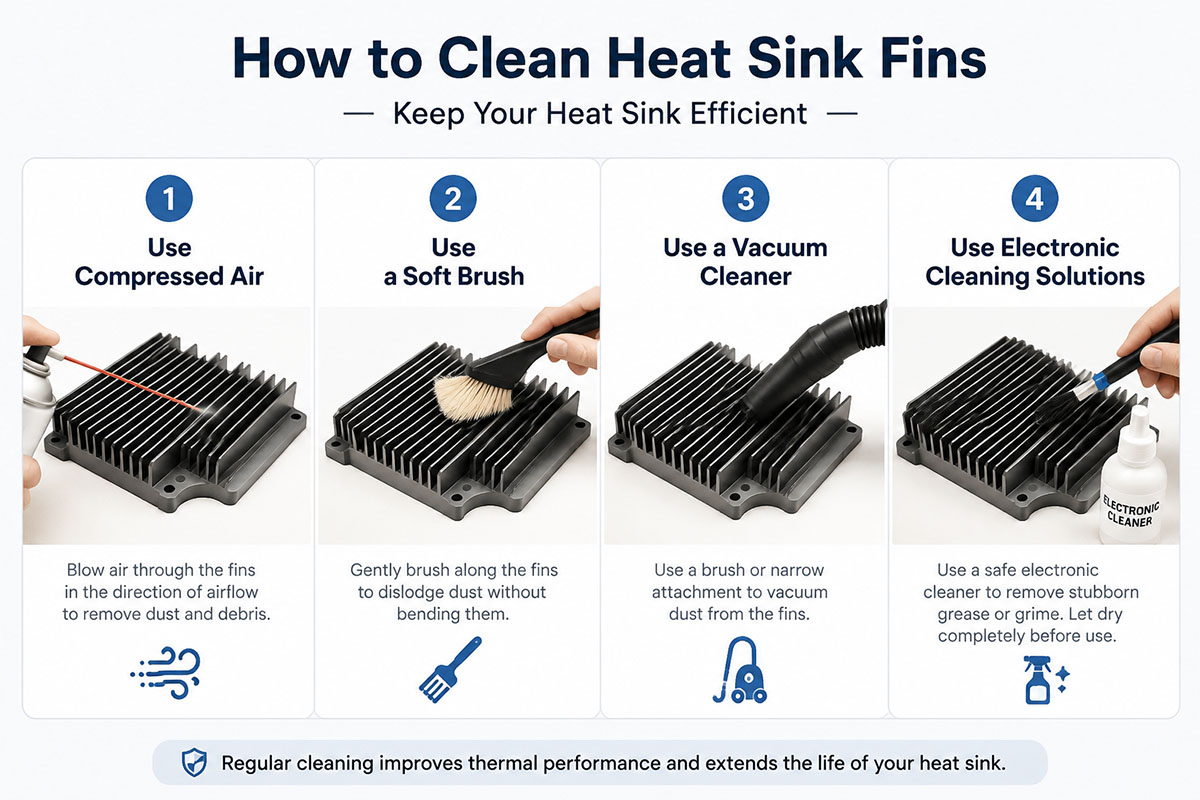
Use Compressed Air
Compressed air is one of the safest and most effective ways to clean heat sink fins.
Steps:
Turn off the equipment and disconnect the power supply.
Hold the heat sink securely.
Blow compressed air through the fin gaps.
Remove dust from multiple directions.
This method is widely used for:
Avoid using excessive air pressure, as it may damage delicate fins or cause fan overspeed.
Use a Soft Brush
For dust that is difficult to remove, a soft brush or anti-static brush can be used.
Recommended tools:
Gently remove dust from the spaces between fins to avoid bending the aluminum structure.
Use a Vacuum Cleaner
A small vacuum cleaner can effectively remove loose dust from large industrial heat sinks.
Vacuum cleaning is suitable for:
When using a vacuum cleaner, avoid applying excessive force directly to the fins.
Use Electronic Cleaning Solutions
For environments with oil, grease, or industrial contaminants, additional cleaning may be required.
Common cleaning solutions include:
After cleaning, make sure the heat sink is completely dry before reinstalling it.
How Often Should You Clean Heat Sink Fins?
The cleaning frequency depends on the working environment.
| Environment | Recommended Cleaning Frequency |
|---|
| Home Electronics | Every 6–12 months |
| Office Equipment | Every 6 months |
| Industrial Equipment | Every 3–6 months |
| Dusty Manufacturing Environment | Monthly or quarterly |
For high-power applications such as power electronics heat sinks, regular inspection is recommended to ensure stable thermal performance.
Tips to Improve Heat Sink Cooling Performance
Besides cleaning, several factors can improve heat sink efficiency.
Maintain Proper Airflow
Ensure there is enough space around the heat sink for air circulation.
Check Thermal Interface Materials
Thermal paste or thermal pads between the heat source and heat sink should be replaced when they become dry or degraded.
Avoid Damaging Cooling Fins
The fins are designed to maximize heat dissipation. Bent or damaged fins can reduce airflow performance.
Choose the Right Heat Sink Design
Different applications require different thermal solutions, including:
How Heat Sink Manufacturers Improve Fin Cleaning and Maintenance
Professional heat sink manufacturers consider maintenance requirements during the design stage.
A high-quality custom heat sink design may include:
Optimized fin spacing
Improved airflow channels
Easy-to-clean structures
Corrosion-resistant surface treatments
High thermal conductivity materials
As an experienced aluminum heat sink manufacturer, KINGKA provides customized thermal management solutions for electronics cooling applications.
Our products include:
Aluminum heat sinks
Skived fin heat sinks
Extrusion heat sinks
Die casting heat sinks
Custom heat sinks
FAQ
Q1: Can I clean heat sink fins without removing the heat sink?
A: Yes. For most electronic devices, compressed air can remove dust without removing the heat sink. However, deeper cleaning may require disassembly.
Q2: How do I remove dust from heat sink fins?
A: The most common methods are compressed air, soft brushes, and vacuum cleaners. For industrial contamination, electronic cleaning solutions may be required.
Q3: Can water be used to clean aluminum heat sinks?
A: Water is generally not recommended for installed electronic heat sinks because moisture can damage electronic components. If cleaning a standalone heat sink, it must be completely dried before use.
Q4: Why are my heat sink fins getting hot?
A: Heat sink fins are designed to transfer heat away from components, so they should become warm during operation. However, excessive temperature may indicate poor airflow, dust buildup, or insufficient thermal contact.
Q5: How can I improve heat sink cooling performance?
A: Regular cleaning, proper airflow, good thermal interface materials, and selecting the correct heat sink design can improve cooling efficiency.