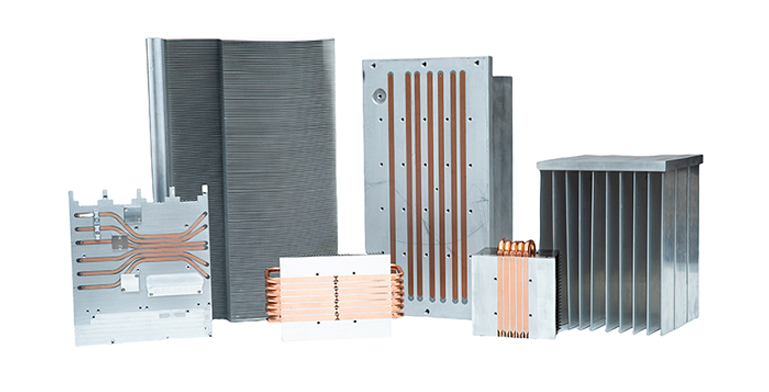
Choosing the right heat sink is critical for ensuring the reliability, efficiency, and lifespan of electronic devices. Whether you're designing a heat sink for power electronics, an EV battery system, or an AI server, selecting the appropriate cooling solution can significantly improve thermal performance and reduce the risk of overheating.This heat sink design guide explains how to choose a heat sink, how heat sinks work, the different types available, and when to consider a liquid cold plate instead of traditional air cooling. If you're looking for a custom heat sink manufacturer or reliable heat sink manufacturers, this guide will help you make an informed decision.
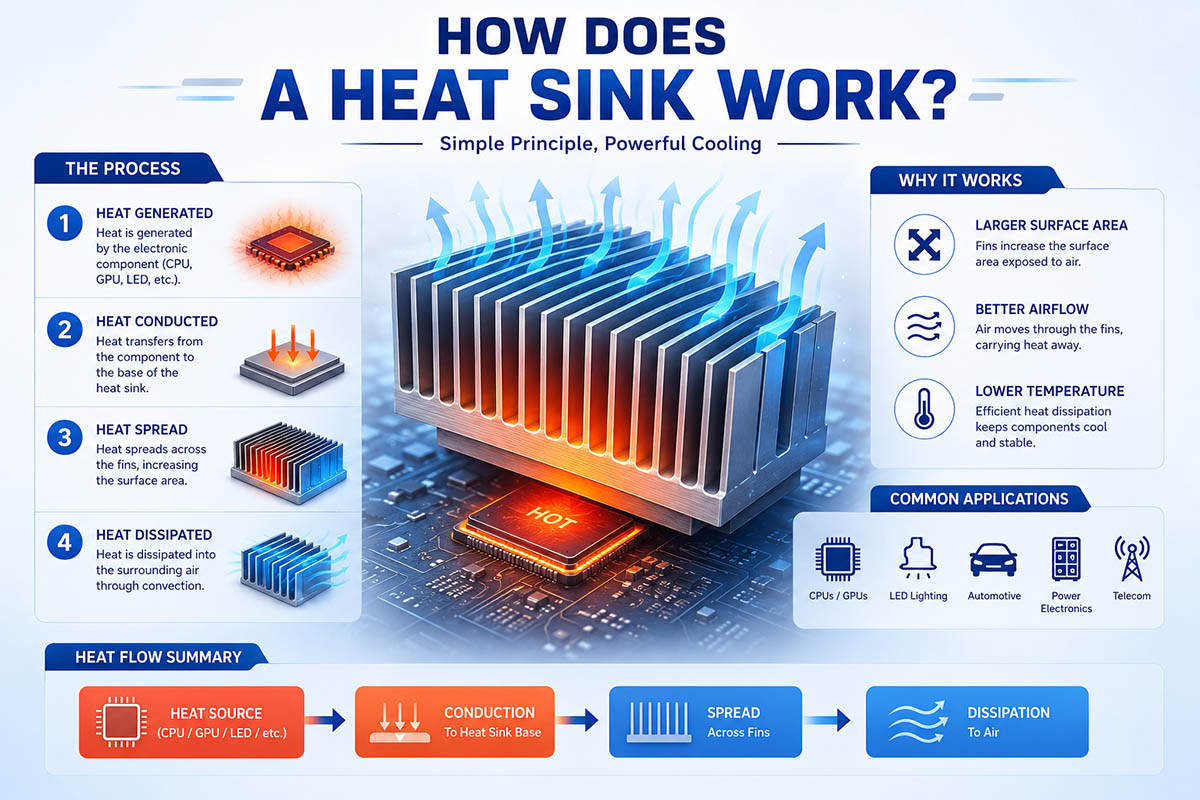 How Does a Heat Sink Work?
Before learning how to choose a heat sink, it's important to understand how does a heat sink work.
A heat sink transfers heat away from electronic components by increasing the surface area exposed to the surrounding environment. Heat generated by chips or power devices is conducted into the heat sink base and then dissipated through fins using either natural convection or forced airflow.
The effectiveness of a heat sink depends on several factors:
Proper thermal management helps maintain stable operating temperatures and improves product reliability.
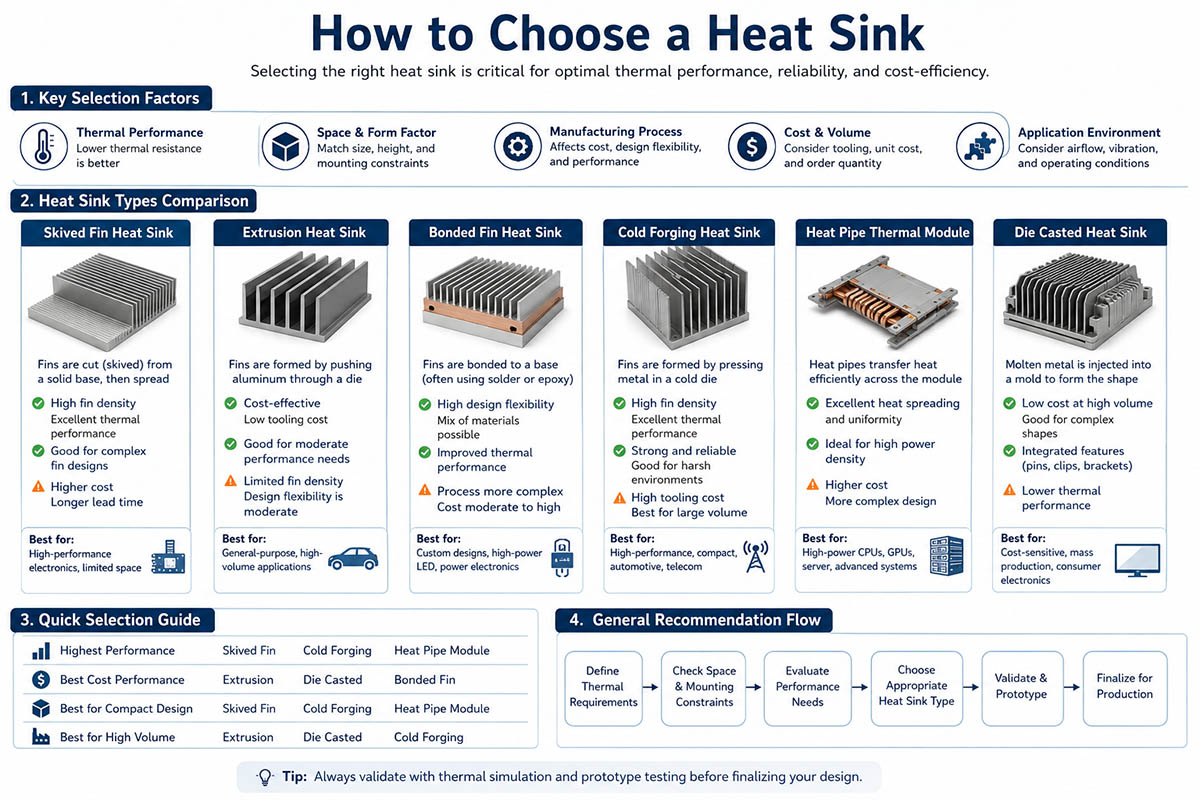
How to Choose a Heat Sink
Selecting the right heat sink requires evaluating both the application and operating environment.
1. Calculate Heat Dissipation Requirements
The first step is determining how much heat your device generates.
Important considerations include:
Component power consumption
Maximum allowable junction temperature
Ambient operating temperature
Target thermal resistance
Lower thermal resistance means better cooling performance.
Applications such as power electronics heat sink, industrial automation, and renewable energy systems typically require higher cooling efficiency.
2. Select the Right Heat Sink Material
Material selection directly affects cooling performance.
Aluminum Heat Sink
An aluminum heat sink is the most common choice because it offers:
Many companies choose an experienced aluminum heat sink manufacturer for customized designs.
Copper Heat Sink
A copper heat sink provides:
Copper is generally heavier and more expensive than aluminum, making it suitable for demanding applications.
3. Choose the Best Heat Sink Structure
Different heat sink structures provide different cooling capabilities.
An extruded heat sink is ideal for:
Advantages include:
A Skived Fin Heat Sink is manufactured by cutting thin fins directly from a solid metal block.
Benefits include:
It is widely used in:
Bonded Fin Heat Sink
A bonded fin heat sink joins individual fins to the base using thermal adhesives or brazing.
Advantages include:
Higher fin density
Larger cooling area
Flexible designs
Suitable for applications where extrusion limits cannot meet cooling requirements.
CNC Machined Heat Sink
A CNC machined heat sink provides maximum design flexibility.
Ideal for:
CNC machining also enables rapid prototyping and short lead times.
4. Consider Air Cooling or Liquid Cooling
Choosing between air cooling and liquid cooling depends on the amount of heat generated.
Air Cooling Heat Sink
An air cooling heat sink is suitable when:
Heat generation is relatively low
Adequate airflow is available
Maintenance should be simple
System cost is important
Air cooling is commonly used for:
Liquid Cold Plate
When air cooling reaches its limits, a liquid cold plate becomes the preferred solution.
Compared with traditional air cooling, cold plate cooling provides:
Liquid cooling is widely applied in:
5. Evaluate Installation Space
Available installation space determines the maximum heat sink dimensions.
Consider:
Length
Width
Height
Weight limitations
Mounting orientation
Airflow direction
Custom solutions are often required when installation space is limited.
6. Determine Whether a Custom Heat Sink Is Needed
Standard heat sinks do not always provide optimal cooling performance.
A custom heat sink is recommended when:
Product dimensions are unique
Heat load is unusually high
Space is limited
Special mounting methods are required
Weight reduction is important
Working with a professional custom heat sink manufacturer ensures the design matches your exact application.
Custom services typically include:
Custom heat sink design
Thermal simulation
Material selection
CNC machining
Surface treatment
Prototype production
Mass production
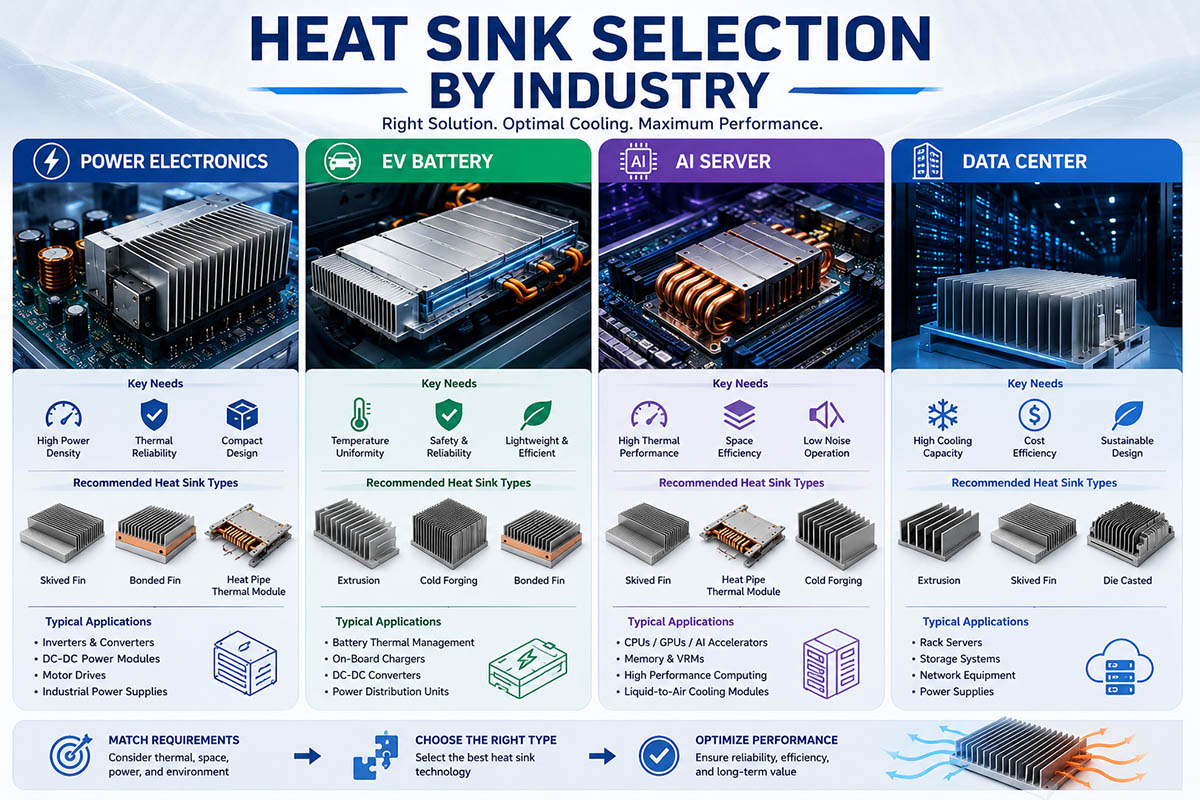 Heat Sink Selection by Industry
Heat Sink for Power Electronics
Power electronics generate continuous high heat loads.
Recommended solutions include:
Heat Sink for EV Battery
Electric vehicle battery systems require stable temperatures for safety and performance.
Recommended solutions:
Heat Sink for AI Server
AI servers produce extremely high thermal density.
Common cooling solutions include:
These solutions help maintain stable server performance while reducing energy consumption.
Why Choose a Professional Heat Sink Manufacturer?
Selecting an experienced heat sink manufacturer ensures:
Professional engineering support
Optimized thermal management
High manufacturing precision
Stable product quality
Short delivery times
Competitive pricing
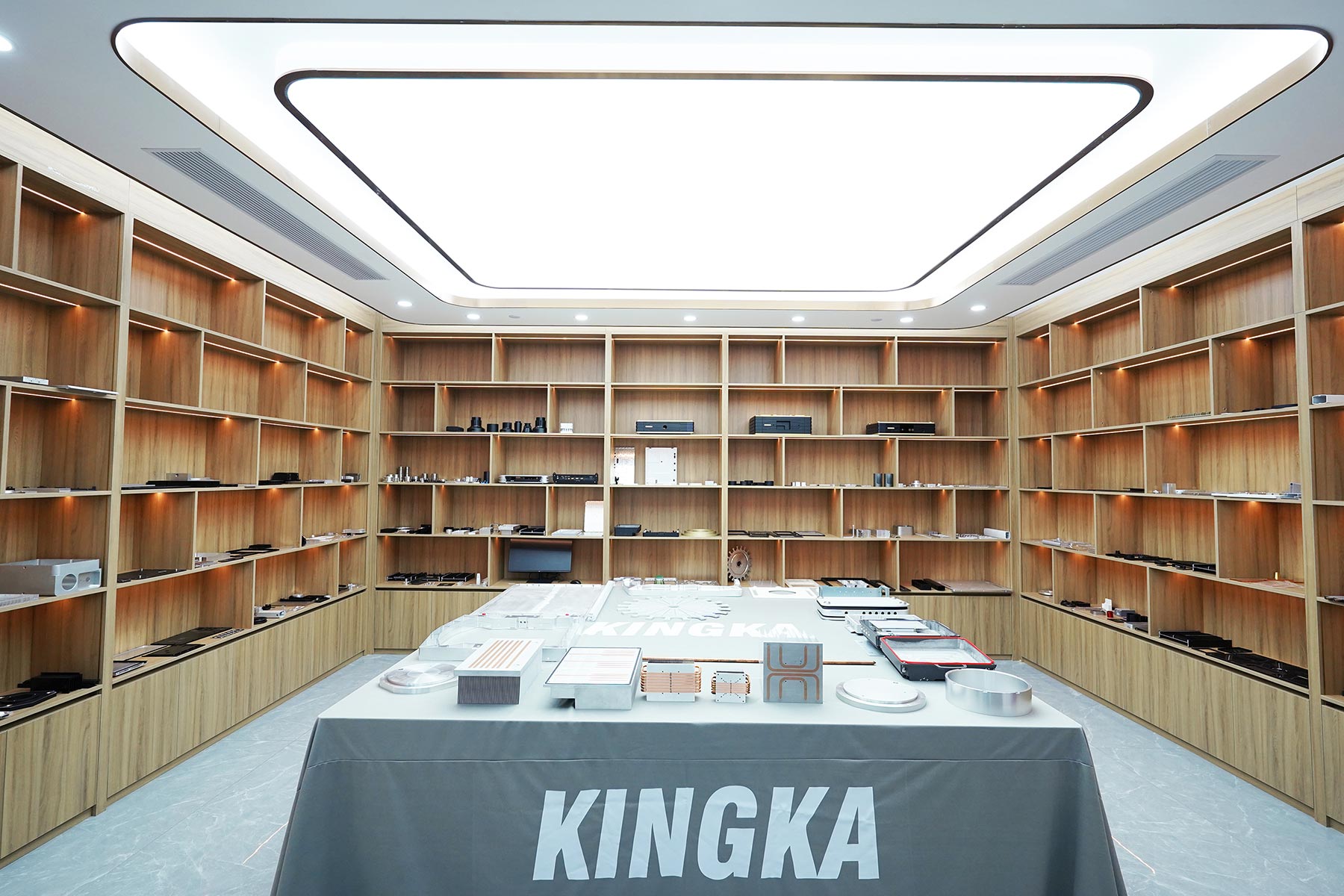
Reliable heat sink manufacturers also provide:Design consultation
Thermal simulation
Prototype validation
Full-scale production
Quality inspection
Global delivery
KINGKA – Your Trusted Heat Sink Supplier in China
KINGKA is a professional heat sink supplier China with extensive experience in manufacturing high-performance cooling components.
Our products include:
With advanced CNC machining, skiving, friction stir welding (FSW), brazing, and precision manufacturing capabilities, we provide complete thermal management solutions for industries including AI computing, electric vehicles, energy storage, telecommunications, power electronics, industrial automation, and medical equipment.
Whether you need a standard product or a fully customized solution, our engineering team can support your project from concept and custom heat sink design to prototype development and mass production.