As artificial intelligence (AI), cloud computing, and high-performance computing (HPC) continue to increase server power density, thermal management has become one of the biggest challenges for modern data centers. Efficiently distributing heat sinks is essential to prevent hotspots, improve cooling efficiency, lower energy consumption, and maintain stable server performance.
Whether using traditional aluminum heatsinks, copper heat sinks, or advanced liquid cooled heat sinks, proper heat sink placement can significantly improve data center cooling performance and reduce operating costs.
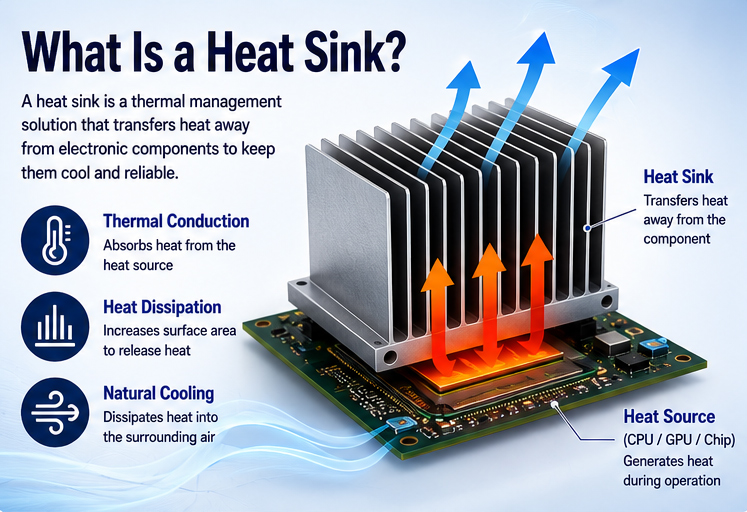 What Is a Heat Sink?
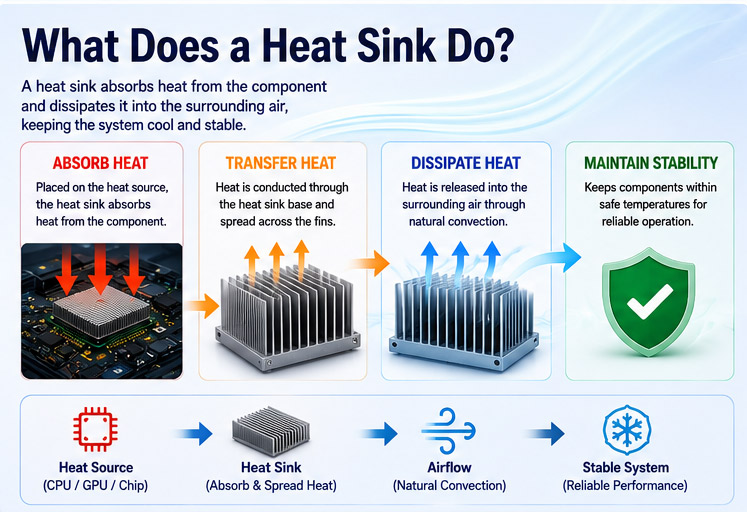
Before discussing distribution strategies, it is important to understand what is a heat sink and what does a heat sink do.
A heat sink is a thermal management component designed to absorb, spread, and dissipate heat generated by electronic devices. It transfers heat from CPUs, GPUs, power modules, and other high-power components into the surrounding air or cooling fluid.
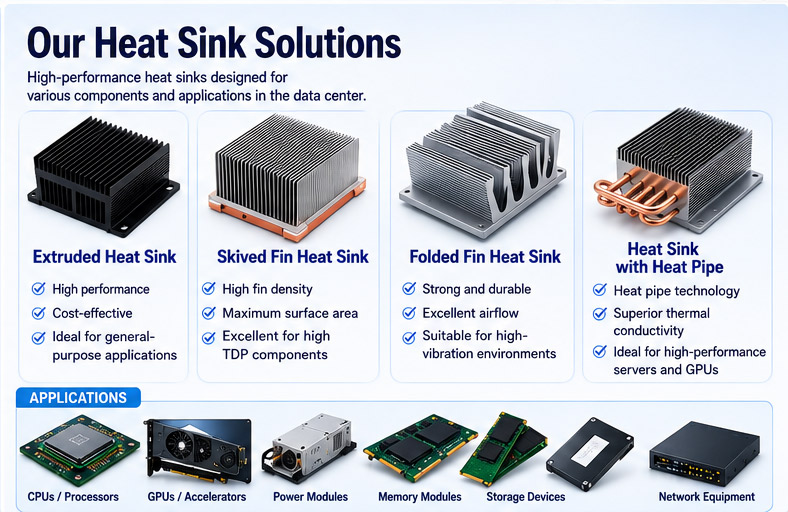
Common types of heat sinks for electronics include:
Each type offers unique advantages depending on heat load, airflow requirements, and application environments.
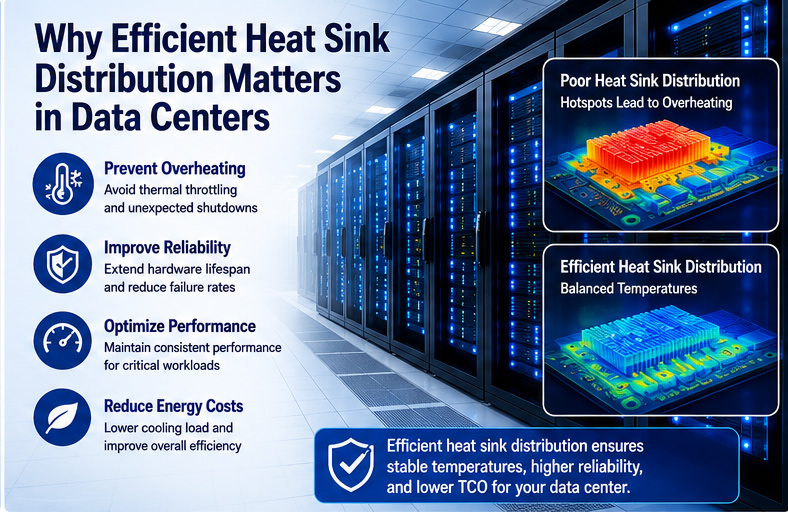 Why Efficient Heat Sink Distribution Matters in Data Centers
Modern data centers contain thousands of servers operating continuously. Improper heat sink distribution can lead to:
Hotspots (Hot Spots)
Uneven airflow
Increased fan power consumption
Higher Power Usage Effectiveness (PUE)
Reduced server reliability
Thermal throttling and performance degradation
Efficient heat sink distribution helps:
Improve airflow efficiency
Lower cooling energy consumption
Extend equipment lifespan
Enhance server stability
Support high-density AI and GPU deployments
1. Distribute Heat Sinks Based on Heat Density
Different servers generate different amounts of heat.
High-power equipment
Examples:
These applications often require:
Copper heat sink
Heatpipe heatsink
Cold plate heat sink
Liquid cooled heat sink
Standard computing equipment
Conventional servers can typically use:
Placing high-performance heat sinks in high-power racks prevents localized overheating.
2. Implement Hot and Cold Aisle Design
One of the most effective ways to distribute thermal heat sink systems is through hot and cold aisle containment.
Cold aisle
Receives cooled air directly from the cooling system.
Hot aisle
Collects heated exhaust air from servers.
Benefits include:
Improved cooling efficiency
Reduced air recirculation
Better temperature control
Lower operating costs
Properly distributing heat sink plates within these airflow paths maximizes heat removal efficiency.
3. Use Copper Heat Sinks for High-Density Racks
A copper heat sink offers significantly higher thermal conductivity than aluminum.
Advantages include:
Faster heat transfer
Reduced thermal resistance
Better hotspot management
Suitable for high-power CPUs and GPUs
Many heat sink manufacturers recommend custom copper heatsink solutions for AI servers and high-performance computing systems.
4. Utilize Advanced Heat Sink Technologies
Heatpipe Heatsink
A heatpipe heatsink uses phase-change technology to transfer heat rapidly across large surfaces.
Applications:
GPU servers
AI computing systems
Blade servers
A skived fin heat sink provides:
It is widely used in compact server environments.
Flexible Heat Sink
A flexible heat sink can adapt to irregular spaces and complex equipment layouts, making it useful for specialized electronic systems.
5. Adopt Liquid Cooling for High-Power Data Centers
As server power densities continue to rise, air cooling alone often becomes insufficient.
A liquid cooled heat sink or cold plate heat sink can directly remove heat from the source.
Benefits include:
Extremely high heat dissipation efficiency
Uniform temperature distribution
Lower noise levels
Reduced energy consumption
PUE below 1.2 in advanced facilities
Modern AI data centers increasingly rely on:
Cold plate heat sink systems
Direct-to-chip liquid cooling
Immersion cooling technologies
These solutions are becoming essential for next-generation data center thermal management.
6. Optimize Heat Sink Materials and Design
Aluminum Heat Sink Plate
An aluminum heat sink plate offers:
Lightweight construction
Cost efficiency
Corrosion resistance
Easy manufacturing
Aluminum Sink and Extrusions
Aluminum sink designs and aluminum heat sink extrusion products are commonly used because they provide an excellent balance between cost and performance.
Thermal Adhesive for Heat Sink
Using proper thermal adhesive for heat sink installation improves:
Selecting the right materials and interfaces ensures maximum cooling performance.
Work with Professional Heat Sink Manufacturers
Leading heat sink manufacturers can provide customized solutions, including:
Custom airflow analysis
CFD thermal simulations
Custom copper heatsink design
Heat sink extrusion manufacturing
Cold plate heat sink development
Liquid cooling integration
Customized thermal solutions are often necessary for modern high-density data centers.
Understanding what is a heat sink and what does a heat sink do is the foundation of efficient data center thermal management.
To efficiently distribute heat sinks in a data center, operators should:
Match heat sink types to server heat density.
Implement hot and cold aisle containment.
Use copper heat sinks for high-power equipment.
Adopt heatpipe heatsinks and skived fin heat sinks where appropriate.
Deploy cold plate heat sinks and liquid cooled heat sinks for AI and GPU clusters.
Optimize materials, airflow, and thermal interfaces.
As computing power continues to increase, strategic deployment of heat sinks for electronics will remain a critical factor in improving cooling efficiency, reducing PUE, and ensuring reliable data center operations.