A liquid cooling system is an advanced thermal management solution designed to remove heat from high-power electronic components more efficiently than traditional air cooling. It is widely used in applications such as power electronics, EV battery systems, data centers, and AI servers, where heat density is too high for standard heat sinks.
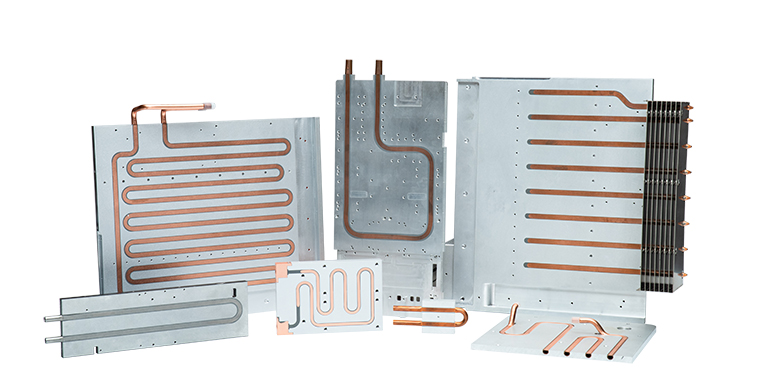
At the core of most modern liquid cooling systems is the Liquid Cold Plate, which directly absorbs heat from electronic devices and transfers it to a circulating coolant.
 What is a liquid cooling system?
A liquid cooling system is a heat dissipation system that uses a circulating fluid (such as water, glycol, or dielectric coolant) to absorb and transfer heat away from electronic components.
Compared with air cooling, cold plate cooling provides:
Higher heat transfer efficiency
Lower thermal resistance
More stable temperature control
Better performance in compact designs
A typical system includes:
 How does a liquid cooling system work?
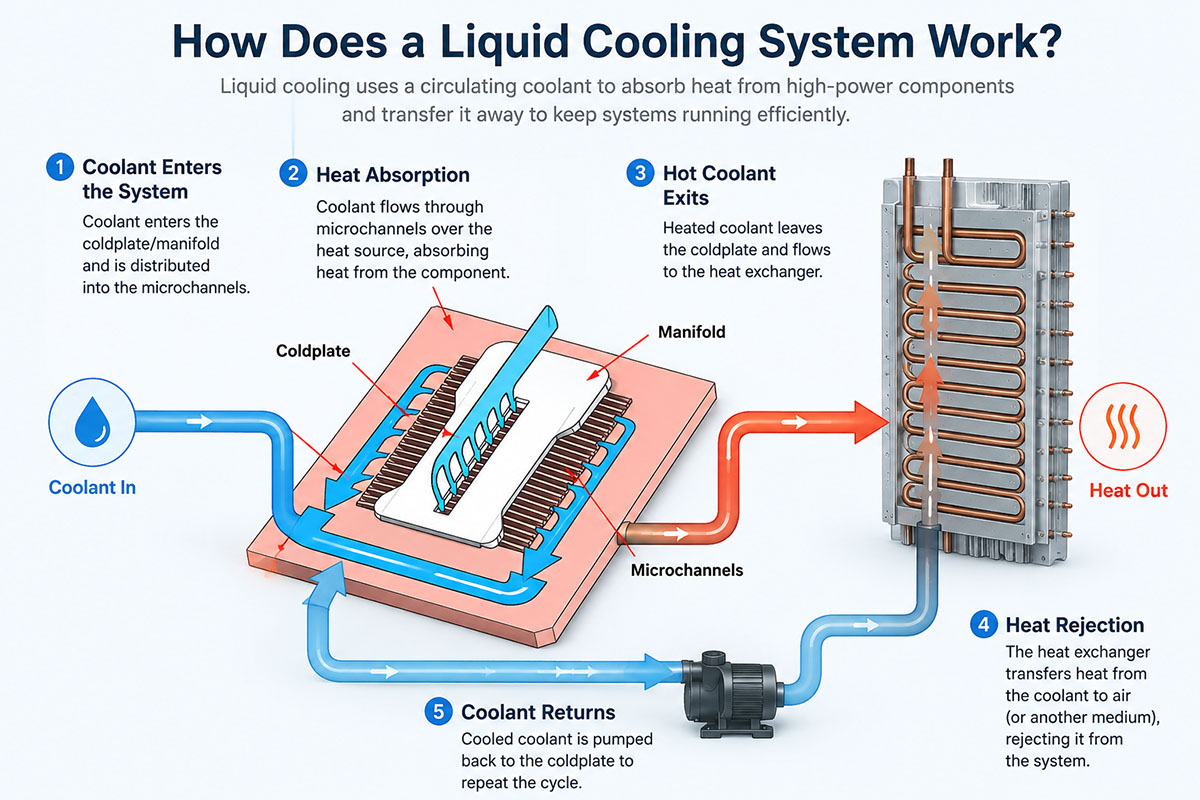
A liquid cooling system works through a continuous heat transfer cycle:
1. Heat absorption at the cold plate
The heat source (such as a CPU, inverter, or battery module) is mounted on a liquid cold plate.
The cold plate heat sink (also called water cooling block or cooling water block) absorbs heat through direct contact.
Common structures include:
Aluminum liquid cold plate
CNC machined cooling block
Brazed or friction stir welded designs
2. Heat transfer inside the liquid cold plate
Inside the Liquid Cooling Plate, internal channels allow coolant to flow and carry heat away.
This process is also referred to as:
High-performance designs reduce thermal resistance and improve efficiency in liquid cooling cold plate for electronics applications.
3. Coolant circulation
A pump pushes coolant through the system, moving heat from the liquid cold plate to a heat exchanger.
This system may also be called:
4. Heat rejection
The heated coolant passes through a radiator or heat exchanger, where heat is released into the air or secondary cooling loop.
After cooling, the fluid returns to the system and repeats the cycle.
 What is a liquid cold plate?
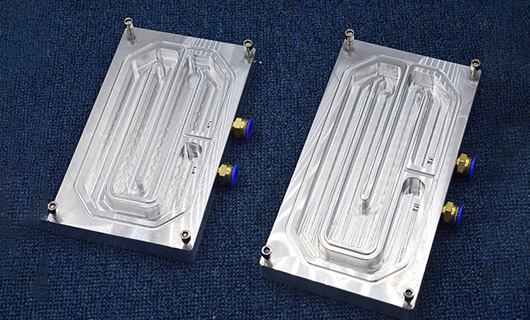
A liquid cold plate is a key component of a liquid cooling system that transfers heat from electronic devices to a flowing coolant.
It is also known as:
water cooling block
cooling block
cold plate heat sink
Types include:
A professional liquid cold plate manufacturer designs these structures to maximize thermal performance and reliability.
 What are the benefits of a cold plate?
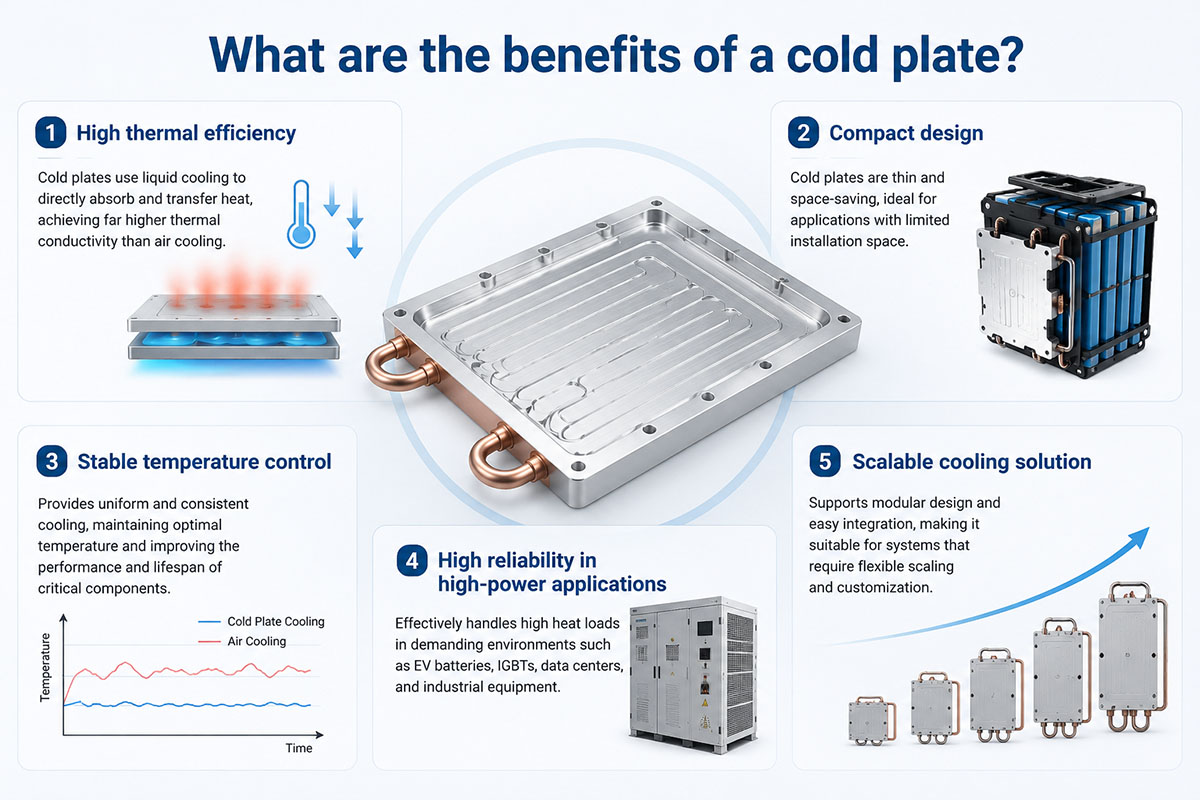
A Cold Plate Cooling System offers several advantages over traditional air cooling:
1. High thermal efficiency
Liquid has much higher heat capacity than air, enabling faster heat transfer and lower thermal resistance.
2. Compact design
A liquid cooling plate allows high-power systems to be designed in smaller spaces.
3. Stable temperature control
Ideal for sensitive applications like:
4. High reliability in high-power applications
Supports continuous operation in demanding environments.
5. Scalable cooling solution
A cold plate cooling solution can be customized for different power levels and layouts.
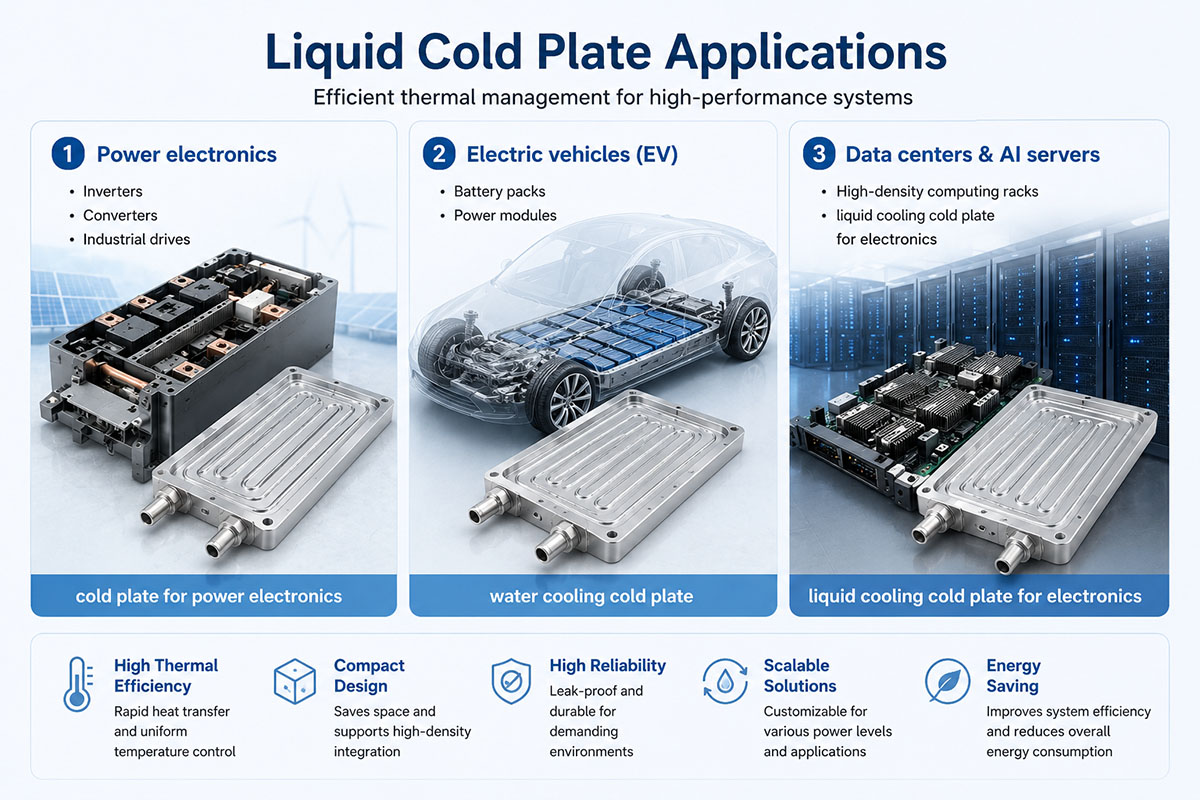 Liquid cold plate applications
Liquid cooling is widely used in modern industries:
Power electronics
Electric vehicles (EV)
Data centers & AI servers
Custom liquid cold plate solutions
Standard products cannot always meet system requirements. That is why many industries require a custom liquid cold plate.
A professional liquid cold plate supplier or liquid cold plate manufacturer can provide:
Custom design based on thermal load
CFD thermal simulation
Material selection (aluminum or copper)
CNC machining & brazing processes
Prototype and mass production
These liquid cold plates are optimized for performance, cost, and reliability.
Why choose a professional liquid cold plate manufacturer?
Working with an experienced liquid cold plate manufacturer ensures:
Optimized thermal performance
Precise manufacturing control
Stable mass production capability
Engineering support for thermal design
Reliable quality for industrial applications
A trusted liquid cold plate supplier can support projects from prototype to large-scale production.
A liquid cooling system works by transferring heat from electronic components into a circulating coolant through a liquid cold plate, then dissipating that heat through a heat exchanger.
Compared with air cooling, cold plate cooling provides significantly better performance, making it essential for modern high-power applications such as EVs, AI servers, and power electronics.
Whether you need a standard liquid cooling plate or a fully customized high performance liquid cold plate, working with an experienced manufacturer ensures optimal thermal management and system reliability.