Liquid cooling cold plates are advanced Thermal Management devices designed to dissipate heat from high-power electronic components. Made from materials with high thermal conductivity such as aluminum cold plates and copper cold plates, these systems use circulating liquid coolant to efficiently transfer heat away from the source and maintain stable operating temperatures.
Compared with traditional air cooling, liquid cooling cold plates provide significantly higher heat dissipation performance, making them essential for modern high-power density applications.
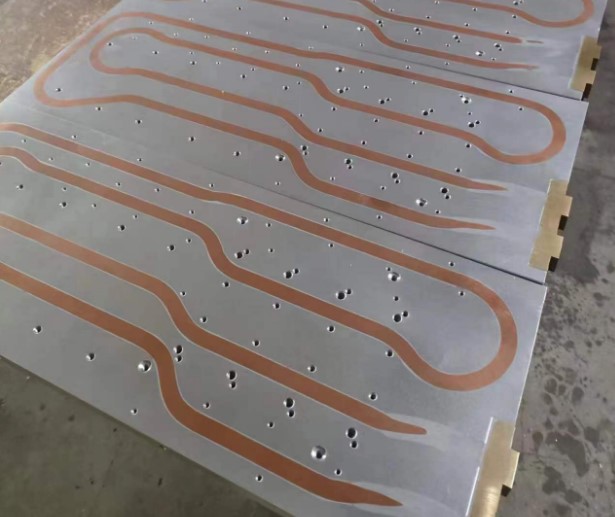
What is a liquid cooling cold plate?
A Liquid Cold Plate is a heat exchanger that uses internal coolant channels to absorb and remove heat generated by electronic components.
The working principle is based on a continuous heat transfer cycle:
Heat is generated by electronic devices (CPU, GPU, battery, IGBT, power modules)
Liquid coolant flows through embedded channels inside the cold plate
Heat is absorbed by the coolant
Heated liquid is circulated to a remote heat exchanger
Cooled liquid returns to repeat the cycle
This process makes liquid cooling cold plates far more efficient than air-based cooling systems.
How liquid cooling cold plates work
The structure of a liquid cooling cold plate system is designed to maximize thermal transfer efficiency.
Inside the plate, specially designed channels increase the contact area between the coolant and the metal surface. As coolant flows through these channels, it absorbs heat directly from the heat source.
Key working features include:
High surface contact efficiency
Continuous coolant circulation
Stable thermal performance
Rapid heat removal from hotspots
This ensures effective thermal management system performance even under high loads.
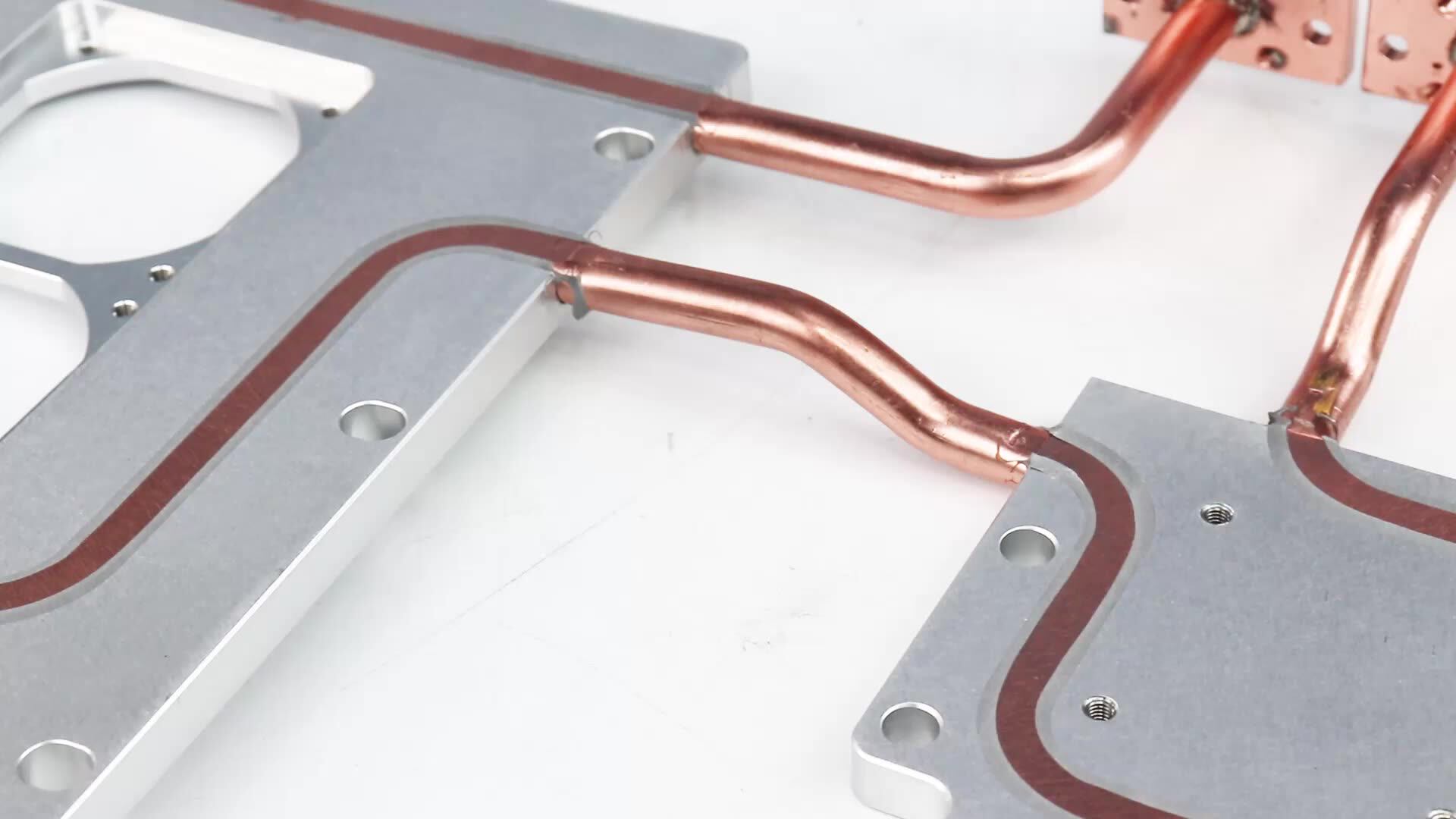 Advantages of liquid cooling cold plates
1. Superior heat dissipation efficiency
Liquid has a much higher specific heat capacity than air, allowing liquid cooling cold plates to remove heat far more effectively than traditional air cooling systems.
2. Excellent temperature control
They provide stable and uniform temperature distribution, reducing hot spots and preventing thermal throttling.
3. Low noise operation
Unlike air cooling systems that rely on fans, liquid cooling systems operate quietly, making them ideal for data centers and sensitive environments.
4. High reliability and longer lifespan
By maintaining optimal operating temperatures, liquid cooling reduces thermal stress and improves component reliability.
5. Energy efficiency
Liquid cooling systems can significantly reduce overall energy consumption and improve PUE in data centers.
Why choose liquid cooling over air cooling?
Compared with traditional air cooling systems, liquid cooling offers major performance improvements:
| Feature | Air Cooling | Liquid Cooling Cold Plates |
|---|
| Heat dissipation | Limited | High efficiency |
| Noise level | High | Low |
| Temperature distribution | Uneven | Uniform |
| High-power capability | Weak | Strong |
Liquid cooling can directly transfer heat from the source, making it ideal for high power cooling solutions such as EV batteries, servers, and industrial electronics.
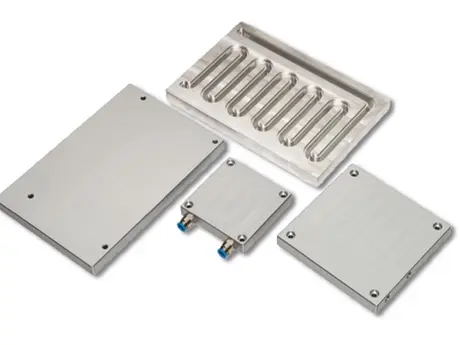
Types of liquid cooling cold plates
Different designs of Liquid Cold Plates are used depending on application requirements:
Tube-in-plate cold plate: Suitable for low to medium heat loads
Flat tube cold plate: Commonly used in EV battery cooling systems
Brazed cold plate: High-performance applications with complex channel structures
Friction stir welded cold plate: Ideal for harsh and vibration environments
CNC-machined cold plate: Precision cooling for medical and advanced electronics
Each type offers different advantages in terms of performance, cost, and durability.
Application areas of liquid cooling cold plates
Liquid cooling cold plates are widely used across industries that require advanced thermal management:
Electric vehicles (EV/HEV battery cooling systems)
Energy storage systems (ESS liquid cooling systems)
Data centers and AI computing servers
IGBT and power electronics cooling
Aerospace and UAV systems
Industrial automation equipment
Medical devices and laser systems
5G communication and telecom base stations
These applications all rely on stable and efficient liquid cooling technology to ensure performance and safety.
In summary, liquid cooling cold plates are a critical solution for modern thermal management challenges. Their advantages include:
High heat dissipation efficiency
Uniform temperature control
Low noise operation
Compact system design
Strong adaptability for high-power applications
As demand for high-performance computing, EVs, and energy storage continues to grow, liquid cooling cold plate technology will remain a key driver in advanced cooling system development.