A heat sink is one of the most important thermal management components used in electronics and industrial equipment. Its main function is to absorb heat generated by electronic devices and transfer that heat into the surrounding air, preventing overheating and ensuring stable performance. Heat sinks are widely used in computers, LED lighting, automotive electronics, power supplies, industrial machinery, telecommunications equipment, and renewable energy systems.
Why Heat Sinks Are Important
Modern electronic components generate a significant amount of heat during operation.
For example:
High-performance CPUs can generate over 100W of heat
Power LEDs convert part of electrical energy into heat
Power transistors and inverters may operate at very high temperatures
If this heat is not removed efficiently:
Electronic performance decreases
Components age faster
System instability may occur
Permanent damage can happen
A heat sink solves this problem by improving heat dissipation efficiency.
The Basic Working Principle of a Heat Sink
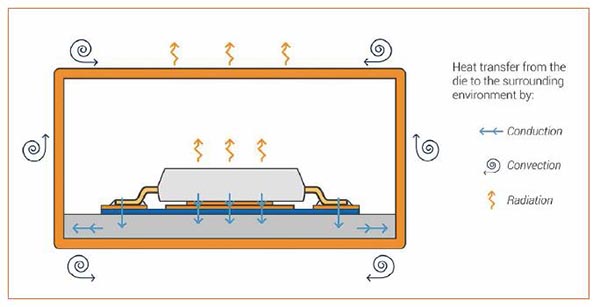
A heat sink works through three main thermal transfer processes:
Conduction
Heat Spreading
Convection
These processes work together to move heat away from sensitive electronic components.
 1. Heat Conduction: Moving Heat Away from the Source
The first stage is heat conduction.
When an electronic device operates, its semiconductor junction generates heat. This heat travels from the component into the heat sink through direct physical contact.
This process is based on the principle of thermal conduction.
Materials with high thermal conductivity transfer heat more efficiently.
| Material | Thermal Conductivity |
|---|
| Copper | ~400 W/m·K |
| Aluminum | ~205 W/m·K |
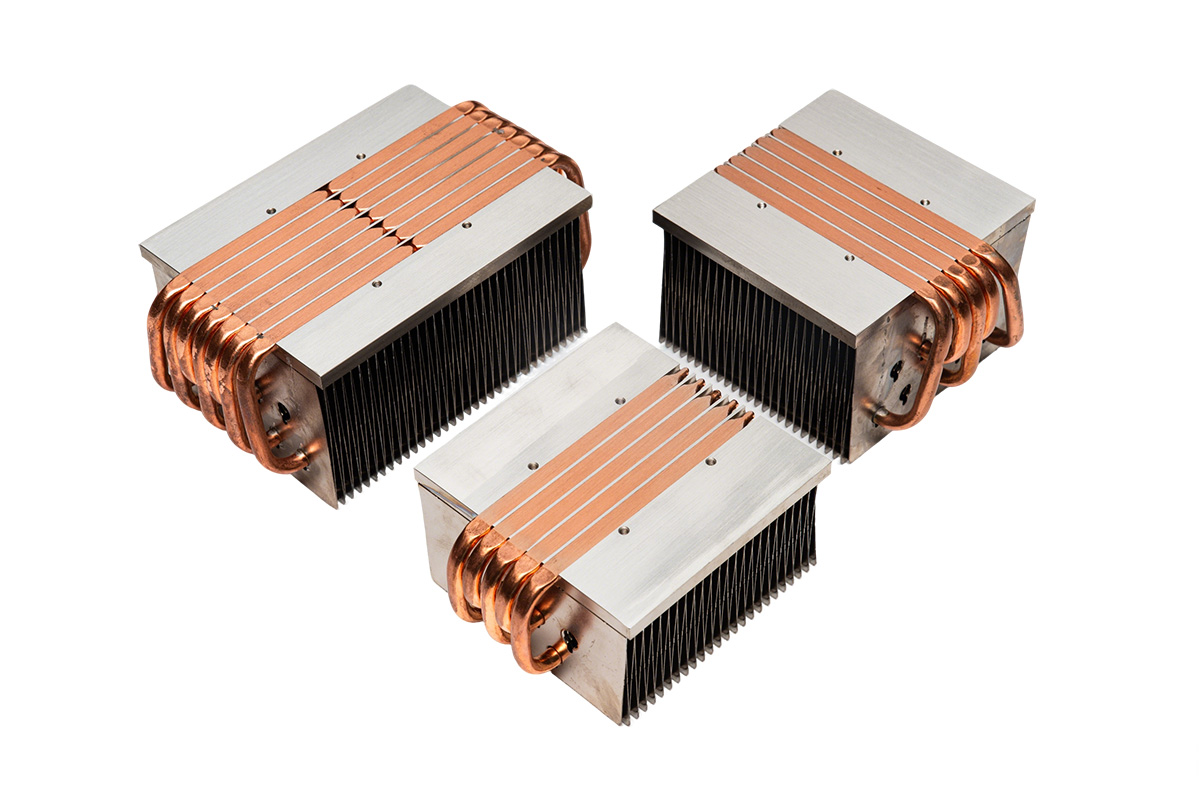
Copper transfers heat faster, while aluminum is lighter and more cost-effective. Many Industrial Heat Sinks use aluminum because it provides a good balance between performance, weight, and manufacturing cost.
Between the chip and the heat sink, manufacturers often apply:
Thermal grease
Thermal pads
Phase-change materials
These materials fill microscopic air gaps and improve thermal contact efficiency.
2. Heat Spreading Inside the Heat Sink
After heat enters the heat sink base, it spreads across the metal body.
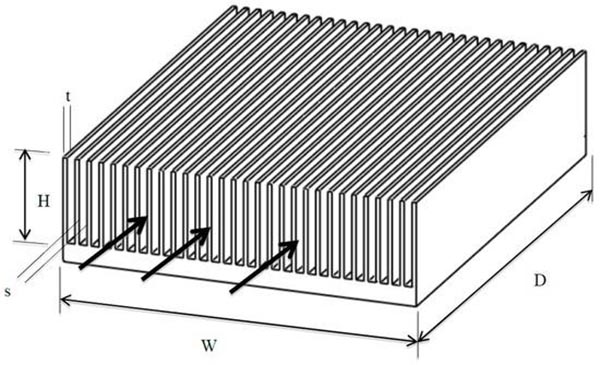
Heat Sink Structure
The heat sink distributes thermal energy from the hot spot toward a larger surface area.
This is why heat sinks are designed with:
Multiple fins
Extended surfaces
Optimized fin spacing
The purpose is simple:
Larger surface area = better heat dissipation
The fin design dramatically increases the amount of air contacting the metal surface.
Different Fin Structures Include
Straight fins
Pin fins
Skived fins
Folded fins
Bonded fins
Each design is optimized for specific airflow conditions and thermal requirements.
3. Convection: Releasing Heat into the Air
Once heat spreads throughout the heat sink, it must leave the metal and enter the surrounding air.
This occurs through convection.
There are two main convection methods:
Natural Convection
Natural convection relies on hot air rising naturally.
As the heat sink warms the surrounding air:
This creates continuous airflow without using a fan.
Common Applications
Forced Convection
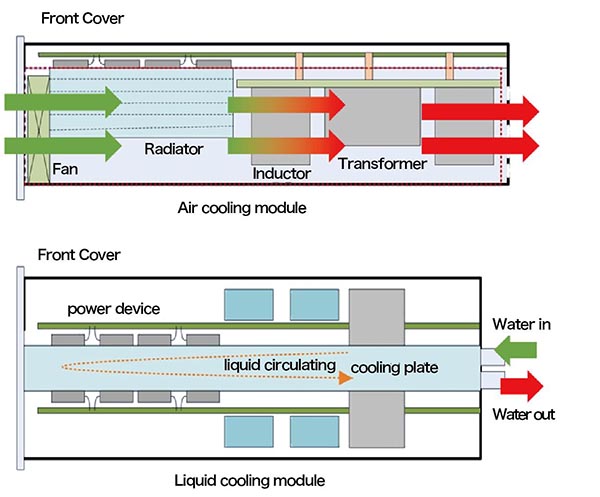
Forced convection uses fans or blowers to move air.
The airflow increases heat transfer efficiency significantly.
Applications Include
Forced-air systems can improve cooling performance several times compared to passive cooling alone.
Heat Sink Efficiency Factors
Several factors affect how well a heat sink performs.
Airflow and Cooling Performance
1. Surface Area
More fin area means more heat can transfer into the air.
2. Material Type
Copper offers better thermal conductivity, while aluminum offers lower weight and cost.
3. Airflow Speed
Higher airflow removes heat faster.
4. Fin Spacing
Fin spacing must match airflow conditions:
5. Ambient Temperature
Heat sinks perform better in cooler environments.
6. Thermal Interface Quality
Poor contact between the component and heat sink increases thermal resistance.
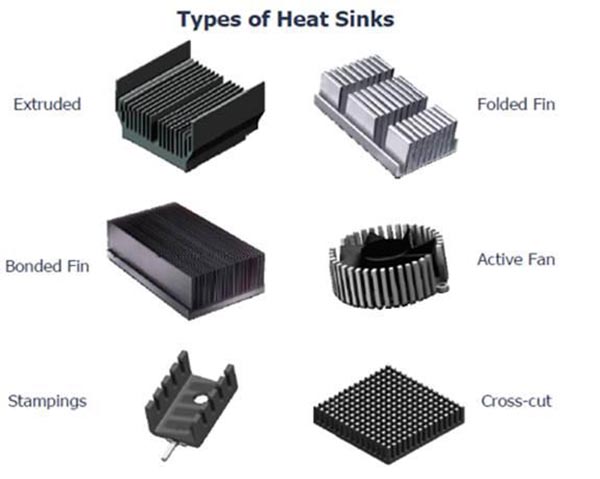 Common Types of Heat Sinks
Passive Heat Sinks
These use only natural airflow.
Advantages
Silent operation
No moving parts
Long lifespan
Applications
LED lamps
Industrial controllers
Outdoor electronics
Active Heat Sinks
These combine a heat sink with a fan.
Advantages
Higher cooling capacity
Compact size possible
Applications
CPUs
GPUs
Servers
Gaming systems
Liquid-Cooled Heat Sinks
Advanced systems use liquid circulation to remove heat.
Applications
Heat Sink Manufacturing Methods
Modern heat sinks are produced using several technologies.
Skiving creates very thin fins from a solid metal block.
CNC Machined Heat Sinks
Used for custom designs and precision applications.
Die-Cast Heat Sinks
Suitable for complex shapes and mass production.
Applications of Heat Sinks
Common Heat Sink Applications
LED Lighting
High-power LEDs require efficient thermal management to maintain brightness and lifespan.
Computers
CPUs and GPUs generate large amounts of heat during processing.
Automotive Electronics
Electric vehicles and onboard electronics rely heavily on heat sinks.
Renewable Energy
Solar inverters and wind power systems use heat sinks for power conversion modules.
Industrial Automation
Motor drives and industrial control systems require stable thermal management.
Maintenance of Heat Sinks
Proper maintenance helps maintain cooling efficiency.
Recommended Maintenance Includes
Dust accumulation can reduce cooling performance significantly by blocking airflow.
A heat sink works by transferring heat away from electronic components through conduction, spreading the heat across a larger surface area, and releasing it into the surrounding air through convection. Its efficiency depends on material selection, fin structure, airflow design, and thermal interface quality.
As electronic devices become more powerful and compact, heat sink technology continues to evolve. Modern thermal solutions now combine advanced materials, optimized airflow engineering, and precision manufacturing to achieve higher cooling performance in increasingly demanding applications.
Without heat sinks, many modern electronic systems would quickly overheat and fail. They remain one of the most essential components in thermal management and electronic reliability.