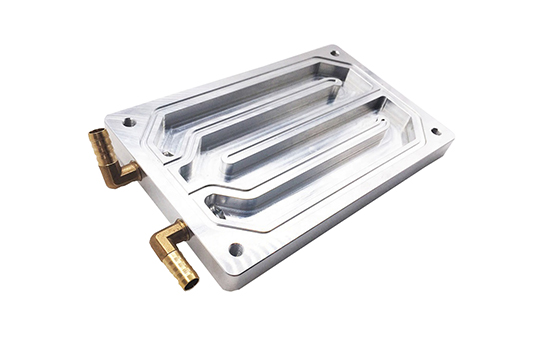
With the rapid development of modern technology, electronic devices continue to achieve higher performance and greater power density. As a result, thermal management challenges are becoming increasingly critical. In high-performance servers, AI systems, electric vehicles, power electronics, and industrial equipment, traditional air cooling methods are often no longer sufficient. This is why liquid cooling solutions have become an essential technology in modern thermal management systems.
Compared with air cooling, a Liquid Cooling Plate system uses the high heat capacity and excellent thermal conductivity of liquid to remove heat more efficiently from the heat source. This allows equipment to operate more stably while extending service life. In addition, liquid cooling systems typically operate more quietly, making them ideal for noise-sensitive environments.
At the center of every cold plate cooling system is the Liquid Cold Plate itself. Acting as the bridge between the heat source and the coolant, the performance of the cold plate directly determines the efficiency and reliability of the entire system. Understanding how liquid cold plates work is therefore the first step toward understanding advanced liquid cooling technology.
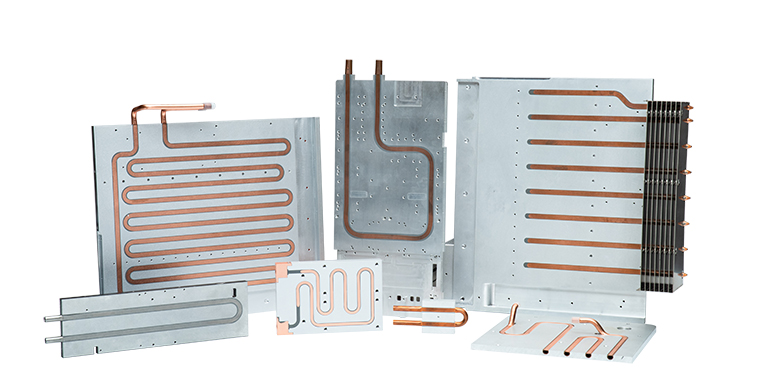
A liquid cold plate is a thermal management component designed to transfer heat from electronic devices or power systems into circulating coolant. It is commonly used in cold plates for electronics, EV battery systems, industrial power modules, CPUs, and high-performance computing equipment.
The basic structure usually consists of:
As coolant flows through the internal channels, heat from the device is transferred into the liquid and carried away from the heat source.
Common materials include:
Because of its excellent heat transfer capability, Cold Plate Liquid Cooling has become one of the most effective cooling methods available today.
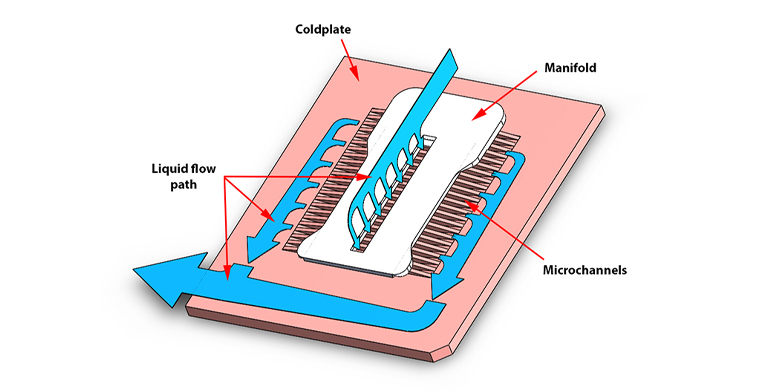 How Liquid Cold Plates Work
Many engineers and users ask: “Does liquid cooling actually work?”
The answer is yes. Liquid cooling is significantly more efficient than traditional air cooling in high-heat-density applications.
A complete Cold Plate Cooling System generally consists of:
Pump
Reservoir
Liquid cold plate
Radiator
Cooling fan
Tubing
The working process is relatively straightforward:
The pump circulates coolant throughout the system.
The coolant enters the liquid cooled cold plate and absorbs heat from the heat source.
Heated coolant flows to the radiator.
The radiator dissipates heat into the surrounding air with fan assistance.
The cooled liquid returns to the system and repeats the cycle.
In this process, the coolant continuously carries thermal energy away from the device.
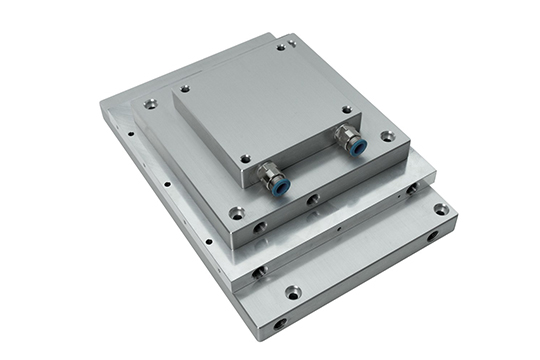
Why Use a Cold Plate?
Compared with traditional air cooling, cold plate cooling offers several major advantages:
Higher Heat Transfer Efficiency
Liquids have much higher thermal capacity than air, allowing water cooling plates to remove large amounts of heat quickly.
Compact Thermal Management
A water cooled cold plate can manage high thermal loads in confined spaces where traditional heatsinks and fans are insufficient.
Lower Noise
Because liquid cooling relies less on high-speed airflow, systems can operate much more quietly.
Better Temperature Uniformity
Liquid cold plates help reduce hot spots and maintain stable operating temperatures across sensitive components.
These advantages explain why battery liquid cold plate systems are widely used in electric vehicles and energy storage systems.
Coolant Selection in Liquid Cooling Systems
Although pure water is inexpensive and has good thermal conductivity, it can easily cause oxidation and corrosion inside the system.
Therefore, most liquid cooling plate systems use specially formulated coolants that include:
Proper coolant selection helps improve both system reliability and thermal performance.
Liquid Cold Plate Design Considerations
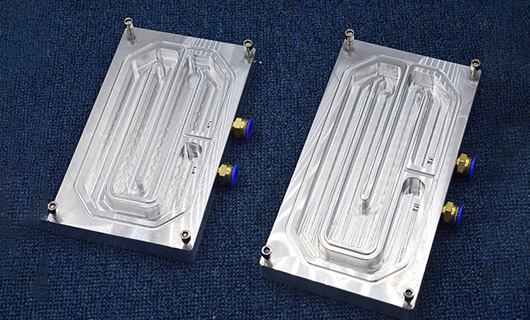
The performance of a liquid cold plate design depends heavily on its internal structure and manufacturing method.
A well-designed custom liquid cold plate must balance:
Thermal performance
Fluid resistance
Structural strength
Manufacturing cost
Key design factors include:
1. Heat Exchange Efficiency
The coolant should contact the heated surface as effectively as possible. Advanced channel structures such as microchannels or fin arrays are commonly used to improve thermal transfer.
2. Fluid Dynamics
Internal channels must balance coolant velocity and pressure drop. Excessive flow resistance increases pump load, while insufficient flow reduces cooling efficiency.
3. Manufacturing Process
Different manufacturing methods affect cost, durability, and performance.
Common production methods include:
4. Material Selection
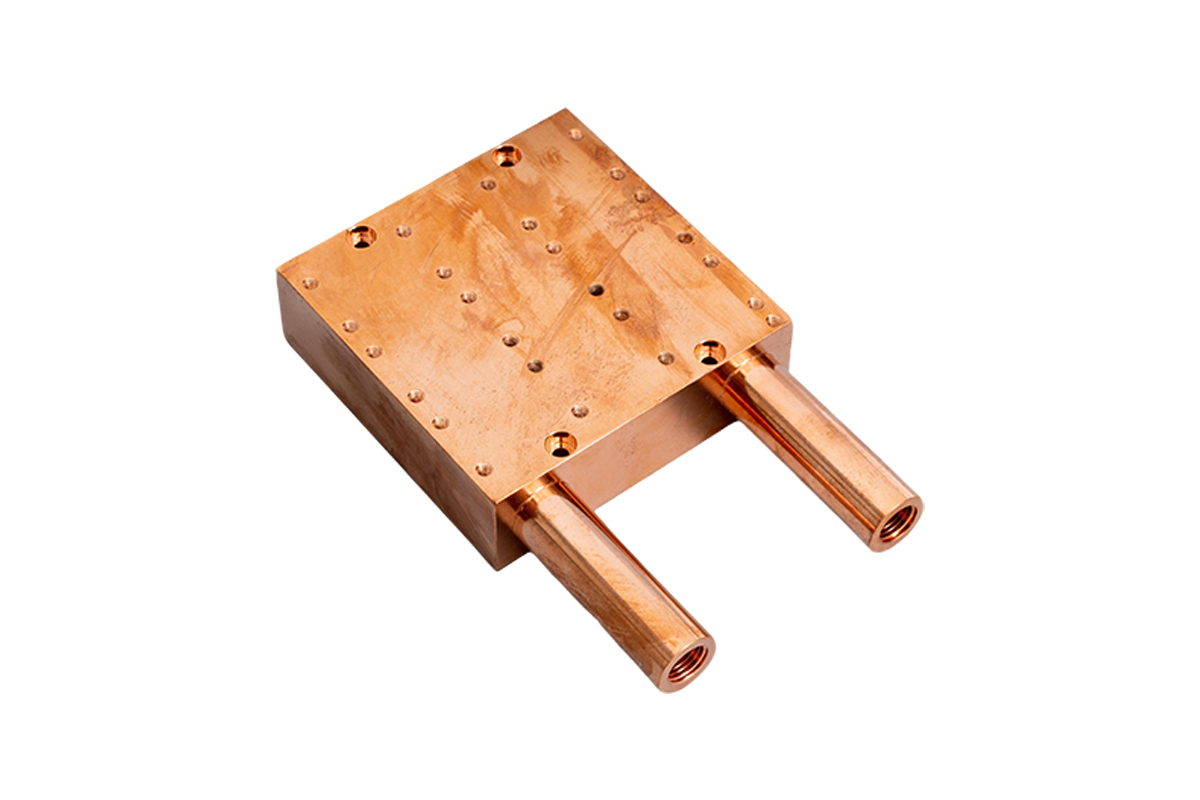
Copper cold plate designs provide superior thermal conductivity and are widely used in high-performance systems.
Aluminum designs are lighter and more economical, though their thermal conductivity is lower and galvanic corrosion must be considered.
Common Types of Liquid Cold Plates
Friction Stir Welding technology creates highly reliable sealed structures with excellent thermal performance and mechanical strength. These are commonly used in EV batteries and industrial power electronics.
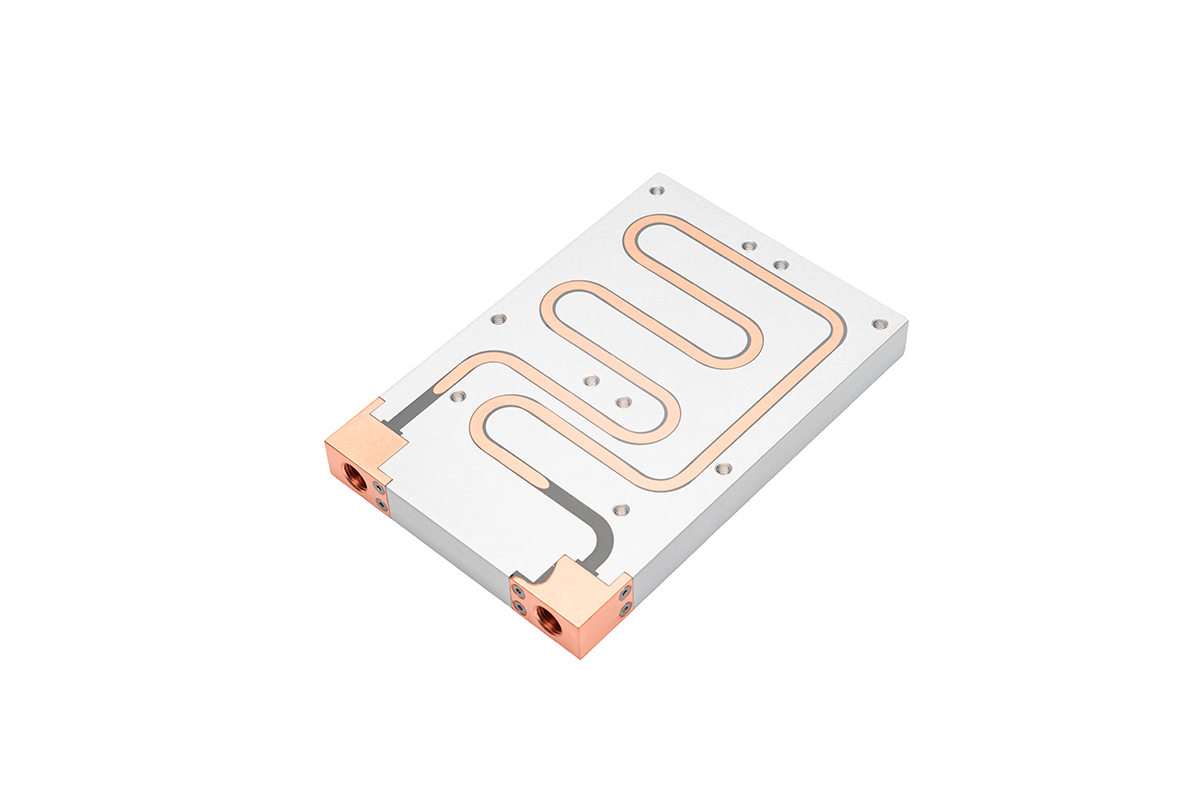
The tubed cold plate is one of the most traditional water cooling plate designs.
In this approach, copper or aluminum tubes are bent into S-shaped or U-shaped paths and attached to a conductive base plate.
Advantages:
Applications:
Industrial inverters
Power supplies
Large electrical systems
However, because the tube diameter is relatively large and the flow path includes many bends, thermal uniformity is lower and localized hot spots may occur.
 3. Folded Fin Liquid Cooling Plate
Folded fin structures use wave-shaped or zigzag metal fins to increase heat transfer area and create turbulence inside the coolant flow.
Advantages:
Balanced thermal performance
Moderate manufacturing cost
Suitable for medium-scale production
Applications:
This design achieves a good balance between cooling efficiency and fluid resistance.
4. Pin Fin Cold Plate
Pin fin liquid cold plates contain densely arranged cylindrical or pin-shaped fins.
These structures significantly improve turbulence and heat transfer efficiency.
Common fin shapes include:
Rectangular
Circular
Elliptical
Advantages:
Disadvantages:
5. Skived Fin Water Cold Plate
Skived fin technology cuts fins directly from a single metal block.
Because the fins and base are integrated into one structure, thermal resistance between components is eliminated.
Advantages:
Excellent thermal conductivity
Strong structural integrity
Efficient for mass production
Disadvantages:
Comprehensive Comparison of Cold Plate Cooling Technologies
 Thermal Performance
The highest cooling performance is generally achieved by:
Microchannel cold plates
Skived fin cold plates
These designs maximize contact area and thermal conductivity.
Pin fin and folded fin structures provide strong performance in specific applications.
Tubed cold plate systems offer lower thermal efficiency but excellent reliability and maintainability.
Cost Efficiency
Lowest cost:
Moderate cost:
Folded fin
Pin fin
Skived fin
Highest cost:
Fluid Resistance
Moderate pressure drop caused by long flow paths and multiple bends.
Microchannel Cold Plate
Very high flow resistance due to narrow channels and dense structures.
Folded Fin
Creates controlled turbulence with moderate pressure drop.
Pin Fin
High turbulence and high resistance due to dense fin arrangements.
Skived Fin
Relatively smooth coolant flow and lower pressure drop.
Choosing the Right Liquid Cold Plate
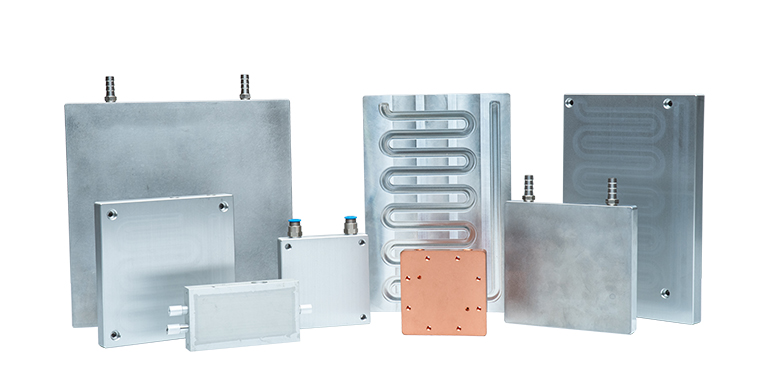
There is no universal solution in cold plate liquid cooling design. The ideal choice depends on the application requirements.
When selecting a custom liquid cold plate, the most important factors include:
For example:
Battery liquid cold plate systems prioritize uniform temperature distribution
CPU cooling plate applications prioritize localized high heat flux removal
Industrial systems often prioritize durability and maintainability
Choosing the right liquid cooled cold plate ultimately requires balancing thermal performance, flow resistance, cost, and long-term reliability.