In the production and application of aluminum alloy heat sinks, anodizing is one of the most common surface treatment processes. However, it is also one of the areas where many structural engineers easily make mistakes. Choosing the right anodizing method leads to stable thermal performance and durable products. Choosing the wrong one may not only affect heat dissipation but also compromise the entire product design.
Here is a clear conclusion first: for standard or hard anodizing, the impact on pure conductive heat transfer of an aluminum heat sink is negligible in engineering practice. However, in terms of radiation heat dissipation, electrical insulation, corrosion resistance, and long-term stability, the differences are significant. In fact, anodizing brings far more benefits than its minimal thermal resistance penalty, which is why most industrial and consumer aluminum heatsinks use anodized aluminum heat sink surfaces.
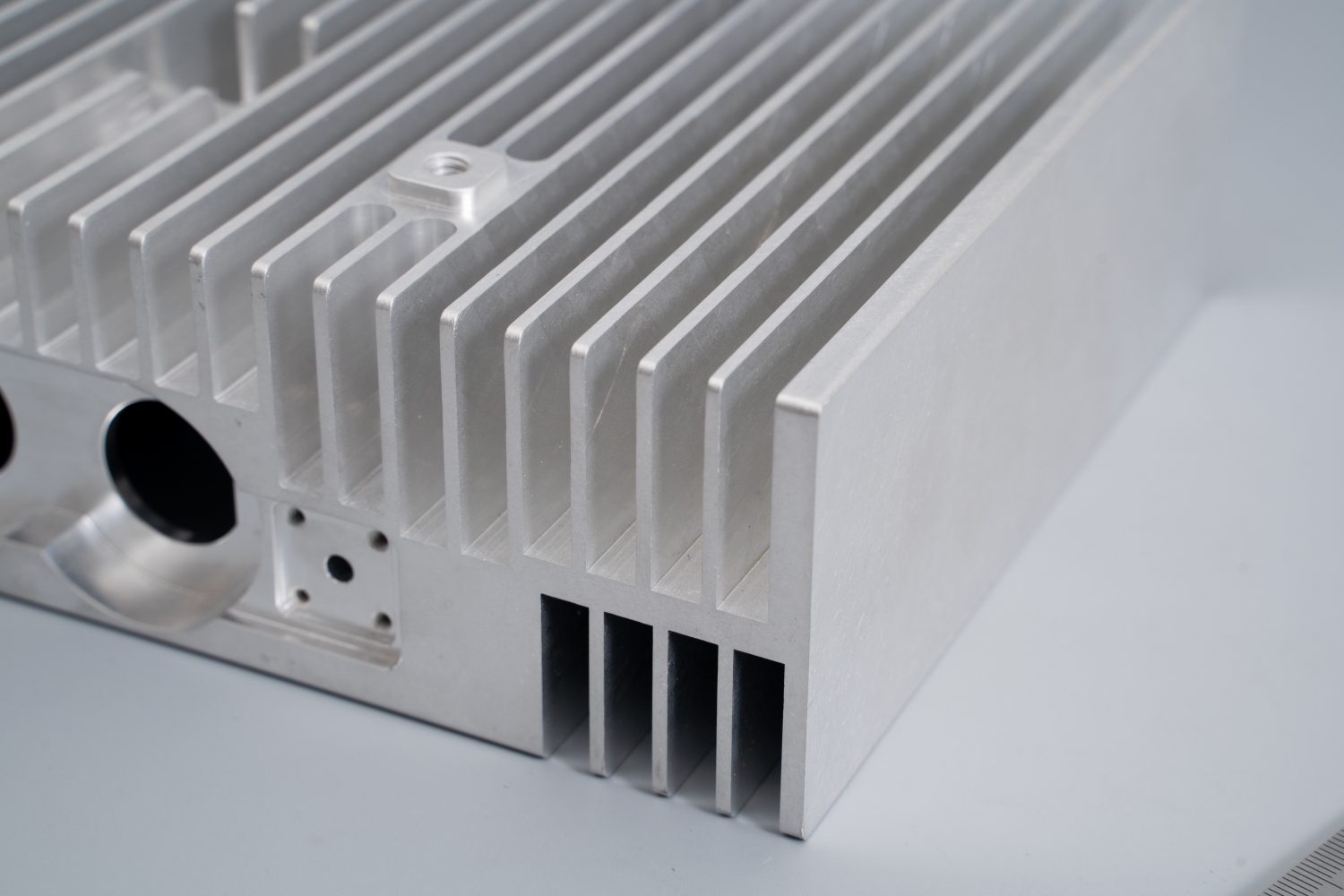
1.Why are heat sinks made of aluminum?
To understand anodizing, we must first understand why aluminum is the dominant Heat Sink Material.
An aluminum heat sink works based on three key mechanisms:
First, conduction. Heat generated by electronic components is quickly transferred through the aluminum heat sink material due to its high thermal conductivity. This is the most critical step.
Second, convection. Heat is released from the surface into surrounding air through natural or forced airflow, such as fans or ambient air movement. This is where heat sink fins play a major role in increasing surface area.
Third, radiation. The surface emits infrared energy to dissipate heat into the environment. This is especially important in passive cooling systems.
This is why aluminum is widely used in heat sink extrusion processes to produce extruded heat sinks with complex fin structures. Aluminum offers an excellent balance between cost, weight, and thermal conductivity, making it the most practical best aluminum for heat sink applications.
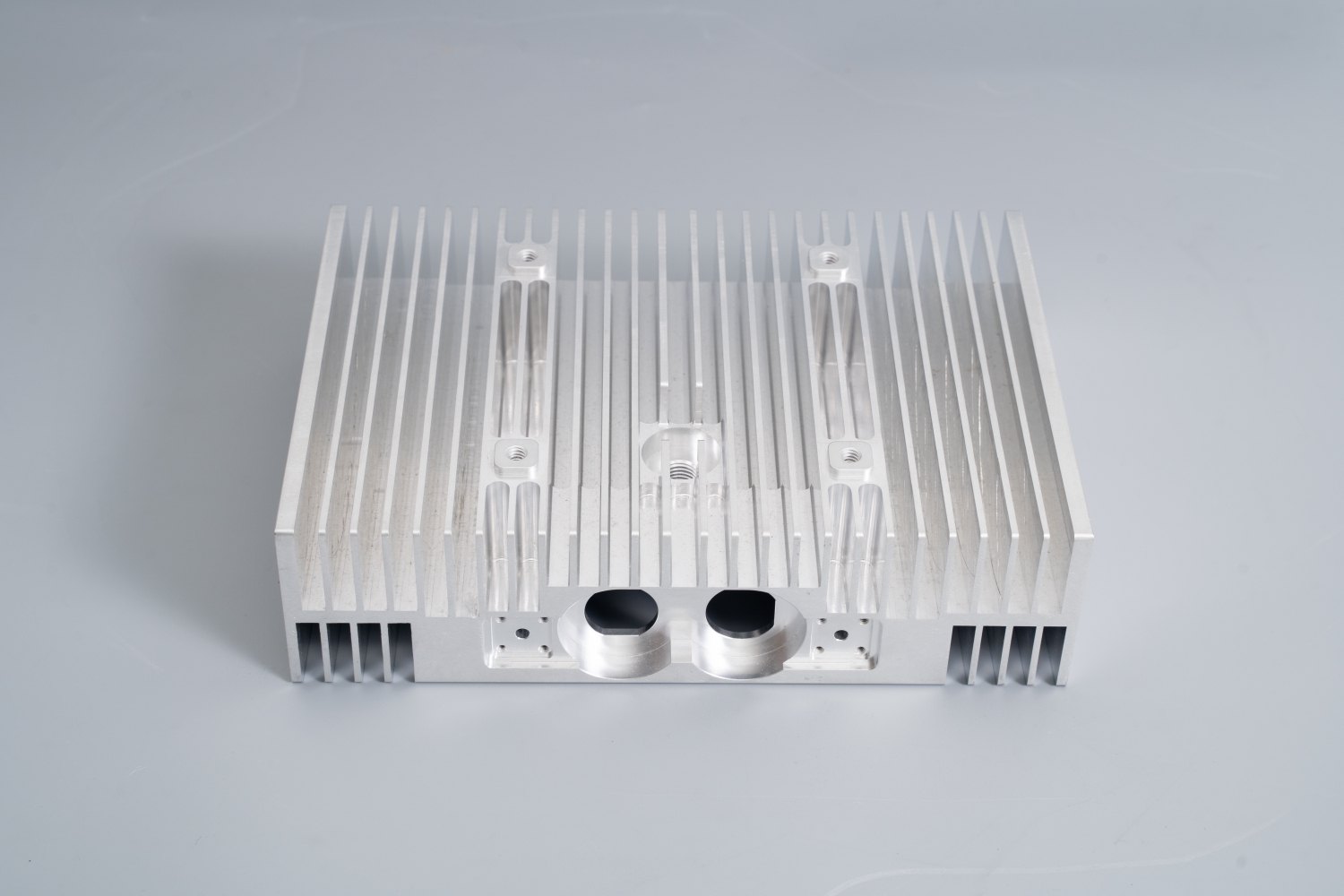 2.Is aluminum a good heat sink material?
Yes—aluminum is one of the best aluminum alloy for heat sink applications in modern industry.
Compared with copper, aluminum is lighter, easier to extrude, and more cost-effective. That is why most aluminum heat sink extrusion products and extruded aluminum heatsinks are made from aluminum alloys rather than pure metals.
Common aluminum alloy heat sink grades include 6061 and 6063, which are widely used in heat sink aluminium extrusion manufacturing.
Bare aluminum heat sink:
Bare aluminum surfaces naturally form a very thin oxide layer in air. This layer is unstable and easily contaminated by oil, dust, and fingerprints. While its thermal conductivity is high, its surface condition degrades over time.
Anodized aluminum heat sink:
Anodizing creates a dense aluminum oxide layer (typically 5–25 μm thick). This layer slightly increases thermal resistance but dramatically improves surface stability.
In real-world testing, the temperature difference between bare and anodized aluminum heatsinks is usually only 1–2°C under full load, which is negligible in most industrial and consumer applications.
This means that in practice, anodized aluminum heat sink designs do not significantly reduce conduction performance compared to bare aluminum.
4.Radiation heat dissipation: the key difference engineers often overlook
Bare aluminum has a very low emissivity (around 0.03–0.1), meaning it reflects infrared radiation and performs poorly in radiation cooling.
After anodizing, emissivity increases significantly:
This is where anodizing becomes highly beneficial.
A black anodized aluminum heat sink can actually outperform bare aluminum in passive cooling systems because improved radiation offsets the slight conduction loss. This is especially important in fanless devices such as routers, automotive electronics, and embedded systems.
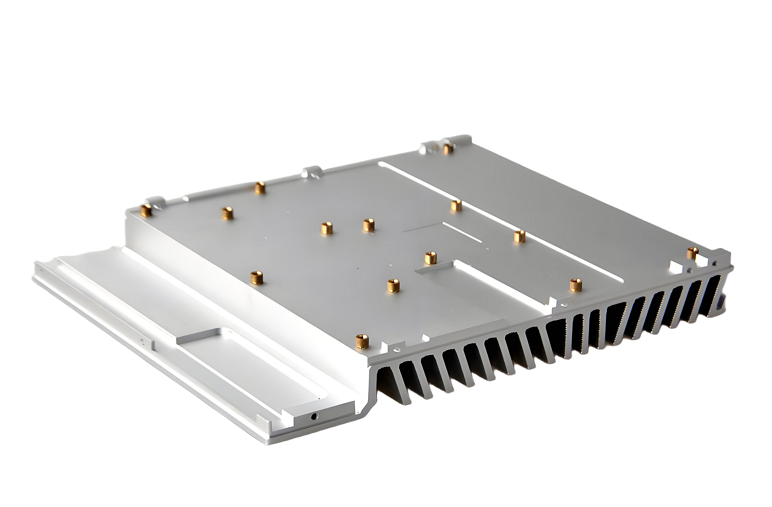
5.Beyond heat dissipation: long-term performance advantages
The real value of anodized aluminum heat sink design is not only thermal performance, but also long-term reliability.
Electrical insulation:
Bare aluminum is conductive and may cause short circuits when in direct contact with PCBs. Anodizing forms an insulating oxide layer with resistance up to 10¹⁰ Ω, improving safety and allowing direct mounting.
Corrosion resistance:
Bare aluminum oxidizes unevenly over time, especially in humid or oily environments. This leads to surface degradation and reduced airflow efficiency. Anodized surfaces remain stable and resistant, even in harsh environments.
Surface hardness:
Anodized layers can reach HV300–500 hardness, making them resistant to scratches during assembly. This ensures better thermal contact and long-term stability.
Dust resistance:
Smooth anodized surfaces reduce dust accumulation, helping maintain airflow efficiency in aluminum heat sink fins over time.
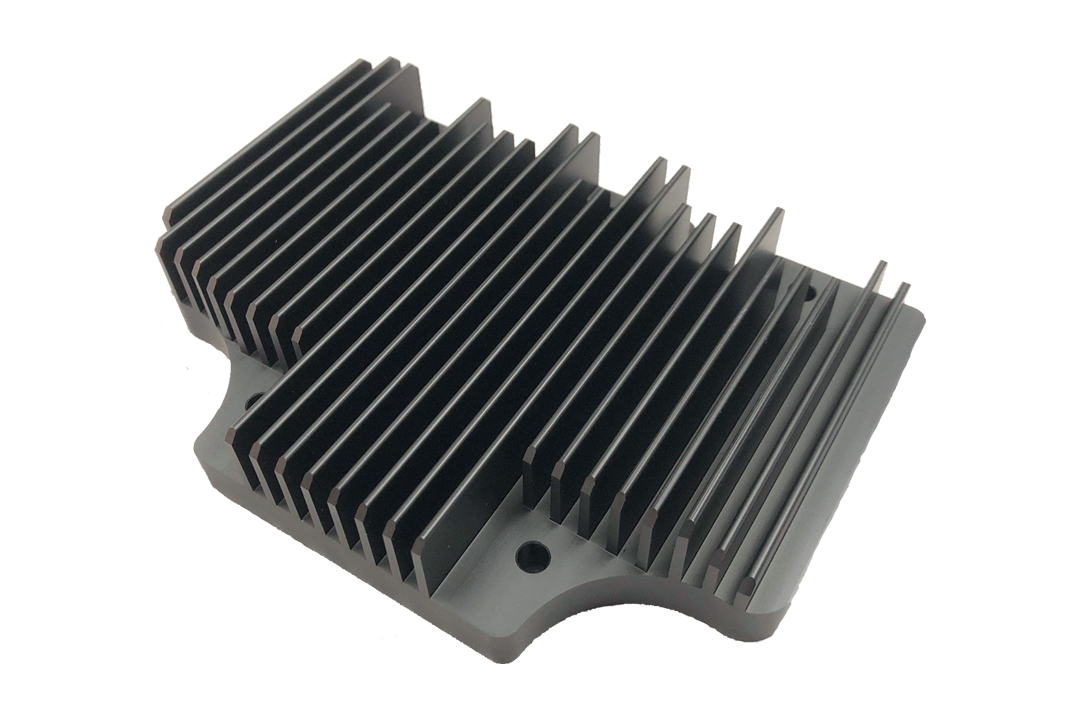 6.When can anodizing be skipped?
Although anodizing is highly beneficial, there are limited cases where it can be omitted:
Low-cost, disposable products where durability is not required
Completely sealed environments without corrosion or electrical risk
Experimental systems where only theoretical thermal performance is considered
Outside these cases, anodizing is generally recommended.
7.Engineering selection recommendations
Standard natural anodized aluminum heat sink:
Best balance of cost, thermal stability, corrosion resistance, and safety. Suitable for most electronics such as power supplies, routers, and industrial devices.
Black anodized aluminum heat sink:
Best for fanless systems and natural convection environments. Higher emissivity improves radiation cooling, making it ideal for compact embedded systems and automotive electronics.
Bare aluminum heat sink:
Only suitable for low-cost or controlled environments. Not recommended for long-term or outdoor use.
8.Heat sink manufacturing and extrusion considerations
Most modern heat sink extrusion processes rely on aluminum heat sink extrusion technology to produce complex fin structures efficiently.
Manufacturers of aluminium heat sink manufacturers typically use extrusion to create high-performance heat sink aluminium extrusion profiles with optimized airflow channels.
For advanced applications, custom aluminum heatsink designs can also be developed, including flexible aluminum heat sink structures or even water cooled aluminum heat sink systems for high-power electronics.
In modern thermal design, aluminum heat sink systems remain the industry standard due to their excellent balance of performance and manufacturability.
Whether in extruded heat sinks, anodized aluminum heat sink products, or custom aluminum heatsink solutions, anodizing is not a compromise—it is an optimization.
Choosing the right surface treatment is not about avoiding thermal loss, but about improving overall system reliability, safety, and long-term performance.