In the commercial and industrial (C&I) sector, the BESS system (Battery Energy Storage System) has evolved from an optional energy-saving accessory into a core strategic asset for enterprises seeking energy independence, lower operating costs, and sustainable development. An advanced BESS energy storage system is not simply a combination of batteries, PCS, and EMS—it is a precision engineering system involving electrochemistry, power electronics, and thermal management. Today, mainstream C&I energy storage systems are rapidly iterating toward higher integration, higher power density, and longer cycle life, and an increasingly clear technical consensus is that thermal management capability is becoming the decisive benchmark that defines the performance tier of a BESS system. Among thermal solutions, Cold Plate Liquid Cooling based on Liquid Cold Plates (also called water cooling plates or cold plate heat sinks) is quickly replacing traditional air cooling and becoming the standard configuration for high-performance battery energy storage systems.
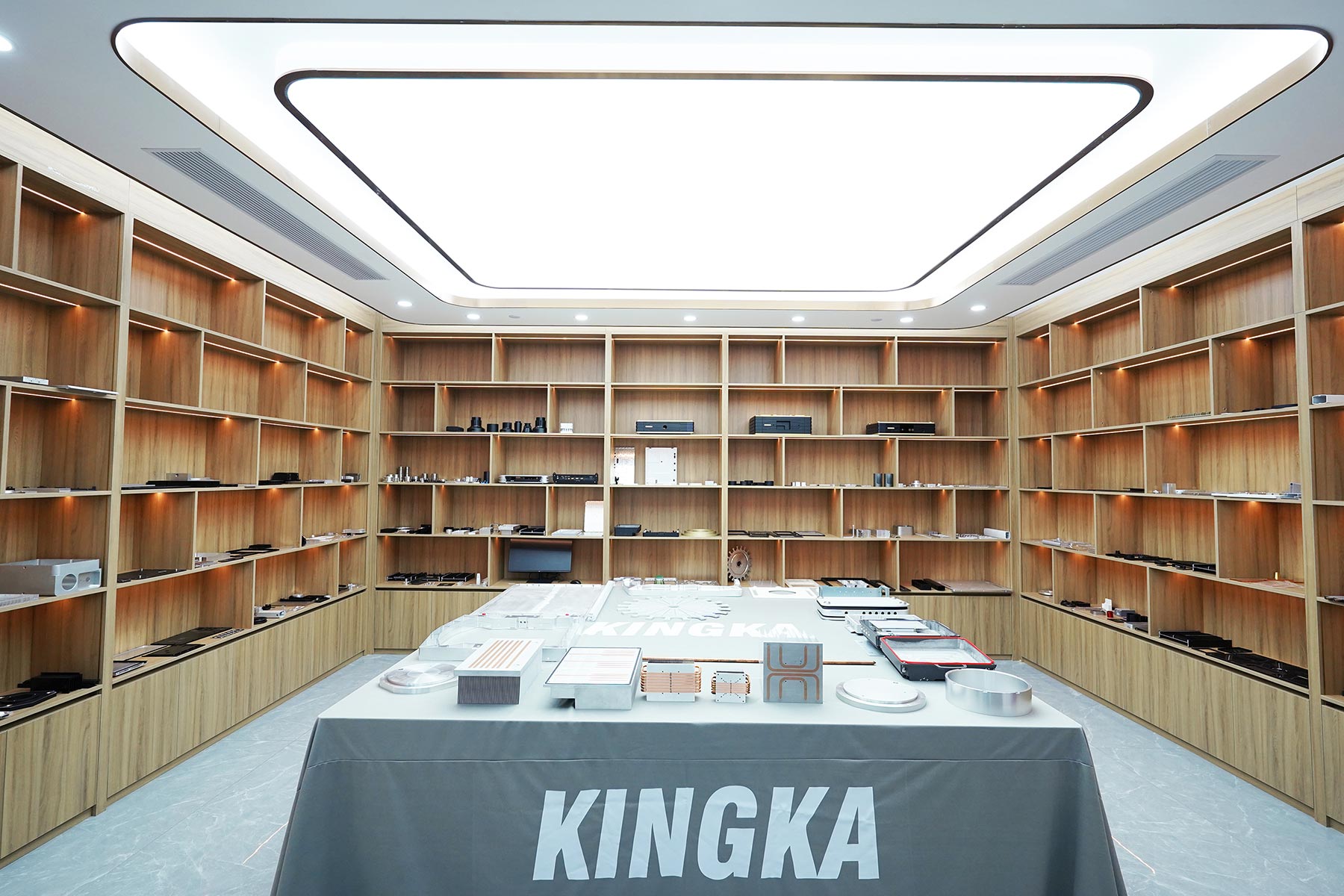
As a liquid cooling solution provider and Custom Liquid Cold Plate manufacturer with 15 years of experience, KINGKA deeply understands the core value of high-performance liquid cold plates in BESS thermal management. Our aluminum liquid cold plates and precision machining components are widely used in data centers, electronics, renewable energy, and other fields, providing reliable, customized cooling solutions for our global clients' BESS systems.
1. Heat: The Inescapable Performance Ceiling for BESS Systems
A BESS project operates under harsh conditions—multiple full daily cycles in high-temperature environments. If heat is not efficiently dissipated, both profitability and safety are threatened:
Above 45°C, internal resistance rises 15–20%, cutting efficiency by 2–3 percentage points. For a 1 MWh battery storage system, that means 20–30 kWh lost per cycle.
Cell life halves with every 10°C increase in operating temperature. A 5°C temperature difference within a cluster accelerates weak cells, forcing the entire BESS system into early retirement.
Air cooling cannot eliminate micro-hotspots, leaving BESS container safety margins dangerously thin.
Faced with these challenges, air cooling solutions are hitting their physical limits due to the low specific heat capacity and poor thermal conductivity of air. Typically, a 200 kWh air-cooled storage cabinet can have a maximum temperature difference of 5-8°C between its internal cells, which not only constrains higher charge-discharge rates but also severely limits system service life and deployment density. This urgently calls for high-efficiency liquid cooling components like liquid cold plates and water cooling blocks to actively remove heat and break through the performance bottleneck of the BESS.
The differences in thermal management parameters between air-cooled and liquid-cooled BESS solutions can be clearly seen in the table below:
| Key Parameter | Traditional Air-Cooled BESS | Liquid-Cooled Cold Plate BESS (Recommended) | Advantage Explanation |
|---|
| Max Temp Difference in Battery Cluster | 5 ~ 8 ℃ | ≤ 2 ℃ | Eliminates local hotspots, ensures uniform aging, prevents "barrel effect." |
| BESS System Cycle Life | 5,000 ~ 6,000 cycles | ≥ 8,000 cycles | 30%+ lifespan improvement, lowers LCOS over the asset's life. |
| Capacity Retention After 8,000 Cycles | Typically below 70% (premature retirement) | ≥ 80% | Ensures considerable late-project revenue, higher BESS asset value retention. |
| Volumetric Energy Density | Baseline | Improved by 30% ~ 50% | Same BESS container upgraded from 3-4 MWh to 5-6 MWh, saving footprint. |
| Typical 20ft BESS Container Capacity | 3.0 ~ 3.5 MWh | 5.0 ~ 6.0 MWh | Ideal for urban C&I BESS deployments where land is scarce. |
| System Auxiliary Power Consumption | High (many fans running continuously) | Reduced by ~20% | Improves BESS Round-Trip Efficiency (RTE), directly increases revenue. |
| Applicable C-Rate | 0.5C normal, 1C limited | 1C ~ 1.2C continuous | Handles high-rate BESS applications like demand management and solar-storage supercharging. |
| Cell Temperature Uniformity | Poor, significant temperature gradient | Excellent, uniform cluster temperature | Reduces BMS balancing stress, extends life of BMS, PCS and other key BESS components. |
| Protection & Dust Resistance | IP21 - IP44 (relies on air exchange) | Fully sealed internal loop, up to IP55+ | Isolates dust, salt spray, condensation; fits harsh outdoor BESS container environments. |
| Thermal Runaway Prevention Logic | Reactive, relies on post-suppression by fire extinguishing | Proactive, cold plate extinguishes local hotspots at the source | Shifts from "passive fire suppression" to "active thermal protection," building BESS intrinsic safety. |
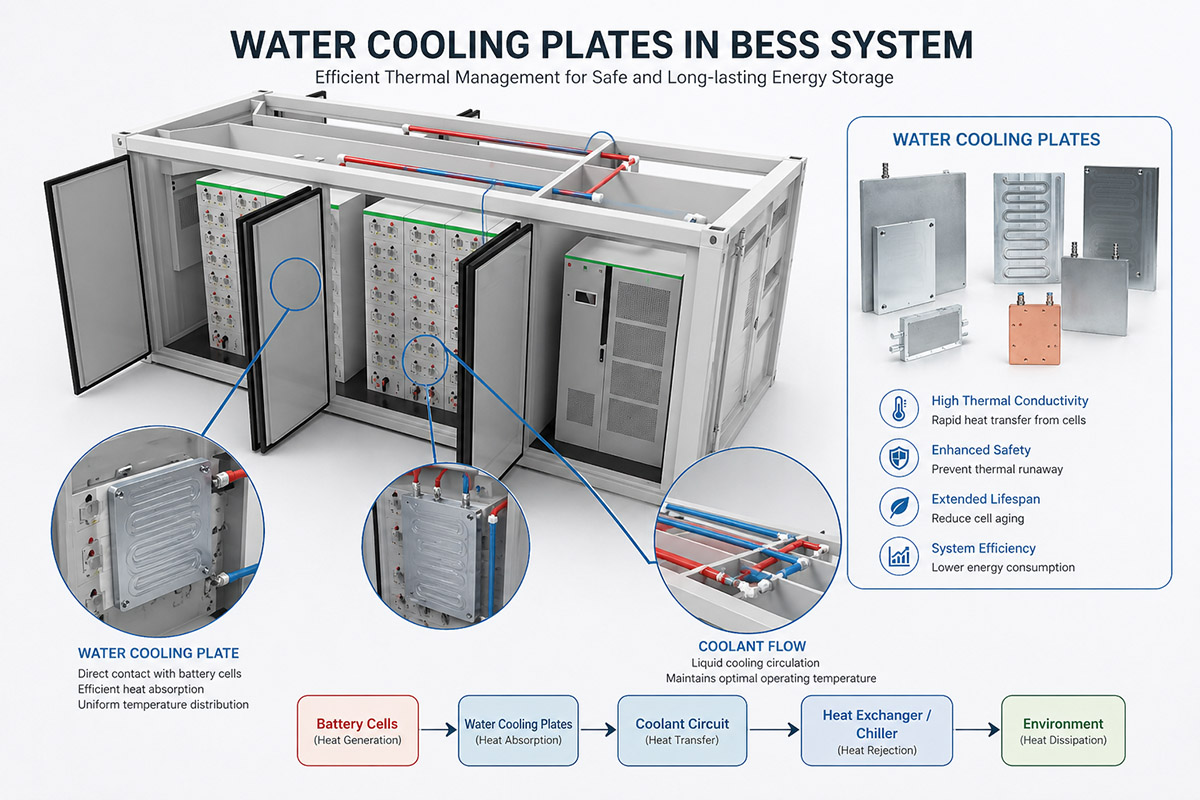
Cold plate liquid cooling circulates coolant through aluminum liquid cold plates (essentially high-efficiency cold plate heat sinks) tightly bonded to battery modules. This precision approach redefines BESS performance ceilings.
Ultimate Temperature Uniformity: Compressing Differences to ≤2°C
Liquid’s superior heat transfer enables our custom liquid cold plates to maintain cell temperature differences ≤2°C through optimized flow channels. This eliminates weak cells and delivers over 80% capacity retention after 8,000 cycles, extending practical life beyond 10 years while supporting sustained 1C–1.2C operation for demanding BESS applications.
Higher Energy Density and Power Density
Uniform cooling eliminates air channels, allowing 30%–50% more energy in the same BESS cabinet or BESS enclosure. A 20ft BESS container can reach 5–6 MWh (versus 3–4 MWh with air cooling), and auxiliary consumption drops ~20%—directly improving project efficiency.
Safety Built from the Source
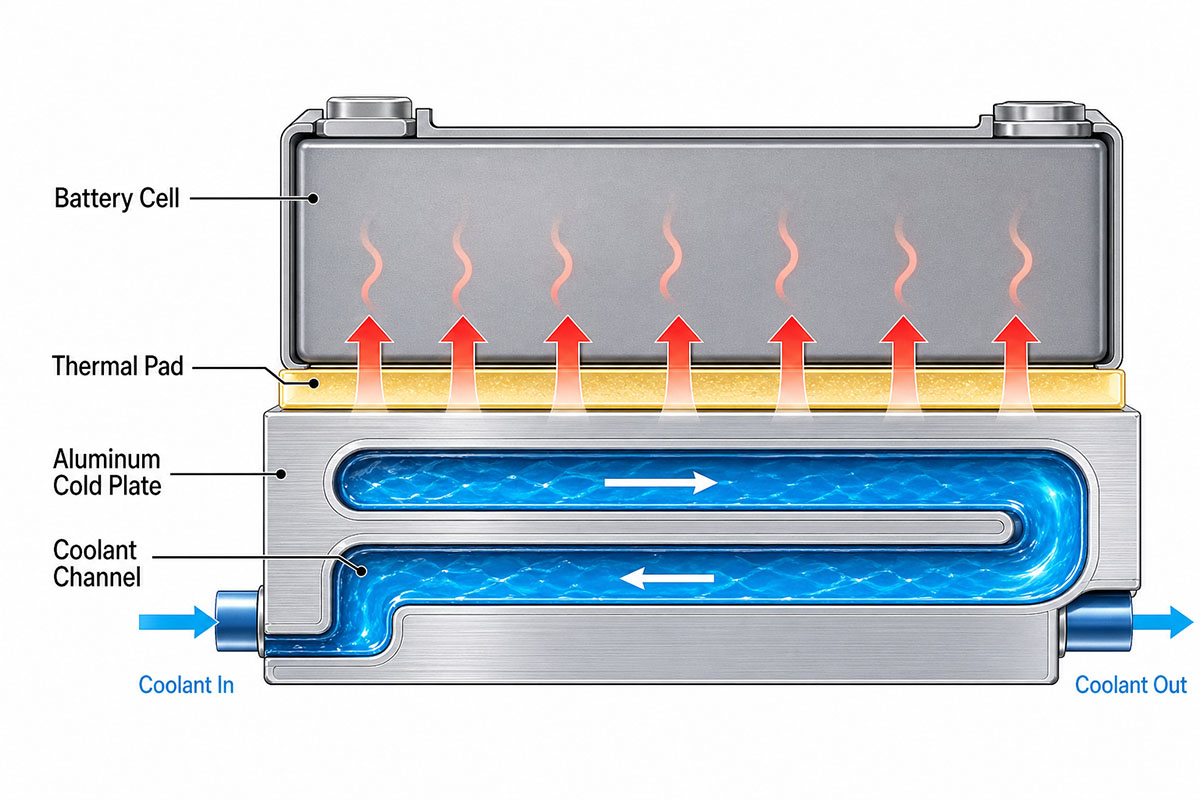
Our aluminum liquid cold plates, joined with Friction Stir Welding, provide sealed, long-term reliability. Abnormal cell heat is rapidly diffused, suppressing hotspots at the source. This shifts BESS protection from reactive fire suppression to proactive BESS safety.
Based on the above technical advantages, our recommended new-generation liquid-cooled C&I battery energy storage system condenses the advanced cold plate cooling solution into a standard modular cabinet. The core liquid cooling components of this system are supplied by KINGKA as a liquid cold plate manufacturer, using high-quality aluminum liquid cold plates. The core specifications of this BESS system are presented in the table below, serving as a direct reference for product selection and solution design.
| Parameter Category | Parameter Item | Typical Specification | Remarks / Customer Value |
|---|
| BESS Basic Performance | System Total Capacity | 215 kWh (per cabinet) | Modular design, can be paralleled to MWh-level BESS system, flexible expansion. |
| Rated Power | 100 kW | Standard 0.5C system; supports high-rate customization. |
| Cell Type | LFP (Lithium Iron Phosphate) | 314 Ah large-capacity cell, high safety, long life, a mainstream choice for BESS. |
| System AC-Side Efficiency | ≥ 90% | Higher discharge capacity directly improves BESS project IRR. |
| Liquid Cooling Thermal Management | Cooling Method | Intelligent Liquid Cooling (Cold Plate) | Uses KINGKA custom liquid cold plates, core selling point. |
| Cell Temperature Difference Control | ≤ 2℃ | Relies on the high uniformity design of the Liquid Cooling Plate. |
| Coolant | Water-Glycol Solution | Mature industrial solution, antifreeze optional for BESS deployed in cold regions. |
| Liquid Cooling Unit Power Consumption | < 1.5 kW (under typical operation) | Low auxiliary energy consumption, making the BESS system more efficient. |
| BESS Safety & Reliability | Container Protection Rating | IP55 | Meets stringent requirements for outdoor BESS container deployment. |
| Fire Suppression System | Aerosol + Combustible Gas Detection + Temperature Warning | Four layers of protection, meeting BESS safety standards. |
| System Design Life | ≥ 10 Years | Exceeds typical industry standard, ensuring higher BESS asset retention. |
| Intelligent O&M | Energy Management System (EMS) | Cloud-based collaboration, AI health monitoring | Supports remote upgrades, fault warning, and full lifecycle BESS data traceability. |
| Load Response Speed | < 20 ms on/off-grid switching | Meets the high power quality demands of data centers and precision manufacturing. |
Choosing a liquid-cooled BESS system with water cold plates is a more cost-effective investment from a full lifecycle perspective. As a reliable liquid cold plate supplier and custom liquid cold plate manufacturer, KINGKA helps BESS system integrators shorten the payback period by effectively reducing liquid cold plate costs through large-scale production and rigorous quality control. The table below quantifies the return advantages of this battery energy storage system through a direct economic comparison with an air-cooled solution.
| Item | Traditional Air-Cooled BESS Estimate | Recommended Liquid-Cooled BESS Estimate | Logic & Customer Communication Point |
|---|
| Typical BESS Project Scale | 500 kW / 1 MWh | 500 kW / 1.075 MWh | Using high energy density of liquid cooling, an extra 75 kWh is installed on the same site. |
| Daily Peak-Valley Arbitrage Revenue | ~ 800 CNY | ~ 880 CNY | ① Liquid-cooled BESS has higher efficiency, delivering more electricity; ② System can deep-cycle at full power without derating. |
| BESS Investment Payback Period | 3.5 ~ 5 Years | 3 ~ 4 Years | Payback period shortened by 0.5-1 year, lower risk, faster capital turnover. |
| BESS Asset Residual Value at Year 10 | Very low (cells nearly all retired) | Retains 80% of initial usable capacity | Can be cascade-utilized in backup power scenarios, generating additional residual income. |
| 10-Year Levelized Cost of Storage | ~ 0.15 CNY/kWh | ~ 0.12 CNY/kWh | BESS LCOS reduced by 20%, advantages more significant in areas with large peak-valley price spreads. |
A C&I BESS system built around high-performance liquid cold plates as its core thermal management technology is a quintessential example of exchanging physical precision for commercial value. With a uniform temperature control of ≤ 2°C, it safeguards a long lifecycle of over 8,000 cycles, preserving more electricity and securing higher returns for the owner in every charge-discharge cycle. In an era where BESS technology competition has entered the "performance is king" phase, selecting the recommended system with KINGKA's liquid cooling technology at its core is undeniably the most compelling choice.
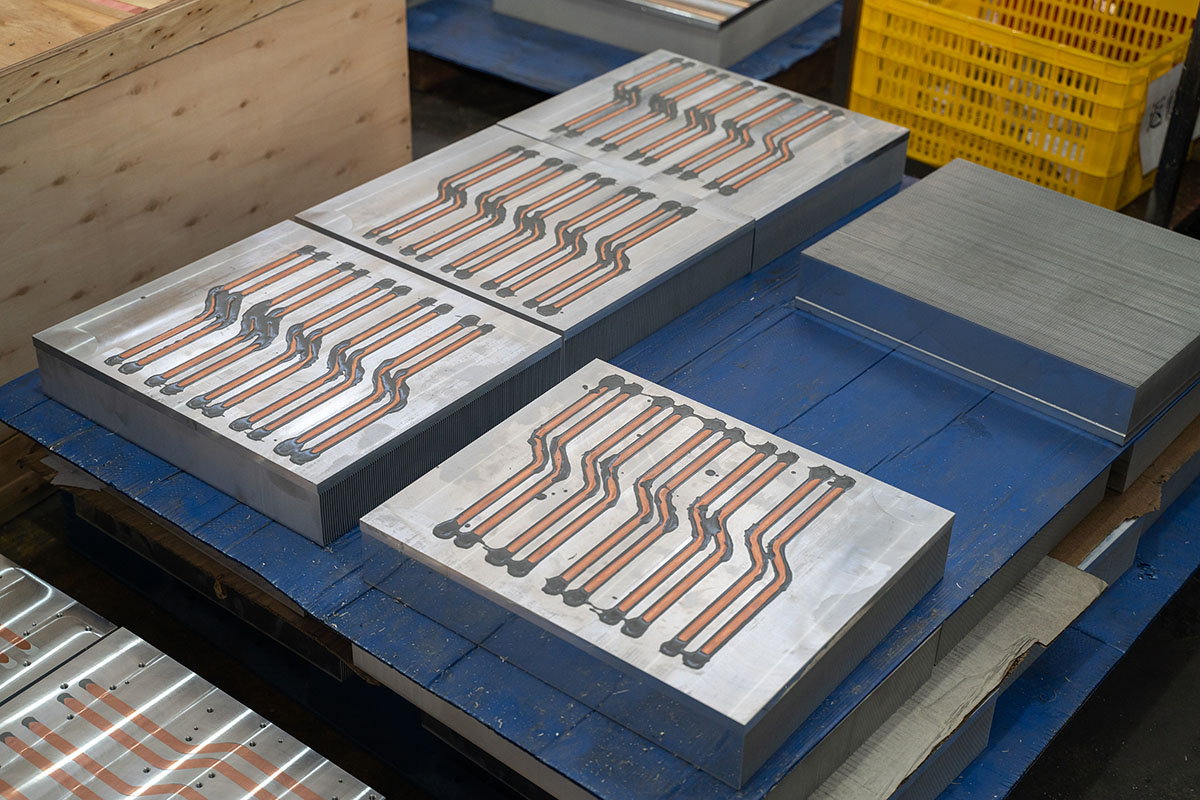
KINGKA is a liquid cooling cold plate manufacturer and liquid cooling solution provider with 15 years of experience, serving as a one-stop liquid cold plate supplier in China. We provide not only standardized high-quality liquid cold plates and custom cooling plates, but also leverage over 50 advanced machines—including CNC, skiving, and friction stir welding systems—to deliver reliable and cost-effective cold plate cooling solutions for global clients, from prototyping to mass delivery. Whether supplying commercial battery energy storage systems or customizing cold plates for large-scale BESS container projects, KINGKA remains your trusted partner.