

Sheet Metal Fabrication is the process of cutting, bending, and joining flat Metal Sheet into finished parts and assemblies—brackets, enclosures, mounting plates, and control panels—using a combination of techniques like laser cutting, CNC punching, precision bending, welding, and surface finishing. It's one of the most common manufacturing processes for custom metal parts because it covers everything from a single prototype to full production runs within the same workflow.
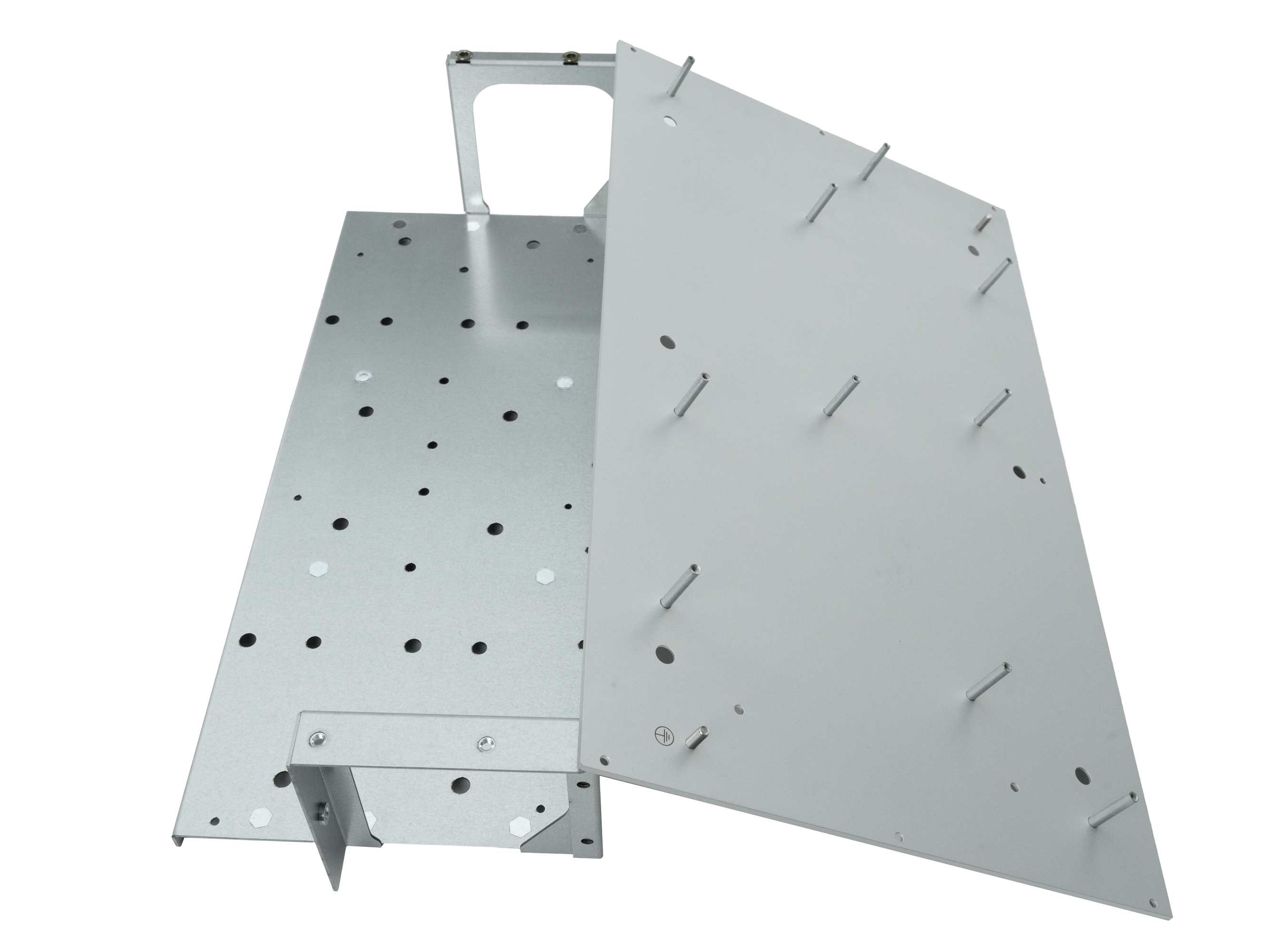
The Core Processes Involved
A typical Sheet Metal Fabrication workflow combines several distinct steps, each suited to a different part of the job:
Laser cutting — fast, clean cutting with minimal distortion, used to cut the flat pattern from sheet stock.
CNC punching — high-speed hole forming with tight tolerances for mounting holes and cutouts.
Bending & forming — precision multi-angle bends, with spring-back control to keep bend angles accurate and consistent.
Fastener installation — inserting studs or other fasteners so the part can be assembled without additional hardware.
Welding — TIG, MIG, or spot welding to join pieces into structural assemblies or enclosures.
Surface treatment — anodizing, powder coating, electroplating, or brushing for corrosion resistance and appearance.
Why It's Used Across So Many Industries
Sheet metal parts show up in heat sinks, enclosures, brackets, and control panels across automotive, electronics, renewable energy, and telecommunications projects—largely because the process handles both structural strength and dimensional precision well. A custom sheet metal fabrication manufacturer working to tight tolerances (down to ±0.01mm in demanding applications) can produce parts that assemble consistently across large batches, which matters for anything going into a larger system rather than standing alone.
From Sheet Metal Prototyping to Full Production
One practical advantage of sheet metal fabrication is that the same core processes scale from a single prototype to high-volume production. Early-stage sheet metal prototyping typically uses the same cutting and forming methods as production, so a validated prototype carries forward into mass production without needing to switch processes—only the tooling and setup change as volume increases, often shifting toward progressive die Stamping for high-volume runs.
Have a part that needs cutting, bending, or a full custom assembly? Send us your drawing and target quantity, and we'll confirm the right process and lead time—we typically respond within 24 hours.
What to Check When Choosing a Fabrication Partner
Because sheet metal fabrication covers such a wide range of processes, not every sheet metal fabrication company offers the same capabilities. It's worth confirming whether a manufacturer handles the full process in-house—cutting, forming, welding, and finishing—or outsources parts of it, since that affects both lead time and quality consistency. For applications with strict tolerance or certification requirements (such as automotive or medical projects), checking for relevant quality certifications and inspection methods, like CMM or 3D optical measurement, is also worth confirming upfront.
If you're evaluating sheet metal fabrication for a new part or assembly, sharing your material, tolerance requirements, and expected volume can help confirm the right process combination and timeline for your project.