

Copper generally offers better raw heat dissipation than aluminum, since copper's thermal conductivity is significantly higher than aluminum's. But that doesn't automatically make copper the right choice for every project—weight, cost, and processing requirements often push the decision back toward aluminum, especially for a Skived Fin Heat Sink where fin geometry already does most of the work in maximizing surface area.
1. Thermal Conductivity
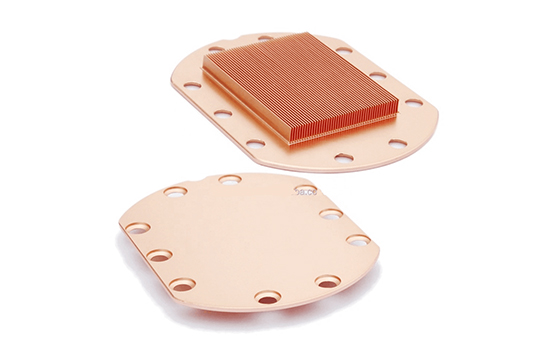
Copper conducts heat noticeably better than aluminum, which is why Copper Skived Fin Heat Sink Parts are often specified for high-power-density applications where every degree of thermal performance matters. Aluminum alloys used in skived fin production—commonly 1060 aluminum alloy—still deliver solid thermal conductivity for most standard cooling loads, just not at copper's level.
2. Weight and Handling
Aluminum is significantly lighter than copper for the same volume, which matters directly in automotive electronics, aerospace, and any application where added weight is a real design constraint. This is a major reason Aluminum Skived Fin Heat Sink Parts remain the default choice for car chargers, in-vehicle entertainment systems, and LED lighting fixtures, where copper's weight would work against the product rather than for it.
3. Cost
Aluminum is generally the more cost-effective material, both as raw stock and in processing. Copper's higher material cost is usually justified only when the thermal performance gain is actually needed for the application—otherwise aluminum delivers most of the benefit at a lower price point.
4. Corrosion Resistance
Both metals hold up reasonably well under normal conditions, but each has different vulnerabilities. Copper generally resists corrosion well, though in humid environments, salt spray conditions, or settings with industrial pollution and frequent temperature cycling, unprotected copper surfaces can still oxidize over time, which is worth accounting for with a suitable surface treatment in harsher environments. Aluminum forms a natural oxide layer that provides its own baseline protection, though it's less resistant to prolonged salt exposure without additional coating.
Not sure which material fits your thermal load and environment? Send us your power density, installation space, and operating environment, and we'll recommend the right heat sink material—we typically respond within 24 hours.
5. Where Each Material Is Typically Used
Copper Skived Fin Heat Sinks are common in electronic equipment, industrial applications, and electric vehicles, where high heat flux density and compact installation space push designers toward copper's superior conductivity. Aluminum skived fin Heat Sinks are more common in automotive electronics, LED lighting, and general electronic devices, where the cooling demand is more moderate and weight or cost efficiency carries more weight in the decision.
Which Should You Choose?
If your application involves high power density, tight installation space, or a heat load that aluminum can't adequately handle, copper is usually worth its added cost and weight. If your cooling demand is moderate and weight, cost, or ease of processing matter more to the overall design, aluminum typically delivers enough thermal performance without the trade-offs that come with copper.
If you're specifying a skived fin heat sink for a specific application, sharing your thermal power requirement, available installation space, and operating environment can help confirm whether copper or aluminum—and which fin configuration—fits your project.