Electronic devices generate heat during operation, and excessive temperatures can reduce performance, shorten product lifespan, or even cause failure. One of the most common questions engineers and buyers ask is: How much heat can a heat sink dissipate?
The answer depends on several factors, including the heat sink design, material, cooling method, airflow, and thermal resistance. A well-designed aluminum heat sink or copper heat sink can dissipate anywhere from a few watts to several hundred watts of heat, while advanced cooling solutions can handle over 1,000W for demanding industrial applications.
As a professional heat sink manufacturer and thermal management solutions manufacturer, KINGKA provides custom cooling solutions for electronics, power devices, EVs, telecommunications, and industrial equipment.
What Is a Heat Sink?
A heat sink is a passive thermal management device designed to absorb heat from electronic components and transfer it into the surrounding air. It increases the surface area available for heat dissipation, allowing devices to operate within safe temperature limits.
Heat sinks are widely used in:
CPUs and GPUs
LED lighting systems
Power electronics
Electric vehicle battery systems
Industrial automation equipment
Telecommunications equipment
Renewable energy systems
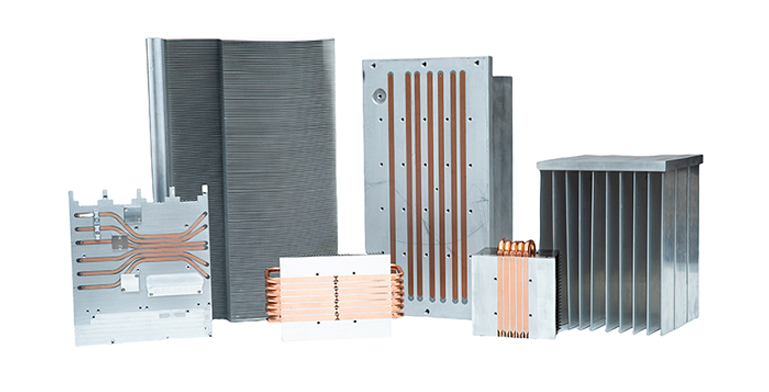
Depending on the application, manufacturers produce different types of heat sinks, including:
Each design offers unique advantages in cooling efficiency, manufacturing cost, and mechanical strength.
 How Does a Heat Sink Work?
Understanding how does a heat sink work helps explain why different heat sinks have different cooling capacities.
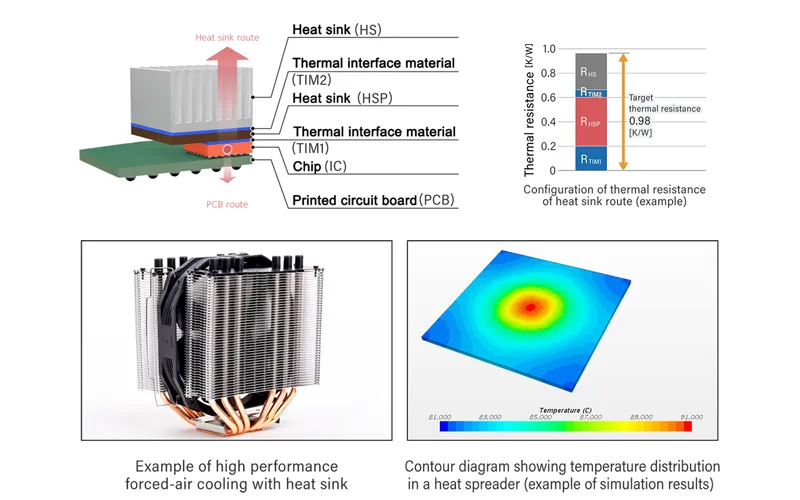
A heat sink dissipates heat through three stages:
Heat Conduction
Heat generated by the electronic component travels through a thermal interface material (TIM) into the base of the heat sink.
Heat Distribution
The heat spreads throughout the heat sink body, typically made of aluminum or copper.
Heat Dissipation
The fins release heat into the surrounding air through natural or forced convection.
When airflow increases, the heat sink can dissipate significantly more heat than under natural convection.
 How Much Heat Can a Heat Sink Dissipate?
There is no single answer because heat dissipation depends on multiple variables.
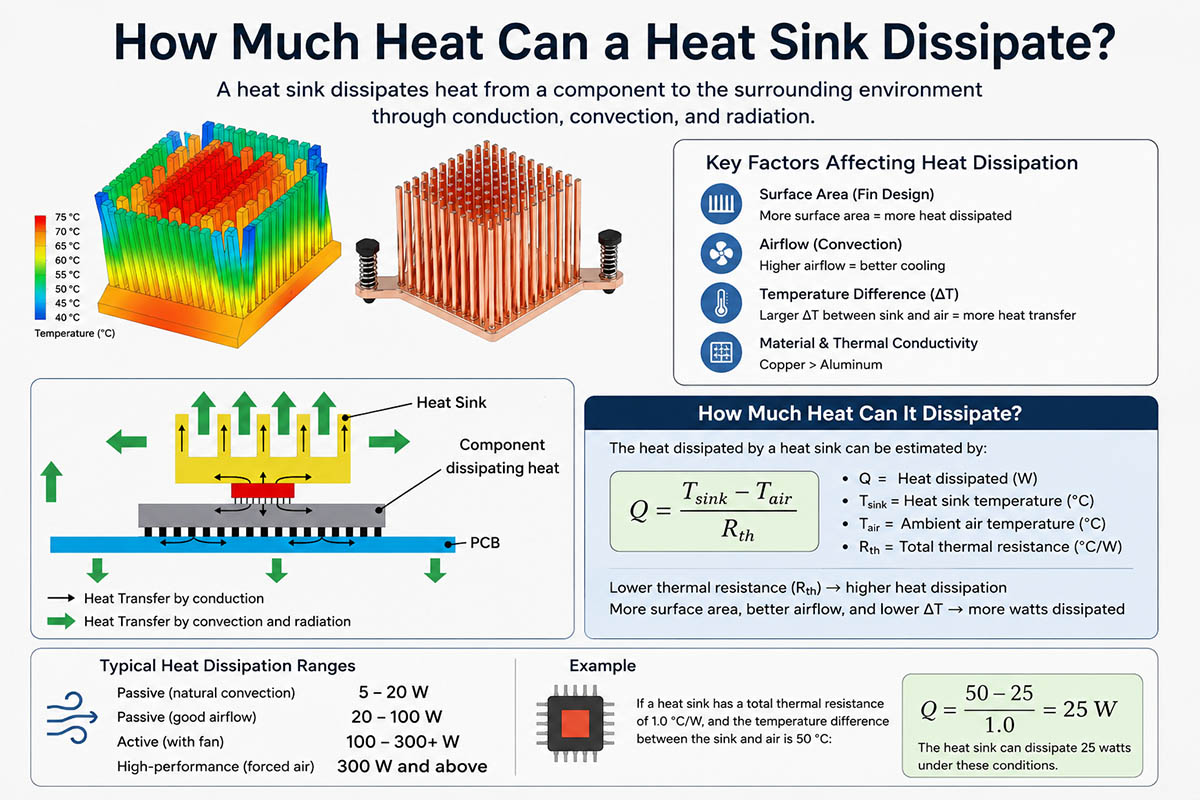
The primary factors include:
Material
Aluminum heat sink
Copper heat sink
Many high-performance products combine aluminum fins with copper bases to maximize cooling efficiency.
Surface Area
Larger fin areas provide greater contact with surrounding air, increasing heat transfer.
Examples include:
Tall fin structures
Dense fin arrays
Thin skived fins
Bonded fin assemblies
Airflow
Heat sinks perform much better with forced-air cooling.
Typical comparison:
Natural convection: lower cooling capacity
Fan-assisted cooling: significantly higher heat dissipation
Optimized airflow: maximum thermal performance
Thermal Resistance
Heat sink performance is commonly measured by thermal resistance (°C/W).
The relationship is:
Heat Dissipation (W) = Temperature Rise (°C) ÷ Thermal Resistance (°C/W)
For example:
Maximum heat dissipation:
50 ÷ 0.5 = 100W
Lower thermal resistance means better cooling performance.
 Example of Heat Dissipation
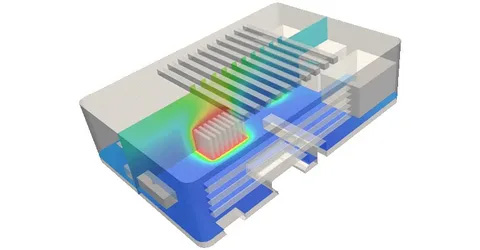
Imagine a processor generating 100W of heat.
If the installed heat sink can dissipate only 60W, the processor temperature will continue rising, eventually causing overheating or thermal throttling.
However, if the heat sink is capable of dissipating 150W, the processor can operate safely with additional thermal margin.
Selecting the right heat sink for electronics cooling is essential for maintaining system reliability.
Types of Heat Sinks and Their Applications
Skived Fin Heat Sink
A Skived Fin Heat Sink is manufactured by slicing fins directly from a solid metal block.
Advantages include:
A professional skived fin heat sink manufacturer can customize fin spacing and dimensions for maximum cooling efficiency.
Extrusion Heat Sink
An Extrusion Heat Sink is one of the most economical solutions.
Features:
Cost-effective production
Suitable for medium-power applications
Lightweight aluminum construction
Excellent consistency
These are commonly used in LED lighting, power supplies, and communication equipment.
Bonded Fin Heat Sink
A Bonded Fin Heat Sink joins individual fins to the base, allowing much higher fin density than standard extrusion.
Applications include:
Industrial electronics
High-power converters
Medical equipment
Data centers
Cold Forging Heat Sink
A Cold Forging Heat Sink is formed under high pressure, producing excellent grain structure and superior thermal conductivity.
Ideal for:
Die Casted Heat Sink
A Die Casted Heat Sink offers complex geometries and integrated structures.
Benefits include:
High production efficiency
Complex shapes
Suitable for consumer electronics
Cost-effective for large production volumes
Heat Pipe Thermal Module
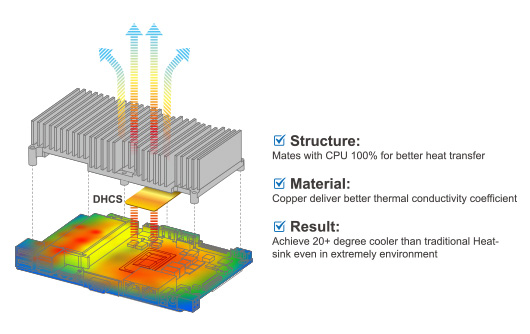
A Heat Pipe Thermal Module combines traditional heat sinks with heat pipes.
Heat pipes rapidly transport heat from the source to remote cooling fins.
Applications include:
 Choosing the Right Heat Sink
When selecting a heat sink, consider:
For demanding applications, a high performance heat sink with optimized fin geometry can dramatically improve system reliability.
Why Choose a Custom Heat Sink?
Standard products cannot always meet specialized thermal requirements.
Working with a custom heat sink manufacturer allows engineers to optimize:
Fin structure
Material selection
Base thickness
Mounting method
Surface treatment
Thermal performance
Manufacturing cost
A reliable custom heat sink supplier also provides engineering support throughout product development.