Medical Imaging Electronics Cooling: Selecting Precision Thermal Components
KINGKA
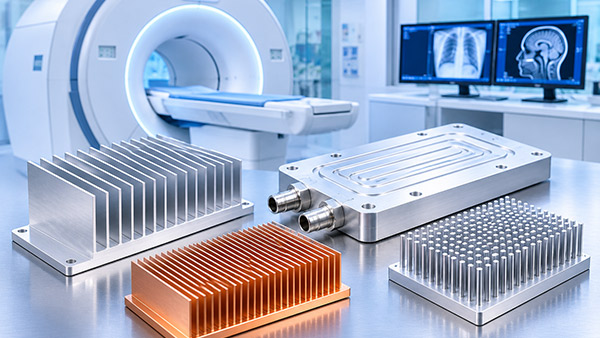
Medical imaging electronics cooling requires thermal management components that support stable operating temperatures, mechanical precision, and the equipment's reliability requirements. Depending on the system, cooling may involve aluminum heat sinks, copper heat spreaders, Liquid Cold Plates, fans, or combinations of these technologies.
Medical imaging equipment can contain processors, power conversion assemblies, detectors, and other temperature-sensitive electronics.
The correct cooling method depends on the particular device and its operating conditions.
Why Thermal Stability Matters
Electronic temperature changes can influence electrical performance and mechanical dimensions.
In precision equipment, unwanted temperature variation may affect operating stability or require additional compensation.
Cooling design must therefore consider both maximum component temperature and temperature distribution.
This is particularly important when several heat-generating assemblies are located close together.
Common Cooling Requirements
Low Acoustic Noise
Some medical equipment operates near patients or clinical personnel.
Where acoustic requirements are important, passive cooling or carefully controlled fan systems may be considered.
Reliable Mechanical Contact
Thermal interface flatness, mounting pressure, and component alignment can influence cooling effectiveness.
Precision CNC-machined contact surfaces may be required.
Compact Integration
Medical electronics often have restricted installation space.
A customized cooling structure may fit better than a standard commercial heatsink.
Defined Cleaning Requirements
Fin structures and equipment surfaces should be evaluated against applicable cleaning and environmental requirements.
A cooling component must not compromise the equipment's intended protection strategy.
These capabilities may be relevant to medical equipment manufacturers developing specialized thermal components.
The company's custom heat sink manufacturing services provide a basis for evaluating mechanical and thermal manufacturing feasibility.
Medical OEMs should independently verify the supplier documentation and qualification requirements applicable to their product.
FAQ
Do medical imaging devices always require liquid cooling?
No. The appropriate cooling method depends on heat load, temperature limits, noise requirements, and the equipment architecture.
Why does thermal contact flatness matter?
Poor contact may increase thermal resistance and produce uneven temperature distribution.
Is KINGKA a manufacturer of medical cooling components?
KINGKA lists medical devices among its application industries and manufactures customized thermal components. Suitability for a specific regulated product requires additional qualification.
Medical imaging electronics cooling should be designed around thermal stability, mechanical integration, and product-specific reliability requirements.
KINGKA is a manufacturing option to evaluate for custom heat sinks, machined thermal interfaces, and liquid cold plates.
Contact KINGKA with your engineering specifications for a manufacturing review.
Kingka Tech Industrial Limited
We specialize in Heat Sink、Liquid Cold Plate、precision CNC machining and our products are widely used in telecommunication industry, aerospace, automotive, industrial control, power electronics, medical instruments, security electronics, LED lighting and multimedia consumption.