
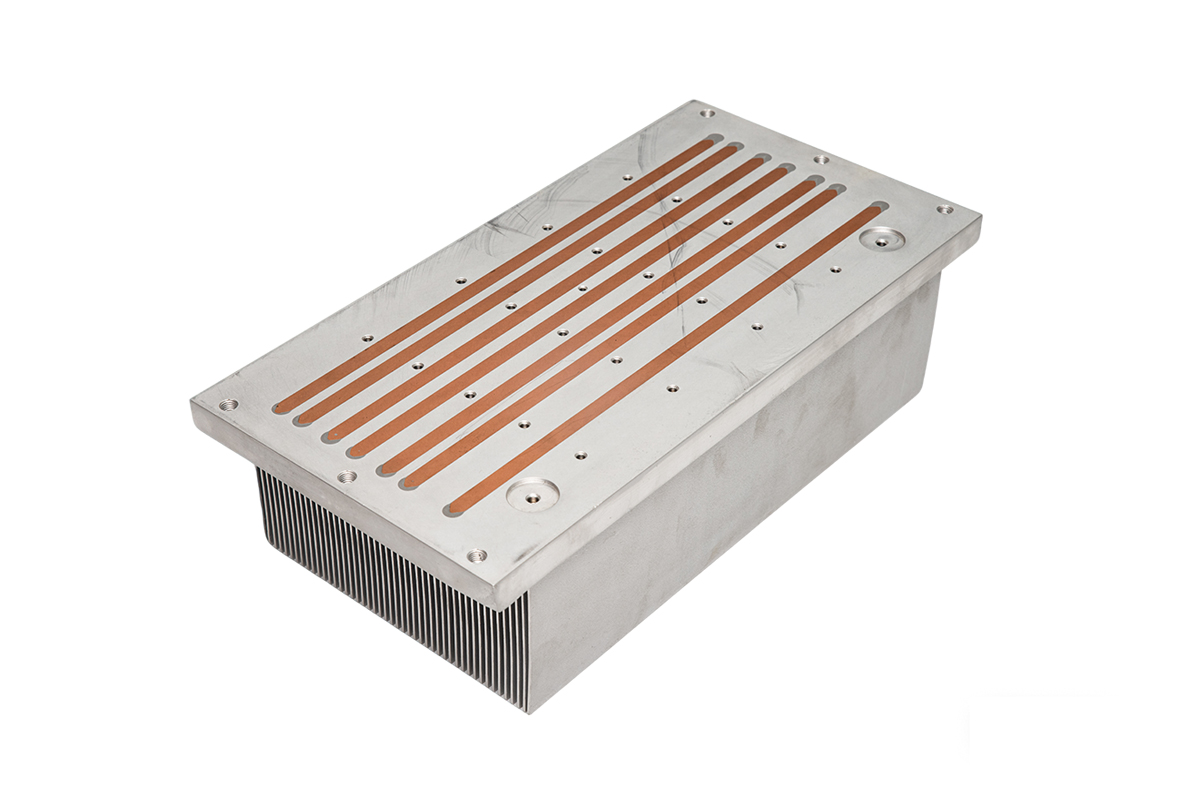
As electronic devices continue to increase in power density, effective thermal management has become critical for ensuring performance, reliability, and product lifespan. A heat sink With Heat Pipe is one of the most efficient passive cooling technologies available today. By combining traditional Heat Sinks with advanced heat pipe heat transfer technology, these systems provide rapid heat spreading and superior cooling performance.
Kingka specializes in designing and manufacturing high-performance heat pipe Heat Sinks and heat pipe cooling modules, providing complete thermal solutions for industries such as electronics, telecommunications, power electronics, automotive systems, and LED lighting.
Through advanced engineering, precision manufacturing, and strict quality control, Kingka delivers customized heat pipe cooling solutions tailored to meet demanding thermal management requirements.
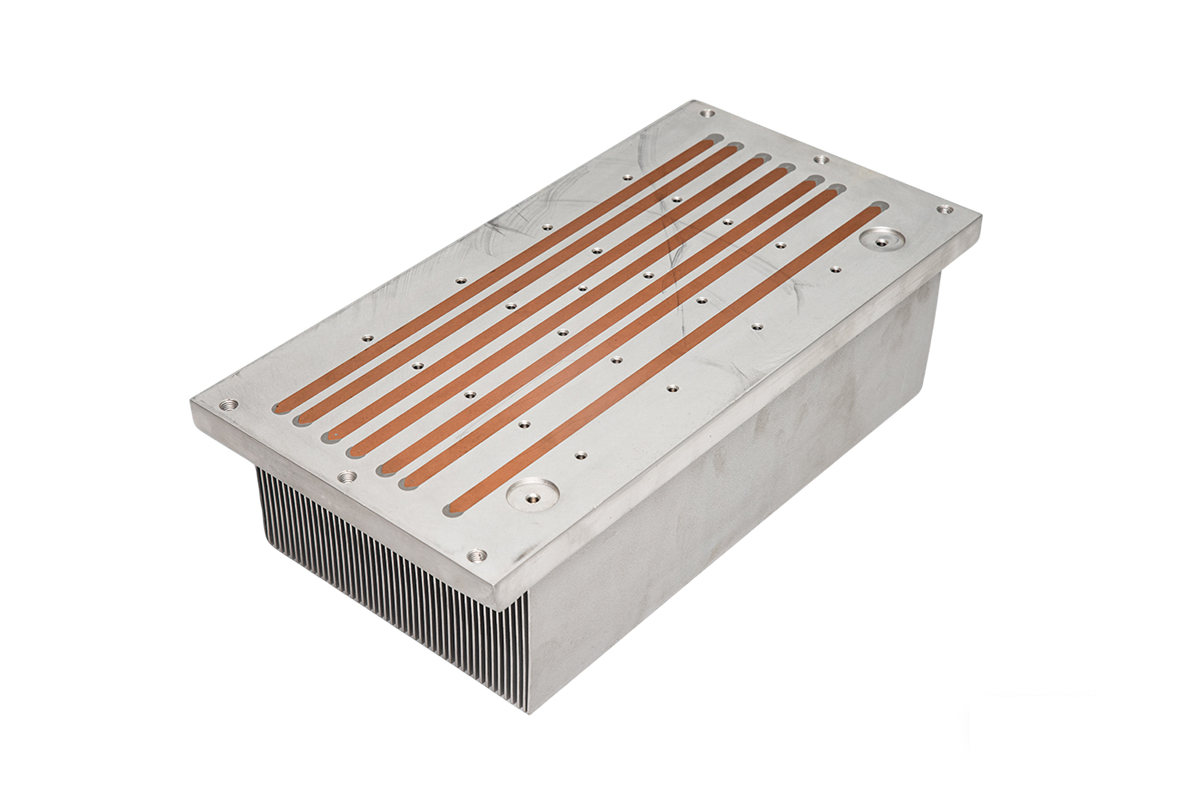
A heat sink with heat pipe is a thermal management device that integrates copper heat pipes into an aluminum heat sink structure to improve heat transfer efficiency.
The core components typically include:
Aluminum base plate (6061 / 6063 high thermal conductivity alloy)
Copper heat pipes
Aluminum cooling fins
The heat pipe operates using a phase-change heat transfer process, where internal working fluid evaporates at the hot end and condenses at the cooler end. This allows heat to be transported extremely quickly from the heat source to the cooling fins.
Compared with traditional solid heat sinks, a heat pipe heat sink offers:
Faster heat spreading
Lower thermal resistance
Higher cooling efficiency
Better performance in high-power applications
This makes heat pipe cooling systems ideal for modern high-power electronic devices.
Kingka utilizes an advanced embedded heat pipe heat sink structure where heat pipes are precisely inserted into grooves machined into the aluminum base plate.
This heat pipe aluminum heat sink design significantly improves the thermal interface between the heat pipe and the base plate.
Key structural benefits include:
Increased contact surface area
Lower interface thermal resistance
Improved heat transfer efficiency
More compact cooling module design
Higher power density capability
To ensure optimal heat conduction, the heat pipe-to-groove clearance is strictly controlled, typically within:
≤0.05 mm
This precision allows the heat pipe cooling module to achieve highly efficient thermal performance.
Kingka follows a comprehensive and highly controlled manufacturing process to ensure each heat pipe thermal module meets strict quality and reliability standards.
High-quality materials are essential for achieving stable heat pipe cooling performance.
Copper heat pipe or composite heat pipe verification
Outer diameter and wall thickness inspection
Vacuum integrity verification
Working fluid confirmation
Thermal performance sampling test
6061 / 6063 aluminum alloy verification
Thermal conductivity validation
Mechanical strength testing
RoHS and REACH compliance verification
These inspections ensure the reliability of every heat pipe cooling plate assembly.
The aluminum base plate is precisely machined to create grooves that securely embed the heat pipes.
Kingka uses advanced CNC machining to manufacture heat pipe cooling plates with high dimensional accuracy.
Key machining processes include:
Raw material cutting
Reference surface milling
Precision groove machining
Mounting hole and thread processing
Edge deburring and chamfering
Typical machining tolerances include:
| Parameter | Control Standard |
|---|---|
| Groove width tolerance | ±0.03 mm |
| Groove depth tolerance | ±0.05 mm |
| Straightness | ≤0.1 mm / 100 mm |
These tight tolerances ensure optimal assembly of the embedded heat pipe heat sink.
Before assembly, heat pipes must be precisely shaped to match the groove path on the aluminum base.
3D bending according to cooling module design
Springback compensation
Shape verification using 3D scanning
The minimum bending radius must be controlled to avoid damaging the internal structure of the heat pipe.
Typical recommendation:
Minimum bending radius ≥ 1.5 × pipe diameter (recommended 2 × diameter)
Proper forming ensures long-term reliability of the heat pipe cooling system.
Kingka offers two major bonding methods for assembling heat pipe heat sinks.
Vacuum soldering is commonly used for high-reliability thermal modules such as:
Server cooling systems
Telecom equipment cooling
Industrial power electronics cooling
Key process characteristics:
Vacuum reflow soldering
Peak temperature: 250–280°C
Solder filling rate ≥ 90%
Advantages include:
Extremely low interface thermal resistance
High bonding strength
Excellent long-term reliability
This process is widely used for high power heat pipe heat sinks.
For some applications, high-performance thermal conductive adhesive is used.
Key parameters include:
Thermal conductivity > 1.5 W/m·K
Adhesive thickness control around 0.1 mm
Pressurized curing process
This method is suitable for:
LED heat pipe heat sinks
Compact electronics cooling
Industrial thermal modules
The result is a reliable heat pipe cooling assembly with consistent thermal performance.
To improve durability and thermal radiation performance, several surface treatments are available.
Black anodizing
Oxide thickness: 8–15 μm
Enhanced heat radiation
Thickness: 30–50 μm
Improved wear resistance
Nickel-phosphorus coating
Thickness: 5–15 μm
Enhanced corrosion resistance
These treatments improve the reliability of heat pipe radiator modules used in harsh environments.
Every heat pipe cooling system manufactured by Kingka undergoes rigorous performance testing.
Testing is performed according to ASTM D5470 standards.
Testing procedures include:
Controlled pressure testing environment
Multi-point temperature monitoring
Power load simulation
This ensures that each heat pipe heat sink meets the specified thermal performance requirements.
Due to their excellent heat pipe thermal management capability, these cooling solutions are widely used across many industries.
CPU heat pipe heat sink
GPU heat pipe cooler
Server cooling modules
Inverter heat sinks with heat pipes
Industrial power modules
UPS systems
High-power LED heat pipe heat sinks
Commercial lighting systems
Base station equipment cooling
Network infrastructure thermal management
Electric vehicle power controllers
Onboard electronics cooling
These applications demand high-efficiency heat pipe cooling modules capable of handling significant thermal loads.
Kingka is a professional custom heat pipe heat sink manufacturer capable of providing complete thermal management solutions.
Our engineering services include:
Heat transfer simulation
Heat pipe layout optimization
Thermal resistance analysis
Structural strength analysis
Thermal stress evaluation
Installation compatibility design
Manufacturability optimization
Cost-efficient production planning
Mass production solutions
With strong engineering capabilities, Kingka provides tailored heat pipe thermal solutions for demanding industrial applications.
Kingka provides a full-service solution for heat pipe heat sink manufacturing.
Advantages include:
Advanced heat pipe cooling system design
Precision CNC manufacturing capability
Vacuum soldering and adhesive bonding technologies
Complete thermal performance testing
Fast custom development
Reliable mass production capacity
Our mission is to deliver high-performance heat pipe cooling modules that help customers improve product stability, efficiency, and reliability.
A heat sink with heat pipe is a thermal management device that combines a traditional heat sink structure with high-efficiency heat pipes to improve heat transfer performance. The heat pipe quickly transports heat away from the heat source through phase-change heat transfer, and the heat sink fins then dissipate the heat into the surrounding air through convection. This type of heat pipe heat sink is widely used in high-power electronics and industrial equipment where efficient cooling is required.
A heat pipe cooling system works based on the phase-change principle. Inside the heat pipe is a sealed working fluid under vacuum. When heat is applied at the evaporator section near the heat source, the fluid evaporates and absorbs heat. The vapor travels to the cooler condenser section where it releases heat and condenses back into liquid. The liquid then returns to the hot end through capillary action. This process allows a heat pipe heat sink to transfer heat much faster than traditional solid metal heat sinks.
A heat pipe heat sink offers several advantages compared to traditional cooling solutions:
Higher heat transfer efficiency
Lower thermal resistance
Faster heat spreading from hot spots
Suitable for high power density devices
Compact and lightweight design
Passive cooling without additional power consumption
These benefits make heat pipe cooling modules ideal for modern electronics and industrial equipment.
Most heat pipe aluminum heat sinks are manufactured using the following materials:
Copper heat pipes – for high thermal conductivity and efficient heat transfer
Aluminum base plates (6061 or 6063) – for structural strength and lightweight properties
Aluminum cooling fins – to maximize heat dissipation area
Additional materials such as solder alloys or thermal conductive adhesives may be used to bond the heat pipe to the base plate.
A heat pipe cooling solution is widely used across many industries that require reliable thermal management.
Typical applications include:
CPU heat pipe heat sink for computers and servers
GPU heat pipe cooler for high-performance computing
LED heat pipe heat sink for high-power lighting systems
Power electronics heat sink for inverters and industrial equipment
Telecommunication equipment cooling
Automotive electronics cooling
Because of their efficiency, heat pipe cooling modules are widely adopted in modern electronic systems.
A traditional heat sink relies on solid metal conduction to move heat from the heat source to the fins. In contrast, a heat pipe heat sink uses internal phase-change heat transfer, which allows heat to move much faster and more efficiently. This results in significantly lower thermal resistance and improved cooling performance, especially in high-power devices.
Yes. Most heat pipe heat sinks are designed according to the thermal requirements of specific applications. Customization options include:
Heat pipe diameter and quantity
Heat pipe layout and bending design
Aluminum base plate thickness
Fin structure and spacing
Surface treatment such as anodizing or nickel plating
As a professional custom heat pipe heat sink manufacturer, Kingka provides complete design support and tailored heat pipe thermal solutions.
To improve durability and corrosion resistance, several surface treatments are commonly applied to heat pipe radiator modules, including:
Black anodizing for improved thermal radiation
Hard anodizing for enhanced wear resistance
Electroless nickel plating for corrosion protection
Thermal coating to enhance heat dissipation
These treatments ensure long-term reliability for industrial heat pipe cooling systems.
Thermal performance is typically tested using standardized methods such as ASTM D5470 thermal resistance testing. The testing process measures the temperature difference between the heat source and the cooling surface under controlled power conditions. This allows engineers to calculate the thermal resistance (Rθ) of the heat pipe cooling module and verify that it meets the design requirements.
Kingka provides a complete heat pipe cooling solution, including:
Thermal simulation and engineering design
Precision CNC machining
Heat pipe forming and assembly
Vacuum soldering or thermal adhesive bonding
Surface finishing and corrosion protection
Thermal performance testing
With strong engineering capabilities and advanced manufacturing equipment, Kingka can deliver reliable high-performance heat pipe heat sinks for a wide range of industrial applications.

Kingka Tech Industrial Limited
We specialize in precision CNC machining and our products are widely used in telecommunication industry, aerospace, automotive, industrial control, power electronics, medical instruments, security electronics, LED lighting and multimedia consumption.


Address:
Da Long New Village, Xie Gang Town, Dongguan City, Guangdong Province, China 523598
Email:
Tel:
+86 137 1244 4018