
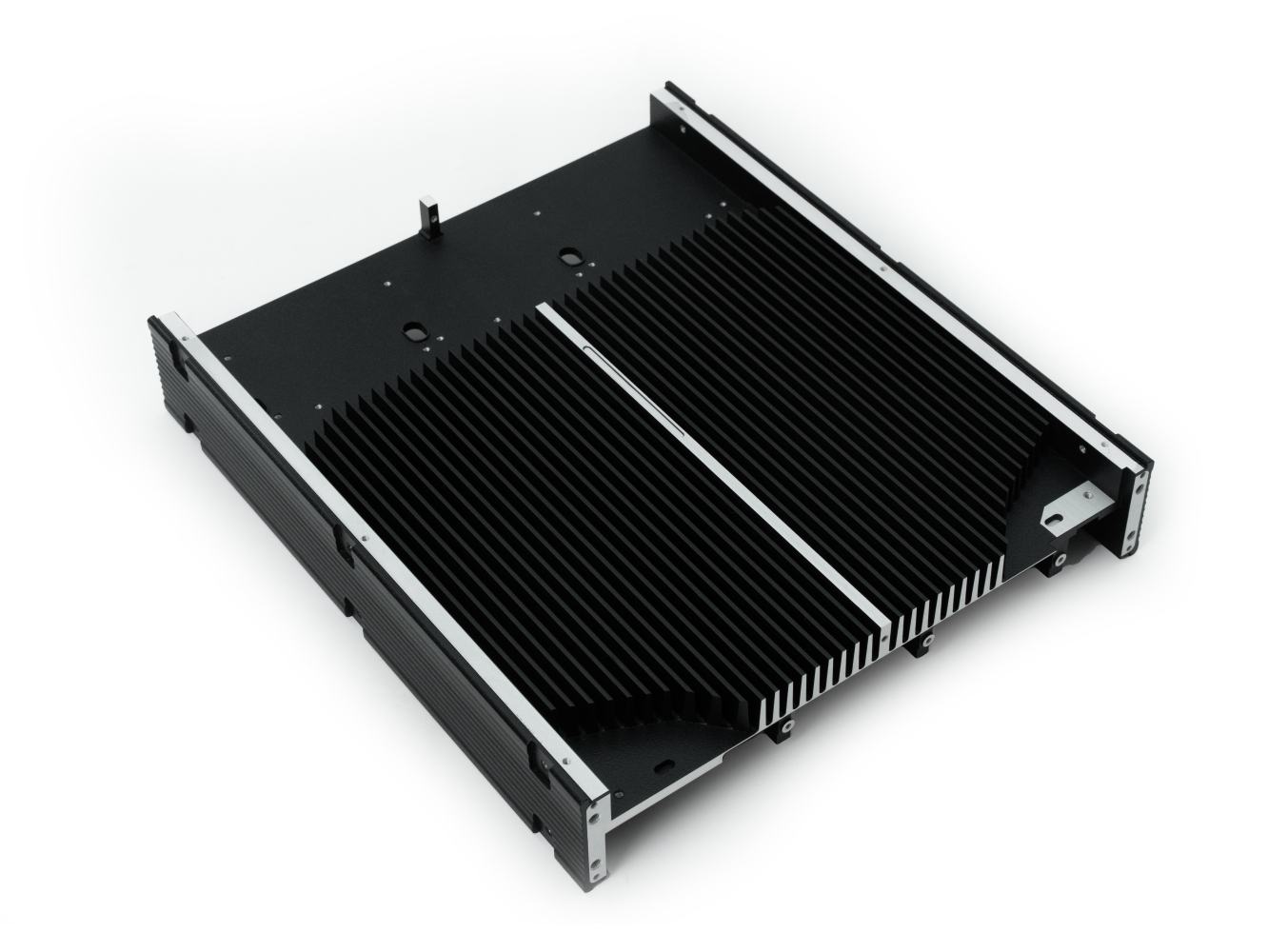
Extrusion heat sinks are high-efficiency thermal management solutions manufactured through precision die extrusion molding technology. Known for their accurate manufacturing process and exceptional heat dissipation performance, extrusion Heat Sinks are widely used across various industries. With a precision of up to 0.001mm, these heat sinks meet the stringent thermal requirements of high-end equipment, ensuring optimal reliability and stability during high-load operation.
Typically, extrusion heat sinks are made from high-quality aluminum alloys, such as 6063-T5 or 6061-T6, renowned for their excellent thermal conductivity, lightweight properties, high strength, and corrosion resistance. Aluminum alloys can undergo additional surface treatments, including anodizing and powder coating, to enhance both corrosion resistance and aesthetics. These features make aluminum alloy heat sinks ideal for industrial, automotive, and electronic applications.
The primary function of an extrusion heat sink is high-efficiency heat dissipation. Through a large surface area and complex fin structures, heat sinks increase thermal exchange with the surrounding environment. The high thermal conductivity of aluminum rapidly transfers heat from the source to the fins, where it is dissipated via natural convection or forced airflow. This efficient heat transfer maintains equipment performance and prevents overheating, especially in high-power electronics and computing hardware.
Extrusion heat sinks and extruded liquid cold plates are integral to numerous applications:
Computer Hardware: Cooling CPUs, GPUs, high-performance servers, and electronic modules.
Automotive Industry: Thermal management for engines, battery packs, and power electronics in electric vehicles.
Aerospace: Maintaining optimal temperatures in high-performance and high-altitude environments.
Power Electronics: Ensuring thermal stability in IGBTs, power modules, and converters.
Medical Equipment and Industrial Control: Maintaining safe operating temperatures in critical systems.
Extruded liquid cold plates further extend heat dissipation capabilities by integrating fluid cooling channels directly into aluminum extrusions. These liquid-cooled solutions utilize water, glycol solutions, or specialized coolants for high-density thermal management in electric vehicle battery packs, data center servers, and high-power laser or IGBT modules.
Extruded liquid cold plates are fabricated with precision extrusion, CNC Machining, and advanced welding techniques:
Material Preparation: Selecting 6061-T5/T6 or 6063-T5 aluminum rods, followed by composition analysis and mechanical testing.
Mold Design: Using CFD simulations for optimal channel design; mold steel H13 is precision-machined and heat-treated.
Extrusion: Aluminum rods are preheated and extruded into closed or multi-channel structures, achieving low flow resistance and high pressure tolerance.
CNC Machining: Accurate end-face, interface, and sealing surface machining ensures tight tolerances and perfect alignment.
End-Cap Fabrication & Welding: End caps are machined and welded using FSW, laser, or TIG methods, ensuring strong, leak-free connections.
Pressure & Leak Testing: Helium leak detection, water pressure testing, and burst pressure testing guarantee reliability.
Surface Treatment: Optional anodizing, nickel plating, or Teflon coating enhances corrosion resistance.
Cleaning & Assembly: Ultrasonic cleaning, sensor installation, and accessory mounting prepare cold plates for operational use.
Performance Testing: Flow resistance, heat transfer efficiency, and thermal uniformity are tested under real operating conditions.
This manufacturing sequence ensures that extruded liquid cold plates achieve high thermal performance, compact size, and durability, ideal for high-power density cooling applications.
To maximize performance and longevity:
Regular Cleaning: Remove dust with soft brushes or compressed air to prevent blockage.
Careful Handling: Avoid collisions or squeezing during installation to prevent deformation.
Proper Installation: Ensure tight contact with heat sources and follow manufacturer specifications.
Fan Checks: For active cooling setups, verify fan operation regularly.
Avoid High-Load Operation: Limit continuous maximum-load operation to prevent overheating.
Safety Measures: Disconnect power and allow cooling before performing maintenance.
Extrusion heat sinks and extruded liquid cold plates are essential components for modern thermal management solutions in electronics, automotive, aerospace, and industrial sectors. With high-precision manufacturing, excellent heat dissipation, and customizable designs, these aluminum alloy heat sinks provide reliable performance under extreme conditions. Following proper maintenance, installation, and operational precautions ensures long-lasting, efficient, and safe thermal management for any high-power system.
1. What is an extrusion heat sink?
An extrusion heat sink is a high-efficiency cooling device made by die extrusion molding of aluminum alloys, designed to dissipate heat from electronic components and high-power equipment. Its precise fin structure and large surface area ensure excellent thermal management performance.
2. What materials are used for extrusion heat sinks?
Most extrusion heat sinks are made of 6063-T5 or 6061-T6 aluminum alloy, which provides high thermal conductivity, lightweight properties, corrosion resistance, and durability. Surface treatments like anodizing or powder coating can further enhance corrosion resistance and appearance.
3. How does an extruded liquid cold plate work?
Extruded liquid cold plates integrate internal flow channels in aluminum extrusions, allowing a coolant (water, glycol solution, or specialized fluids) to flow through. The coolant absorbs heat from components and transfers it away efficiently, enabling high-density thermal management for EV battery packs, data center servers, and power electronics.
4. What are the advantages of extruded liquid cold plates over traditional machined cold plates?
Seamless channels: Reduced leak risk due to no welding seams.
High thermal performance: Aluminum alloys provide excellent heat transfer.
Compact & lightweight: 20-40% lighter than conventional machined plates.
Customizable flow paths: Supports parallel, serpentine, and multi-chamber designs.
Cost-effective: Lower production costs for high-volume applications.
5. What industries use extrusion heat sinks and extruded liquid cold plates?
Computing & servers: CPU, GPU, and server cooling
Electric vehicles: Battery packs, motor controllers
Power electronics: IGBTs, power modules, inverters
Aerospace & defense: High-performance avionics and laser systems
Industrial automation & medical equipment: Efficient thermal management for sensitive devices
6. How should extrusion heat sinks and cold plates be maintained?
Clean dust with a soft brush or compressed air regularly.
Avoid collisions, deformation, or scratches during installation.
Ensure proper ventilation and monitor fan operation if active cooling is used.
Avoid long-term high-load operation to extend equipment lifespan.
7. Can extrusion heat sinks or liquid cold plates be customized?
Yes. Both extrusion heat sinks and extruded liquid cold plates can be tailored for:
Custom dimensions and fin structures
Specific flow channel designs (parallel, serpentine, multi-chamber)
Integration with sensors, fittings, and mounting points
Surface treatments for corrosion resistance or electrical insulation
8. What testing ensures the quality of extruded liquid cold plates?
Pressure testing: Water pressure and burst tests
Leak detection: Helium mass spectrometer or vacuum testing
Flow & thermal performance: Flow resistance and thermal resistance tests
Durability: Thermal cycling and pressure cycling tests
These ensure reliable performance under high-load and high-power applications.
9. What is the typical temperature and pressure range for extruded liquid cold plates?
Operating temperature: -40℃ to 120℃
Typical working pressure: 0.5–1.5 MPa
Burst pressure: ≥3 MPa
10. How do I choose the right extrusion heat sink or liquid cold plate for my application?
Consider:
Heat generation of your components
Available installation space
Required thermal performance
Flow rate and coolant type for liquid cooling
Integration requirements (sensors, fittings, mounting points)
Consult with the manufacturer to match the aluminum alloy heat sink design to your system’s needs.

Kingka Tech Industrial Limited
We specialize in precision CNC machining and our products are widely used in telecommunication industry, aerospace, automotive, industrial control, power electronics, medical instruments, security electronics, LED lighting and multimedia consumption.


Address:
Da Long New Village, Xie Gang Town, Dongguan City, Guangdong Province, China 523598
Email:
Tel:
+86 137 1244 4018