As computing power continues to increase, thermal management has become one of the most important factors in computer performance and long-term reliability. High-performance CPUs, GPUs, AI processors, and gaming systems all generate a large amount of heat in a very limited space. If this heat cannot be removed quickly, system temperatures rise, performance drops, and hardware lifespan may be reduced.
That is why more engineers, gamers, and system builders are turning to water cooling computers for better heat control. At the center of many advanced cooling systems is the cold plate. So, how does a cold plate work in water cooling computers? The answer lies in efficient heat transfer, fluid circulation, and optimized thermal design.
As a professional thermal management manufacturer, KINGKA provides a wide range of cooling solutions, including liquid cold plate, Brazed liquid cold plate, CNC Machined Liquid Cold Plate, Vacuum Brazing Liquid Cold Plate, and other custom cooling components for electronics and computing applications.
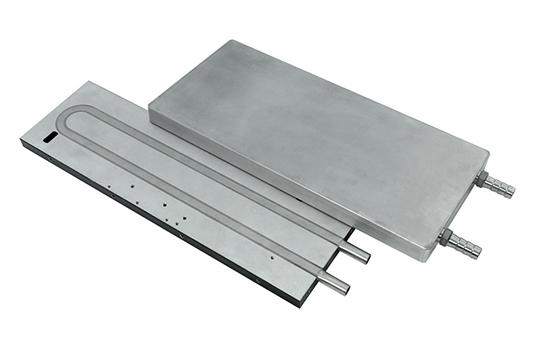
What Is a Cold Plate in a Water Cooling Computer?
A cold plate is a metal cooling component designed to absorb heat from a hot device and transfer that heat into a flowing liquid coolant. In a computer water cooling system, the cold plate is usually mounted directly on the CPU, GPU, or another high-heat component.
Unlike a traditional air-cooled heat sink, which transfers heat into surrounding air, a Liquid Cold Plate transfers heat into coolant flowing through internal channels. The liquid then carries that heat away from the processor to a radiator, where it is released into the air.
In simple terms, the cold plate acts as the first and most critical contact point in a water cooling loop.
How Does a Cold Plate Work in Water Cooling Computers?
The working principle of a cold plate in a water cooling computer can be explained in several steps.
1. Heat Is Generated by the Processor
When the CPU or GPU operates, it produces heat. The higher the workload, the more heat is generated. Modern processors are compact, but their heat density is extremely high, which means thermal energy must be removed quickly.
2. Heat Transfers from the Chip to the Cold Plate
The processor surface is connected to the cold plate through a thermal interface material, usually thermal paste. This material fills microscopic air gaps and helps transfer heat from the chip to the cold plate base.
A well-designed computer cold plate must have:
This is why material choice and manufacturing quality matter so much in a CNC Machined Liquid Cold Plate or Copper Liquid Cold Plate Parts design.
3. The Cold Plate Spreads and Absorbs Heat
Once heat enters the cold plate base, it spreads through the metal and reaches the internal flow channels. Most cold plates are made from aluminum or copper because these metals provide strong thermal conductivity.
Copper is often pref