With the rapid development of new energy vehicles (NEVs), battery systems are becoming more powerful, compact, and energy-dense. As a result, thermal management has become a critical factor affecting battery safety, lifespan, and performance. Among all thermal solutions, the liquid cooling plate has emerged as a core component in EV battery systems.
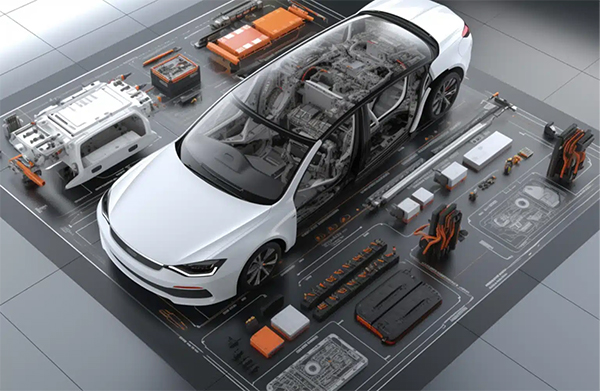
A typical EV battery cooling system consists of the battery cells, battery cooler, pipelines, and the battery liquid cooling plate. These components work together to maintain optimal operating temperatures, ensure temperature uniformity, and prevent thermal runaway.
The Role of Liquid Cooling Plates in EV Battery Systems
The battery liquid cooling plate, also known as a cold plate, is responsible for transferring heat away from battery cells. It is usually installed beneath or alongside battery modules, allowing coolant to circulate and absorb heat generated during charging and discharging.
Compared with air cooling, liquid cooling plates offer:
Higher heat transfer efficiency
Faster thermal response
Better temperature uniformity across cells
Improved battery safety and lifespan
As battery systems evolve toward higher charging rates and higher power outputs, the demand for advanced EV battery cooling plate solutions continues to increase.
Challenges for Water Cooling Plates in EV Applications
Unlike general thermal components, the water cooling plate used in new energy vehicles must operate under demanding conditions:
High mechanical load (supporting battery modules)
Continuous exposure to coolant and potential corrosion
Long service life requirements
High reliability and sealing performance
Therefore, aluminum liquid cooling plate materials must provide both high strength and excellent corrosion resistance. This has led to the development of advanced brazed composite materials specifically designed for automotive cooling systems.
Development of Brazed Composite Materials
From a materials engineering perspective, the performance of a brazed Liquid Cold Plate depends heavily on alloy composition and structural design. In recent years, several new aluminum-based brazing composite materials have been developed to meet the needs of NEV battery cooling systems.
1. High-Strength Aluminum Brazing Alloys
To support battery weight and structural loads, high-strength aluminum alloys are used as the base material for liquid cooling plates. These alloys provide:
By optimizing alloy composition, manufacturers can improve both structural integrity and long-term durability of the cold plate.
2. Corrosion-Resistant Cladding Materials
The internal channels of a battery liquid cooling plate are continuously exposed to coolant, often a mixture of water and glycol. This environment can cause corrosion over time.
To address this, corrosion-resistant cladding layers are added to the aluminum substrate. These layers:
This is especially important for EV battery cooling plate applications where reliability is critical.
3. Advanced Brazing Filler Materials
Brazing filler materials play a key role in ensuring strong bonding and sealing in a brazed liquid cold plate. Modern filler materials are typically based on aluminum-silicon systems, offering:
Optimized filler materials also help reduce defects such as porosity and improve overall product quality.
Manufacturing Technologies for EV Liquid Cooling Plates
Several manufacturing methods are used to produce liquid cooling plates for automotive applications:
Brazing Technology
Vacuum brazing and controlled atmosphere brazing are widely used to produce brazed liquid cold plate products. These methods ensure strong bonding, excellent sealing, and uniform heat distribution.
Extrusion + Welding
Extruded aluminum liquid cooling plate structures offer high strength and cost efficiency, making them suitable for large-scale production.
Friction Stir Welding (FSW)
FSW provides high-strength, leak-free joints, making it ideal for structural cold plate designs that require both cooling and load-bearing functions.
Each process is selected based on product design, cost requirements, and performance targets.
Performance Optimization of Battery Cooling Plates
To achieve optimal performance, the design of the liquid cooling plate must consider:
Advanced simulation tools and testing methods are used to optimize channel design and ensure that the battery liquid cooling plate performs efficiently under real operating conditions.
As new energy vehicles continue to evolve, the importance of efficient thermal management will only increase. The liquid cooling plate has become a key component in ensuring battery safety, performance, and longevity.
Through the development of advanced brazed composite materials, improved alloy design, and optimized manufacturing processes, modern EV battery cooling plate solutions are achieving higher strength, better corrosion resistance, and improved thermal performance.
In the future, with the continued advancement of battery technology, high-performance aluminum liquid cooling plate and Brazed Liquid Cold Plate solutions will play an even more critical role in the success of new energy vehicles.