cold plate cooling and Immersion Cooling are the two leading liquid cooling approaches for high-density data centers, and the right choice depends on how much of your infrastructure you're willing to change. Cold Plate cooling attaches directly to CPUs and GPUs, working within familiar rack architecture with minimal disruption to existing facilities. Immersion cooling submerges entire servers in dielectric fluid, cooling every component at once but requiring a more significant infrastructure overhaul. This guide compares both approaches across efficiency, cost, compatibility, and maintenance to help you determine which fits your deployment.
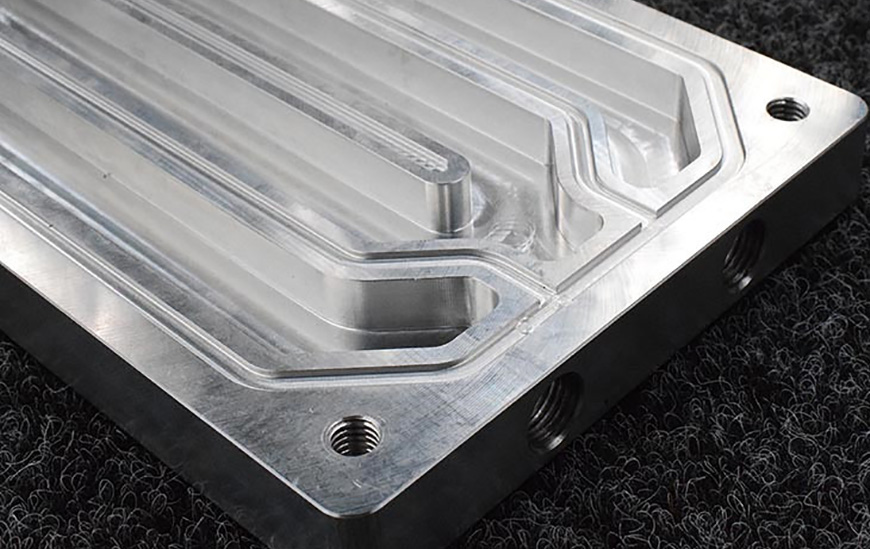
Cold Plate vs. Immersion Cooling: Key Differences
| Factor | Cold Plate Cooling | Immersion Cooling |
|---|
| Coverage | Cools high-power components directly (CPU, GPU); other parts still need air cooling | Cools the entire server uniformly by full submersion |
| Infrastructure compatibility | Retrofits into existing rack architecture with minimal disruption | Requires dedicated tanks, fluid handling, and often a facility redesign |
| Typical thermal efficiency | Effective for moderate-to-high power density racks | Higher efficiency ceiling, especially for extreme power density |
| Maintenance | Requires monitoring for leaks across tubing and connectors | Fewer moving parts and connection points, but fluid handling adds complexity |
| Upfront cost | Lower retrofit cost for existing facilities | Higher upfront investment for tanks and fluid infrastructure |
| Best suited for | Retrofitting existing data centers, moderate-to-high density AI/HPC racks | New-build, ultra-high-density AI clusters where maximum efficiency justifies the infrastructure investment |
How Cold Plate Cooling Works
Cold plate cooling, also called direct-to-chip cooling, mounts a metal plate directly onto the CPU or GPU package. Coolant circulates through internal microchannels in the plate, absorbing heat at the source and carrying it away to a coolant distribution unit (CDU), which rejects the heat to the facility's water loop. Because the plate targets only the highest-power components, servers retain a familiar form factor, and other lower-power parts continue relying on conventional air cooling.
Targets the highest-power components precisely, where heat density is greatest
Integrates into existing rack and row layouts with less disruption than a full liquid cooling conversion
Remains the most widely deployed liquid cooling approach for retrofitting existing facilities
How Immersion Cooling Works
Immersion cooling submerges entire servers in a non-conductive dielectric fluid, which absorbs heat directly from every surface simultaneously rather than only the highest-power chips. Single-phase immersion systems keep the coolant in liquid form throughout, circulating it through a heat exchanger. Two-phase systems allow the coolant to boil and vaporize at the heat source, then condense and return to the tank in a closed loop, which can offer additional efficiency gains for extreme heat loads.
Cools every component uniformly, eliminating localized hot spots that direct-to-chip systems can leave behind
Removes reliance on fans and much of the surrounding air-handling infrastructure
Requires dedicated tanks, fluid management, and often a different rack orientation than standard air-cooled or cold-plate racks
Evaluating liquid cooling options for a new or upgraded data center? Send us your rack power density and deployment timeline, and we'll help you assess which cooling approach fits your build.
Which Should You Choose?
Choose cold plate cooling if: you're retrofitting an existing data center, need to preserve familiar rack architecture, or your power density, while high, doesn't require submerging the entire server
Choose immersion cooling if: you're building a new, ultra-high-density AI or HPC cluster where maximizing thermal efficiency and eliminating hot spots justifies the larger infrastructure investment
Consider a hybrid approach if: your facility mixes extreme-density AI racks with more moderate workloads — many operators run cold plate or air cooling for lower-power equipment alongside immersion or cold plate systems for the densest racks
Neither approach is universally better — the right choice depends on whether you're retrofitting or building new, your target power density, and how much operational complexity your team can take on.
Not sure which cooling architecture fits your infrastructure? Tell us your current setup and target rack density, and we'll walk you through the trade-offs for your specific deployment.
Frequently Asked Questions
1. Is cold plate cooling or immersion cooling better for data centers?
Neither is universally better. Cold plate cooling is the lower-disruption choice for retrofitting existing facilities, while immersion cooling offers a higher efficiency ceiling for new-build, ultra-high-density AI clusters where the added infrastructure investment is justified.
2. What are the main limitations of cold plate cooling?
Cold plate cooling only cools the components it directly contacts, typically the CPU and GPU, so other lower-power parts still rely on air cooling. This can leave the system dependent on supplemental air-handling infrastructure and may not eliminate hot spots as thoroughly as full immersion.
3. What's the difference between single-phase and two-phase immersion cooling?
In single-phase immersion cooling, the dielectric fluid stays liquid throughout the cooling cycle. In two-phase immersion cooling, the fluid boils and vaporizes at the heat source, then condenses back to liquid in a closed loop — an approach that can offer additional efficiency for extreme heat loads but adds system complexity.
4. Can cold plate and immersion cooling be used together in the same facility?
Yes. Many data centers adopt a hybrid approach, using immersion or cold plate cooling for their densest AI or HPC racks while relying on cold plate or conventional air cooling for lower-power equipment elsewhere in the facility.