




A manufacturer's website may display dozens of heat sinks, liquid cold plates and machined cooling components. However, a large product gallery does not automatically tell an OEM engineer whether the supplier can manufacture a particular design.
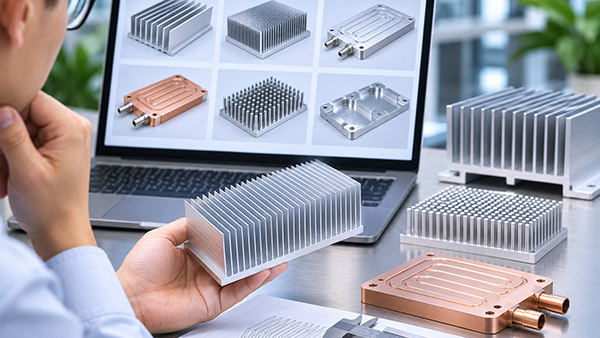
For industrial electronics, supplier evaluation requires more than attractive product photographs. Engineers need reliable information about materials, geometry, manufacturing processes, tolerances and quality verification.
One useful way to assess these capabilities is to examine how the manufacturer presents its extruded aluminum heat sinks.
1. Look for Products with Identifiable Engineering Features
A useful product portfolio should help engineers distinguish between standard profiles, previously manufactured custom parts and new designs requiring feasibility review.
For an extruded aluminum heatsink, important information may include the overall profile dimensions, base thickness, fin arrangement, aluminum alloy and any secondary machining operations.
These details help buyers assess whether the manufacturer offers a suitable starting point for their application.
A photograph without dimensions may demonstrate appearance, but it provides limited evidence of manufacturing compatibility.
2. Check Whether the Manufacturing Process Is Explained
extruded heat sinks are manufactured by forming heated aluminum through a die to produce a continuous profile. The resulting extrusion may then be cut, machined and finished.
This process differs from skiving, bonded-fin assembly and other heat sink manufacturing methods.
A manufacturer should explain which process is appropriate for the required geometry and where manufacturing limitations may exist.
For example, extremely thin fins or high fin aspect ratios may create difficulties for extrusion tooling and material flow.
Buyers should be cautious when a supplier promises to produce any requested cross-section without first reviewing the engineering drawing.
3. Material Specifications Should Be Clear
Aluminum alloys have different combinations of conductivity, strength and manufacturing characteristics.
6063 is commonly considered for complex extruded heat sink profiles because of its extrusion characteristics. 6061 may be selected when different mechanical requirements are important, although extrusion feasibility must still be checked.
The supplier should identify the proposed alloy and temper rather than relying on the broad description "high-quality aluminum."
For buyers who want a more detailed explanation, KINGKA's extruded aluminum heatsink design and manufacturing guide examines material selection, extrusion steps, fin geometry and thermal design requirements.
4. Real Drawings Are More Useful Than General Claims
Engineering drawings can communicate information that product images cannot.
For example, a reference drawing may show mounting-hole locations, profile width, contact-surface requirements and important dimensional tolerances.
Manufacturers do not need to reveal confidential customer designs. Representative drawings and approved technical examples can still demonstrate manufacturing experience.
5. Look Beyond the Primary Manufacturing Process
An extruded profile is not always a finished heat sink.
The application may require cutting, CNC drilling, tapping, base machining or surface finishing.
These secondary operations influence both cost and production feasibility.
When reviewing a supplier, buyers should ask which operations are supported and what dimensional requirements can be verified.
6. How Should Quality Capabilities Be Evaluated?
Quality evidence should correspond to the actual product.
For an extruded aluminum heat sink, important checks may include profile dimensions, fin geometry, mounting features, flatness and surface condition.
For a liquid cold plate, additional pressure-boundary and leak integrity requirements may apply.
A supplier that can explain its inspection methods provides more useful information than one that relies entirely on generic quality statements.
7. Questions to Ask Before Choosing a Manufacturer
Can you provide relevant manufactured product examples?
What aluminum alloys and tempers are available?
Does the proposed profile require new extrusion tooling?
Can you perform the required CNC operations?
Which dimensions can be inspected and documented?
Can you support sample approval and repeat production?
What information is required for a feasibility review?
Frequently Asked Questions
Does a large heat sink catalog prove manufacturing capability?
No. Buyers should also evaluate product specifications, actual manufacturing methods, engineering support and quality evidence.
Can a custom heat sink manufacturer modify an existing extrusion?
Some modifications can be completed through secondary machining. Changes to the extrusion cross-section may require a new die or a different profile.
Why should buyers request material specifications?
Alloy and temper affect thermal, mechanical and manufacturing characteristics. They should form part of the approved component requirements.
Evaluating a thermal manufacturer's portfolio should begin with evidence, not product count.
Real parts, meaningful dimensions, material specifications, manufacturing explanations and inspection information help OEM buyers make better decisions.
For extruded aluminum heat sinks in particular, an understanding of the manufacturing process provides a stronger foundation for technical discussions and supplier qualification.
