




When sourcing custom aluminum heatsinks, OEM buyers often contact several suppliers with the same drawings and technical requirements.
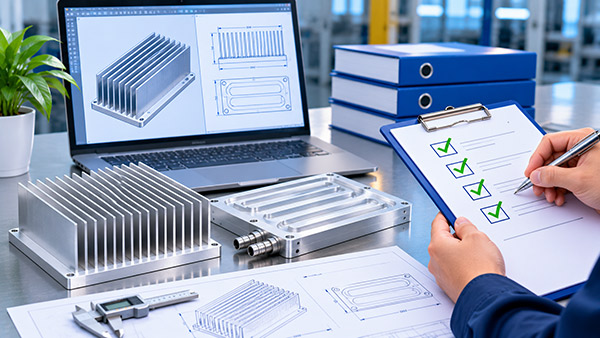
Some manufacturers respond with a price and estimated lead time. Others ask additional questions about thermal performance, mounting requirements, material specifications or manufacturing feasibility.
These differences in communication can help purchasing teams understand how suppliers approach engineering problems before any production order is placed.
A supplier's technical response is not sufficient evidence of manufacturing capability by itself, but it can be a useful part of the initial evaluation.
1. Does the Manufacturer Understand the Application?
heat sink manufacturers should understand the intended function of the component rather than relying entirely on the external dimensions of a drawing.
For an extruded heat sink, relevant application information may include:
Heat-generating component and expected power dissipation
Allowable component operating temperature
Available installation space
Natural or forced airflow conditions
Mounting configuration and thermal interface requirements
Expected production quantities
A manufacturer that asks appropriate application questions may be better positioned to identify missing design information.
However, the depth of review should match the agreed supplier responsibility. A build-to-print manufacturer may not be contracted to perform a complete thermal design assessment.
2. Does the Supplier Identify Unclear Requirements?
Manufacturing drawings sometimes contain incomplete specifications, conflicting dimensions or unclear surface treatment instructions.
A technically useful response should identify these issues before the supplier commits to production.
For example, a drawing may specify tight tolerances on several mounting features without identifying the critical assembly interface.
Clarifying the functional requirement may help engineers and heat sink manufacturers agree on practical inspection criteria.
3. Can the Manufacturer Explain Manufacturing Limitations?
Not every aluminum heat sink extrusion geometry is equally practical to manufacture.
Fin thickness, spacing, height, profile width and other features influence extrusion feasibility.
An experienced supplier should be able to explain whether the requested geometry requires additional technical review.
When proposing a modification, the manufacturer should distinguish between a manufacturing recommendation and an approved engineering change.
The OEM remains responsible for validating changes that could affect product function unless the design responsibility has been assigned differently by contract.
4. Does the Technical Response Identify Assumptions?
One important purchasing risk is receiving a quotation based on assumptions that have not been communicated.
For example, a supplier may assume that standard cutting tolerances are acceptable or that a particular surface finish is unnecessary.
These assumptions should be documented so that both parties understand the scope of the proposed manufacturing work.
| Evaluation Area | Useful Supplier Response |
|---|---|
| Application understanding | Identifies relevant thermal and mechanical requirements |
| Drawing review | Highlights missing or conflicting information |
| Manufacturing feasibility | Explains practical process limitations |
| Technical assumptions | States which requirements need confirmation |
| Change management | Requests approval before modifying specifications |
| Communication | Provides clear responses and identifies responsible contacts |
5. Evaluate Responsiveness and Technical Accuracy Separately
A quick response is convenient, but response speed does not necessarily demonstrate technical competence.
Likewise, a detailed technical response may take longer when a project requires internal engineering review.
OEM buyers should evaluate both communication efficiency and the accuracy of the information provided.
Where appropriate, technical claims should be supported by drawings, manufacturing feedback, inspection information or other evidence relevant to the project.
6. Use a Consistent Supplier Evaluation Process
Purchasing teams can prepare a standardized technical questionnaire for prospective manufacturers.
Using the same questions makes supplier responses easier to compare.
For high-risk applications, the communication assessment should be supplemented by appropriate supplier qualification activities, sample validation and quality documentation.
7. Discuss Custom Heat Sink Requirements with KINGKA
KINGKA manufactures customized thermal management components, including extrusion heat sinks and CNC-machined aluminum heatsinks.
OEM buyers can submit technical drawings, material requirements, thermal conditions and expected production quantities for manufacturing review.
The objective of an initial supplier discussion should be to establish an accurate understanding of the component before quotation approval and production planning.
Selecting among heat sink manufacturers requires more than reviewing prices and product photographs.
The quality of a supplier's technical response can reveal how clearly it understands the project, identifies uncertainties and communicates manufacturing limitations.
Buyers should combine this evaluation with objective manufacturing and quality evidence before making a final supplier decision.
Looking for an OEM Heat Sink Manufacturer?
Explore KINGKA's custom extrusion heat sink capabilities and submit your technical requirements for review.
View KINGKA Heat Sink Manufacturing →