




Global electronics manufacturers may operate assembly facilities in different countries while using common thermal components across several equipment models.
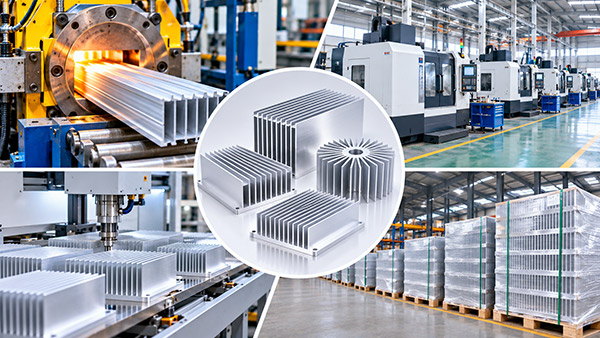
For aluminum heatsinks, a multi-factory production structure introduces purchasing challenges that extend beyond the manufacturing of individual components.
OEM buyers must consider specification consistency, regional demand, transportation arrangements and the responsibility for managing different delivery schedules.
A practical heat sink extrusion sourcing strategy should support both technical consistency and supply coordination.
1. Decide Whether Factories Should Use a Common Specification
When multiple assembly facilities produce the same equipment, standardizing an extruded aluminum heatsink specification may simplify procurement and quality management.
A common drawing can reduce the risk of different locations purchasing components with incompatible dimensions or mounting features.
However, specification standardization should be based on actual equipment requirements.
Different factories may use different assembly fixtures, equipment revisions or cooling configurations. These differences should be reviewed before a shared component is approved.
2. Establish Centralized Technical Control
A multi-factory purchasing structure benefits from clear ownership of technical specifications.
The OEM should identify which engineering team maintains the approved drawings and authorizes changes.
Local purchasing teams should have access to the correct revision and should not independently approve component changes without the required engineering authorization.
This approach can help prevent different sites from purchasing visually similar but technically different aluminum heatsinks.
3. Compare Centralized and Regional Purchasing
Global OEMs may purchase heat sinks through a central sourcing organization or allow each production facility to place orders independently.
Both models have advantages and limitations.
| Supply Model | Potential Benefit | Key Consideration |
|---|---|---|
| Centralized purchasing | Consolidates supplier management and demand visibility | Requires coordination with regional production schedules |
| Regional purchasing | Provides local order management flexibility | May increase specification and supplier coordination requirements |
| Central contract with local releases | Combines common commercial terms with site-level deliveries | Requires supplier agreement on release procedures |
The preferred model depends on factory locations, order volumes, available supplier capacity and internal purchasing resources.
4. Evaluate Transportation and Delivery Requirements
International supply arrangements should be evaluated using consistent commercial terms.
Buyers should clarify packaging, shipping responsibilities, customs documentation and the agreed delivery terms before confirming an order.
Large extruded heat sinks may require protective packaging to prevent fin damage or deformation during transportation.
Transportation costs and transit times should be included in the purchasing evaluation rather than treated as unrelated expenses.
Customs duties and other import costs depend on the applicable product classification and destination regulations.
5. Coordinate Demand Across Manufacturing Locations
Different factories may experience different demand patterns.
One facility may require a large quantity of extruded heat sinks for scheduled production, while another needs only a limited number for maintenance or smaller assembly runs.
A consolidated demand forecast can help the OEM communicate expected requirements to its manufacturing partner.
However, purchasing teams should identify which quantities are confirmed and whether production or material commitments apply.
Shared forecasts can improve planning visibility, but they do not eliminate the need for clear commercial agreements.
6. Plan for Regional Quality Feedback
When the same heat sink is delivered to several factories, the OEM should establish a consistent process for reporting nonconforming components.
Quality feedback should identify the affected part number, drawing revision, shipment information and observed issue.
This information helps manufacturing and engineering teams investigate whether a problem is specific to one shipment or affects a broader production requirement.
Regional differences in inspection methods should also be considered when defining common acceptance criteria.
7. Evaluate a Manufacturing Partner for Global OEM Programs
When selecting heat sink manufacturers for international production programs, buyers should assess manufacturing capability alongside communication, documentation and delivery coordination.
KINGKA supplies custom aluminum heat sink extrusion solutions for electronic and industrial applications.
OEM companies can submit their component drawings, expected production volumes and destination requirements for project-specific manufacturing and quotation discussions.
Any proposed multi-location supply arrangement should be confirmed according to the supplier's actual capacity and agreed commercial terms.
Global heat sink sourcing requires a coordinated approach to engineering specifications, purchasing decisions and regional manufacturing needs.
A common component specification can support consistency, while clear supply agreements help purchasing teams manage demand across different locations.
The objective is to ensure that every assembly facility receives an approved component in the required quantity and condition without introducing unnecessary supply chain complexity.
Source Custom extruded aluminum heatsinks
Explore KINGKA's extrusion heat sink solutions for industrial electronics and OEM manufacturing projects.
Explore Aluminum Heat Sink Extrusion →