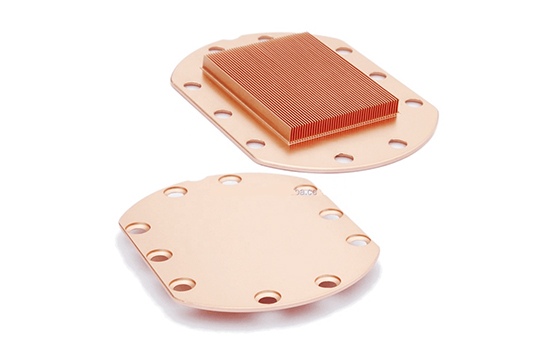
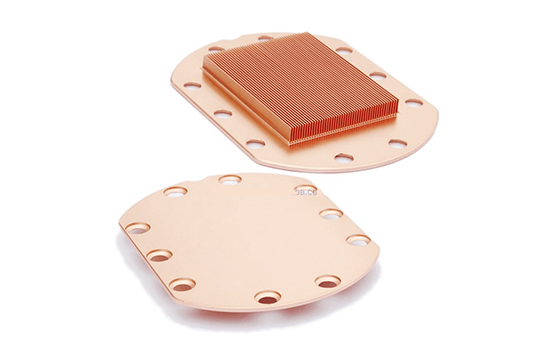
A heat sink is a passive cooling device that absorbs and disperses heat away from critical electronic components such as CPUs, GPUs, LED systems, and power modules. By maintaining safe operating temperatures, it improves system stability and extends the life of the device.
So, what is heat sink made of? The performance of a heat sink largely depends on the material:
Aluminum: Lightweight, corrosion-resistant, cost-effective, and the most common choice for extrusion heat sinks.
Copper: Superior thermal conductivity compared to aluminum, used in high-performance designs like cold forging heat sinks and heat pipe thermal modules.
Hybrid Materials: Some advanced solutions combine copper bases with aluminum fins for a balance of efficiency and cost.
The right material is chosen based on the thermal requirements of the application.
Different applications call for different heat sink technologies. The most common include:
Extrusion Heat Sink: Created by pushing aluminum through a die, suitable for low-to-medium power devices.
Skived Fin Heat Sink: Manufactured by slicing thin fins from a metal block, achieving very high fin density for efficient cooling.
Cold Forging Heat Sink: Produced through cold forging, allowing copper or aluminum to form complex shapes with excellent thermal conductivity.
Bonded Fin Heat sink: Uses thermally conductive adhesive or brazing to bond fins to a base plate, enabling larger surface areas for better airflow and cooling.
Die Casted Heat Sink: Made by injecting molten aluminum into a mold, providing strong mechanical stability and cost efficiency for mass production.
Heat Pipe Thermal Module: Integrates heat pipes into the heat sink to rapidly spread heat from the source to fins, ideal for compact electronics such as laptops or LED lighting.
Even the best design loses efficiency if dust builds up. Here’s how to clean a heat sink properly:
Power down the equipment and unplug it.
Disassemble the heat sink carefully, if accessible.
Blow away dust using compressed air or brush off gently with a soft tool.
Reinstall the heat sink and ensure firm contact with the component.
By learning how to clean heat sink, you can maintain optimal cooling performance over time.
Now you have a clear understanding of what is the heat sink, what is heat sink made of, and how does heat sink work. From extrusion heat sinks to skived fin heat sinks, cold forging heat sinks, bonded fin heat sinks, die casted heat sinks, and even advanced heat pipe thermal modules, each type has its own advantages and applications.
A well-chosen and well-maintained heat sink not only improves efficiency but also ensures the long-term reliability of your electronic devices.
Kingka Tech Industrial Limited
We specialize in Heat Sink、Liquid Cold Plate、precision CNC machining and our products are widely used in telecommunication industry, aerospace, automotive, industrial control, power electronics, medical instruments, security electronics, LED lighting and multimedia consumption.